Pages

Showing posts with label Zurich. Show all posts

Thursday, June 3, 2010

Web 2.0 for citizen involvement

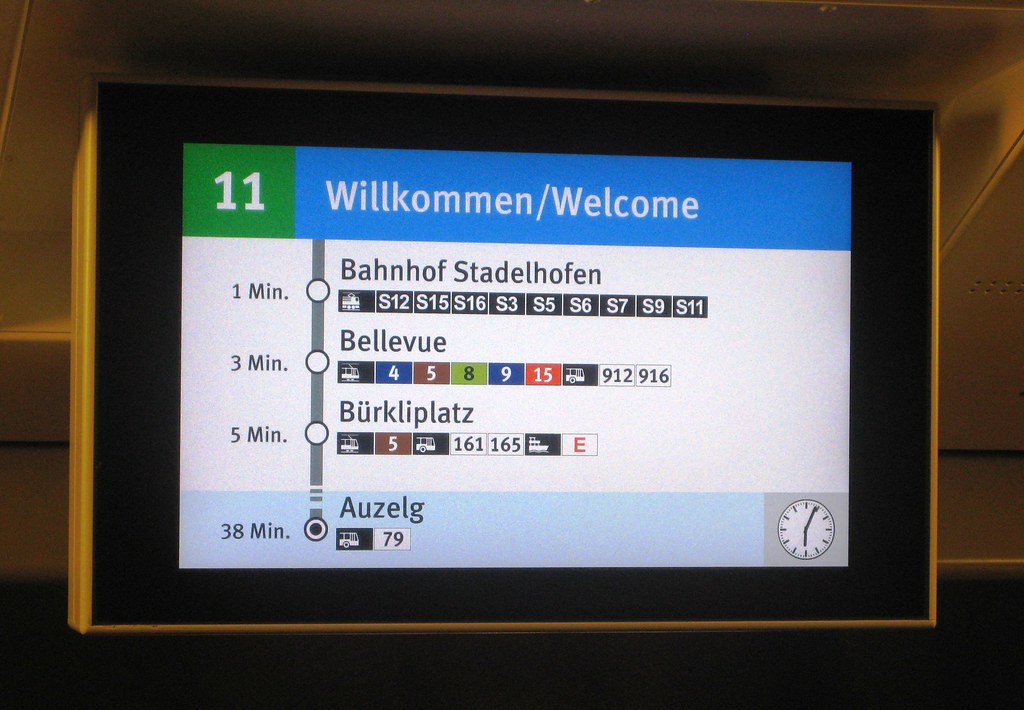
Schedule information screens on Zurich public transport vehicles, from my flickr photos.

The Infrastructuralist just had an interesting article about IBM's Smart Cities program and some work they are doing in Viet Nam. I added a comment suggesting that a good solution for many urban problems is the use of Web 2.0 techniques to involve the public in planning and operating urban services. Read the article and my comment here.

Thursday, April 1, 2010

Bern Switzerland Recommendations

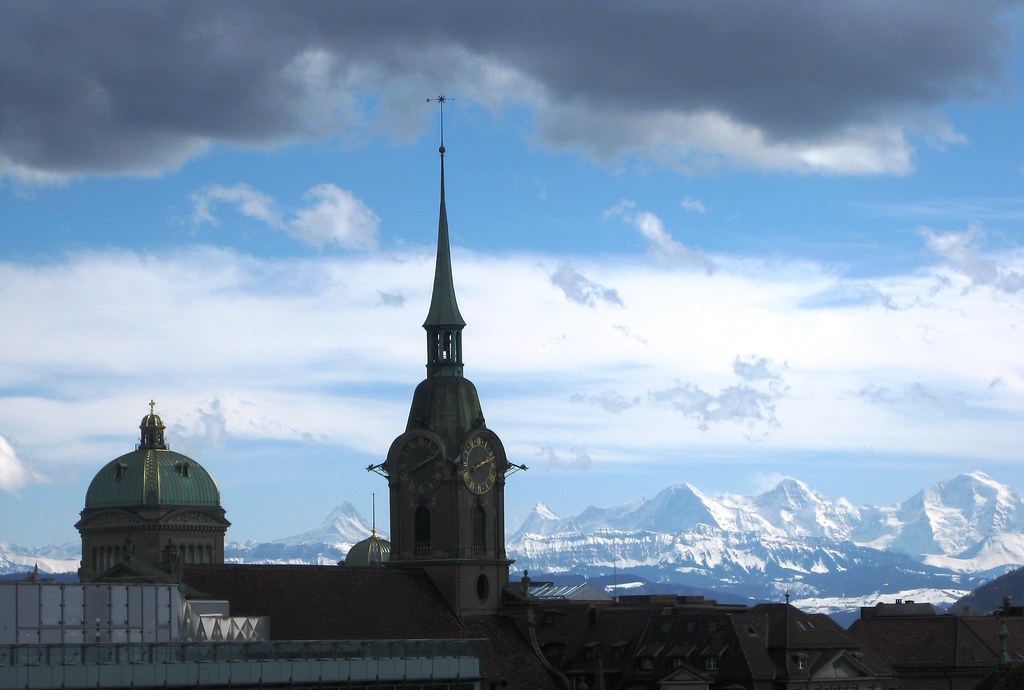
Bern rooftops and the Alps in the distance from the roof of Bern's main station (from my Bern flickr photos - click on any of the photos to enlarge).

We traveled to Bern often when we lived in Switzerland and recently visited to attend a conference. Here are some recommendations.

Bern is Switzerland's capitol and is less than an hour from Zurich by train. The train is a great way to travel: it's faster than driving and you can see exactly how Switzerland's "taktfahrplan" system works (it's a timed transfer system where all trains arrive in stations a few minutes before the hour - then passengers transfer between trains - then the trains all leave a few minutes after the hour). Here's some information on transport in Zurich and Switzerland from my website.

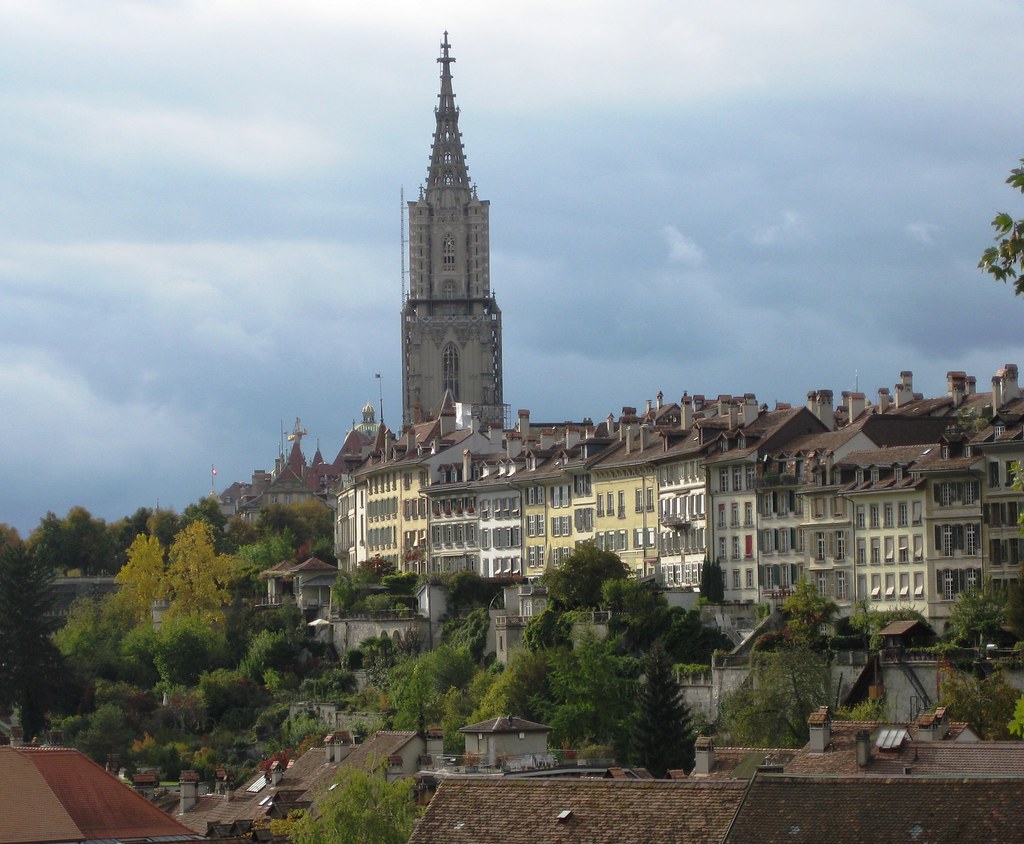
 Bern Cathederal and center city (shot near the Barengraben).
The Zurich - Bern route is especially interesting because to make the one-hour "takt" work, the SBB had to build a high speed section of track on the route. Now the non-stop trains take about 57 minutes - the high speed section was designed exactly to fit the one-hour takt. If you take the train, look around: there is a non-stop train every half hour and several local trains - and they are almost all full. The Swiss rail system is a great example of how creating an integrated network of high quality public transportation can get people out of their cars. But, back to Bern.
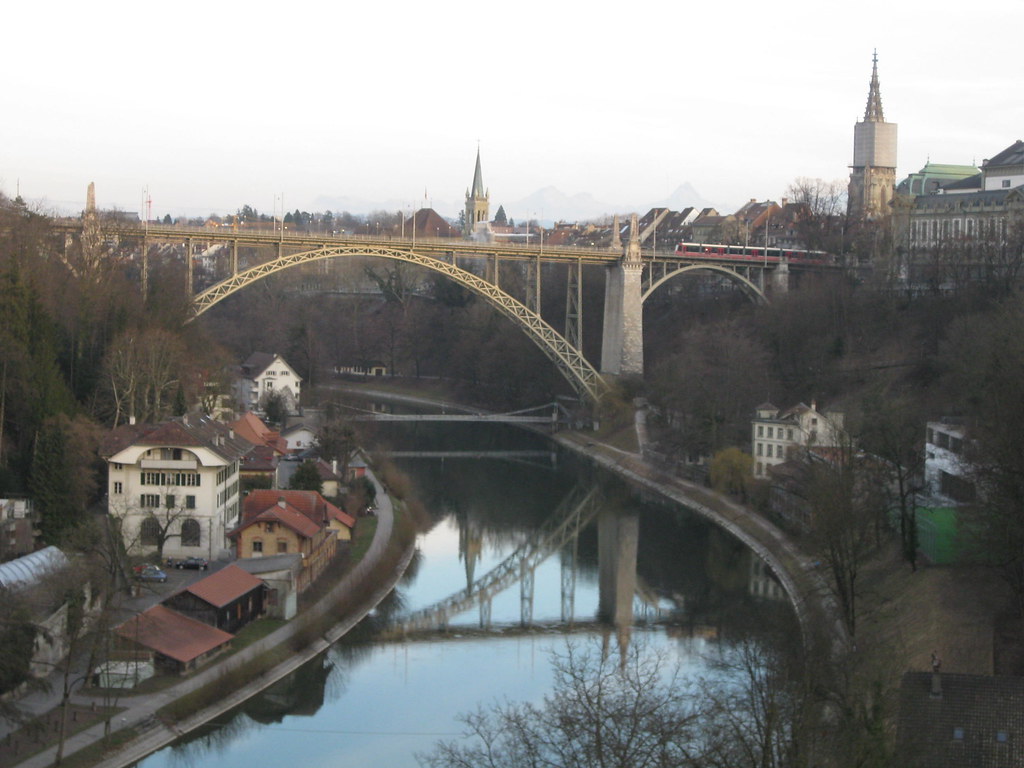
 Kornhaus Bridge in Bern (note the tram on the bridge and the Alps faintly in the background).
Bern's main train station is in the center of town. Like most Swiss rail stations Bern's is very busy. It's filled with stores (which, due to a special law, are open late and on Sundays - in contrast to most stores in Switzerland). From the main concourse you have two choices: go towards the city center or towards the parking garage.

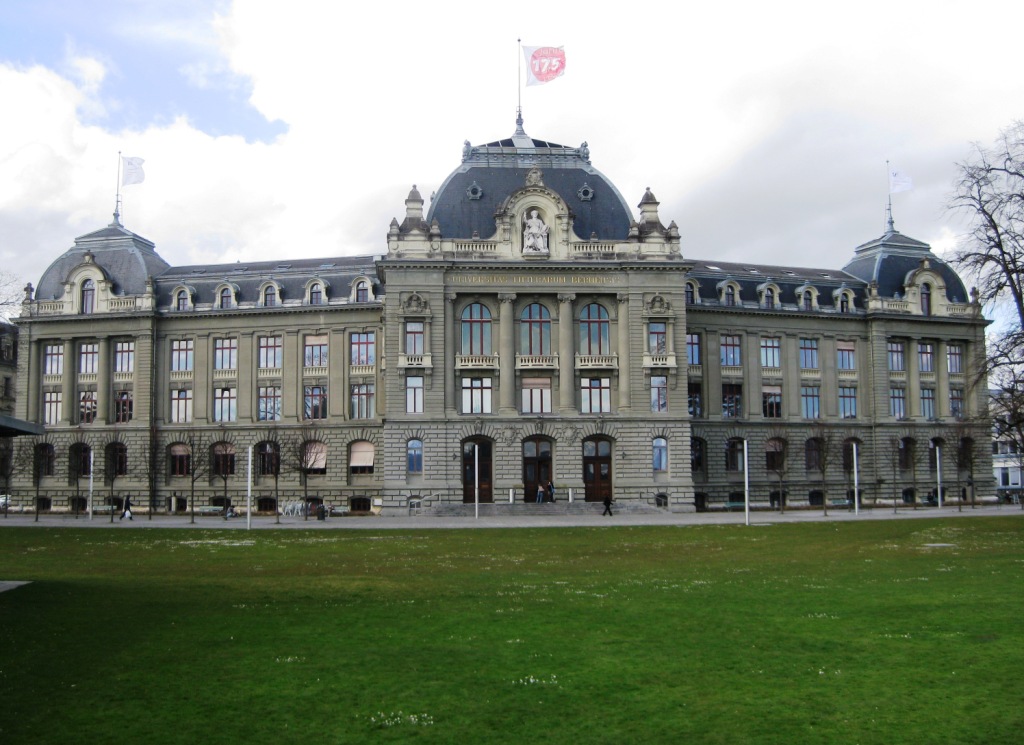
Surprise! First, go in the direction of the parking garage. A set of elevators will take you past the parking floors to the fourth floor: the elevators open onto a huge park called the Grosse Schanze in front Bern University's main building. This photo shows elevator building, cafe and university building (unobstructed view). In the other direction is a view over the city and if it's clear you'll be able to see the Alps in the distance (see top photo). There is a restaurant here which is pretty good, it's actually a cafeteria for the SBB workers, but Swiss cafeterias can be quite good.


The historic center of Bern is a UNESCO world heritage site. Much of it was built during the middle ages and it's filled with brightly painted fountains and cobblestone streets. The most noticeable feature are the arcades: there are continuous arcades on many of the central streets. The first level of these buildings is filled with stores, restaurants and cafes. There is a farmers market on Saturday in front of the Swiss Parliament and extending down some of the adjacent streets. The photo is behind the scenes at the market: coffee to go. The center of Bern is a wonderful place to wander around.

One of the highlights in Bern is the Zentrum Paul Klee. Klee grew up in Bern, became a teacher at the famous Bauhaus school in Germany, and then moved back to Bern. A large collection of Klee paintings was donated to the city on the condition that they build a museum for it. The Zentrum Paul Klee museum, designed by Renzo Piano, is a beautiful building with an undulating grass covered roof. The site overlooks the city and is easily reached by the #12 bus from the main train station (the museum is at the end of the line and so the buses say "Zentrum Paul Klee" on the front). The museum can be crowded so plan accordingly.

Also note that if you are coming on the train to Bern you can buy a combination ticket for the round-trip train ride, the local bus and the museum from your originating train station. Just ask for a "RailAway" ticket for the Zentrum Paul Klee (German only). Also note that RailAway (English) has lots of great rail ticket combination offers. These not only save you money, but also reduce the hassle of figuring out how to buy tickets and use local public transport systems (although using public transport is not difficult in Switzerland).

You can also walk to the museum, the city has recently created several "trails" through Bern connected with Paul Klee. The trails also take you to other Bern sights and have signs describing the connection with Klee. The sign at the right has a drawing Klee made when he was growing up showing the same perspective of the city as you can see.

We have three restaurant recommendations, although there are plenty of great places to eat in Bern. The first is the Altes Tram Depot, a modern microbrewery built into, well, an old tram depot. It's directly adjacent to the Barengraben: an open-air cage for bears (Bern's city symbol is the bear, you'll see bear images a lot in Bern). Right in front of the tram depot is the old bear pit, just looking at it makes you feel sorry for the bears kept there; but on the side is the newly completed bear area: a large expanse on the banks of the Aare River with its own river water. It's a huge improvement and another popular tourist site.

 New Barengraben in Bern.


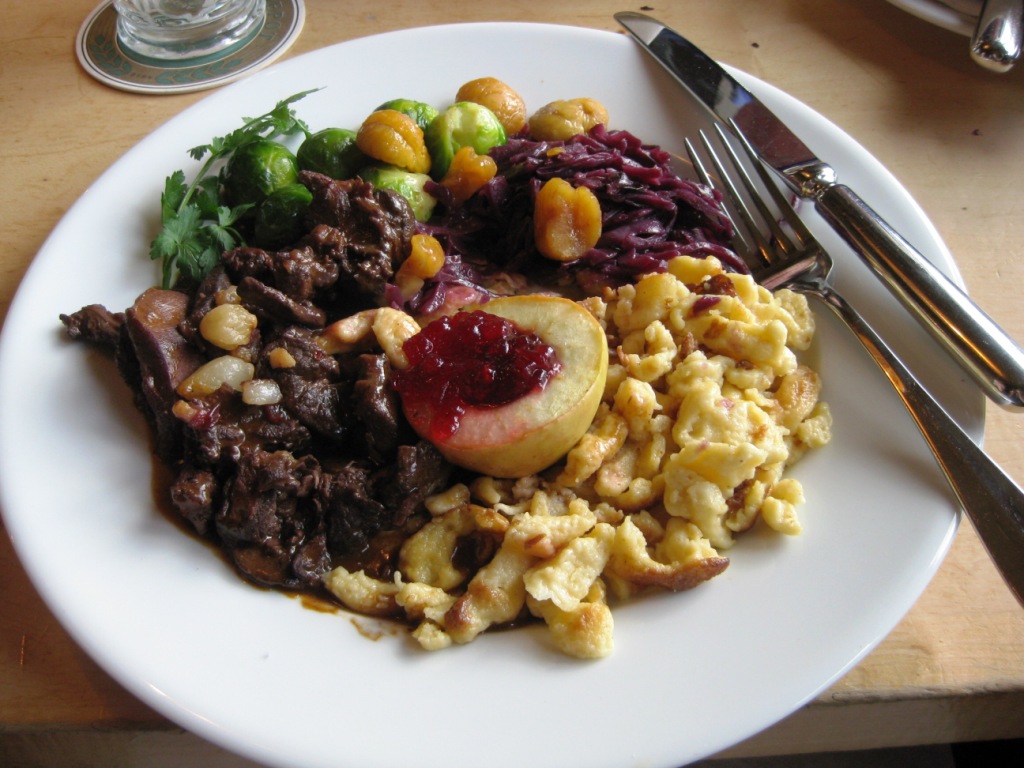
The Altes Tram Depot restaurant has traditional Swiss and "beer hall" food not to mention excellent beer. We have eaten here many times and it's always been good. Last time I had their wild (venison) shown in the photo, and our friends had Zurich geschnitzels (veal in cream sauce), Munich Weisswurst and spatzele - everything was tasty and high quality. It's a busy restaurant but service is quite good although it can get loud (after all it's a beer hall!). They have a wonderful terrace/ beer garden overlooking the Aare and historic center, it's a great place to have a beer and enjoy the view. (It's also on the #12 bus line to the Paul Klee Zentrum - bus stop: Barengraben).

On our last trip we had dinner in a wonderful restaurant called Brasserie Bollwerk. It overlooks the railway viaduct that leads into the Bern main station, so there's lots of trains going by (especially just before the hour and just after the hour, have you been paying attention?). They also have a nice terrace for outdoor dining, although it's on a busy corner so there is lots of automobile traffic. The restaurant is a member of Slow Food Switzerland and so much of the food is local and organic - they are also non-smoking! They have drawings from a local artist, the photo shows a set of postcards to help explain the local Bern dialect of German.

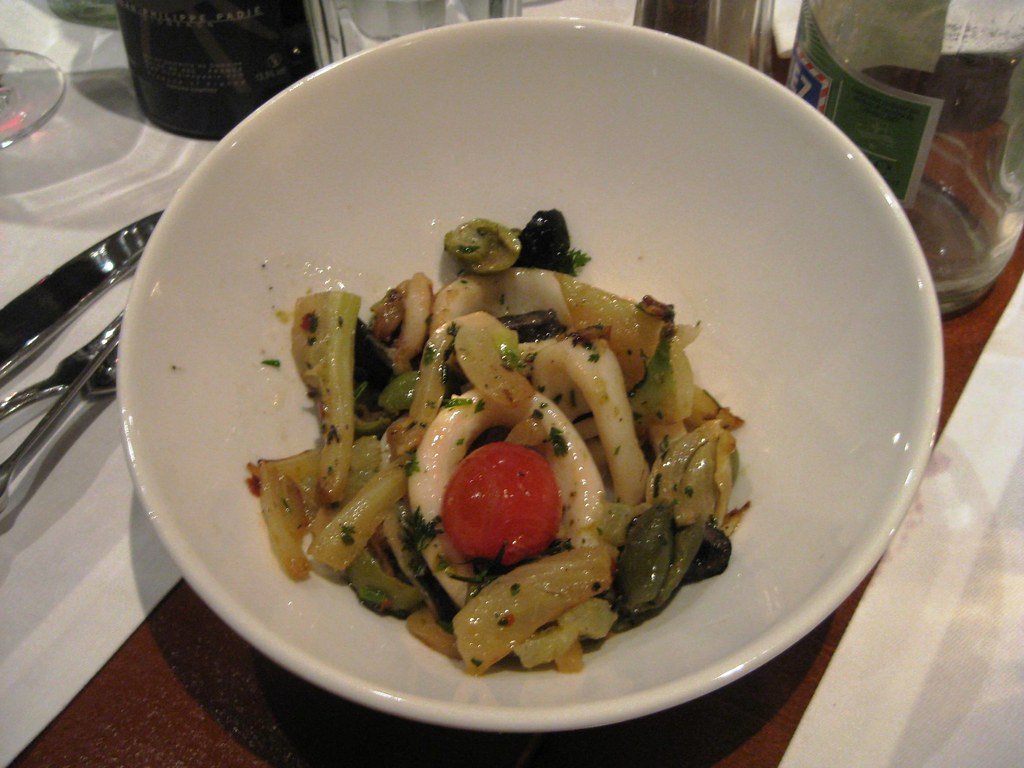
We started with a calamari and fennel dish (shown in the photo), then the special of the evening, a wonderful roast lamb (perfectly cooked) with potatoes and vegetables. Dessert was a really find chocolate mousse. They also had a wonderful Côtes du Roussillon wine that went perfectly with the food. The staff at Brasserie Bollwerk were friendly and efficient. They are open for lunch and dinner during the week.

Note that across the street in the ground floor of the rail station is the SBB Heritage Foundation library. This is not really a museum, but the historic archives of the Swiss National Railway. They often have small exhibits in the lobby area. They are only open on weekdays 9-12 and 13:30-17, and you need to ring the bell to visit.

We had lunch at another great restaurant called Moléson. One of my favorite foods is tarte flambée, the Alsacian pizza-like dish. I like the traditional version with creme frasche, muenster cheese, bacon and onions; Moléson's tarte flambée had a couple more ingredients, but was very tasty. The service could not have been better - they even let us substitute the traditional tarte flambée for the one on the daily special menu (a chicken-curry based model, maybe ala Wolfgang Puck's spicy chicken pizza, but, to me a bit of a travesty ...). We had a wonderful salad to start and coffee was served just right. The restaurant in the back looked excellent too (we ate in the front cafe). They also try to use local ingredients and organic food.
Saturday, March 27, 2010

The Bus from Curitiba


My latest music video: "The Bus from Curitiba" probably needs some explanation, so here's a little bit about bus rapid transit and then the words with a couple comments.

Bus Rapid Transit and Public Transit Priority
Curitiba Brazil is famous for pioneering the development of Bus Rapid Transit (BRT). In the 1970s the city decided to build a very efficient bus-based public transport network instead of a relatively short section of metro line (which would have cost the same amount of money). The results have been nothing short of fantastic.

Curitiba's BRT system has been replicated throughout the world, although not to the extent that it deserves. Many cities are seduced by the thought of rail-based public transport preferring the sexiness of rail over the benefits of creating a more comprehensive public transport network.

Rail-based public transport is critical in large cities where there is sufficient demand, but I think it's better to build an attractive and efficient public transport network - based on buses - and then replace buses with higher capacity rail lines when necessary rather then building 'starter rail lines' and hoping to attract riders. It's the network that enables people to get 'from everywhere to everywhere' thus addressing the oft heard complaint that "I can't get there with public transport."


For more information on Curitiba see: the great Streetfilms Curitiba video showing the system in operation and describing how it works; Professor Robert Cervero's excellent book The Transit Metropolis (which also describes many other interesting examples of public transport throughout the world); and the wikipedia article Rede Integrada de Transporte.

BRT can be defined as the systematic application of public transport priority techniques. Zurich is a great example of another approach towards systematically applying public transport priority techniques; rather than building any large project Zurich incrementally added improvements that speed-up bus and tram service over the last thirty years thus creating a fast and efficient surface public transport system. You can read more about Zurich in Professor Cervero's book and in some of my publications and on my website improving public transport efficiency.

The Bus from Curitiba - Words and Comments

I visited Curitiba to ride the buses in 1997. The city was extremely pleasant and enjoyable. In addition to the buses I remember a fantastic passion fruit smoothie. Here are the words:
Fast and fun and clean and quickly,
The bus from Curitiba comes cruising,
And when she comes the people all say ahh ...
When she moves she's like a Samba that
Rides so smooth and sways so gentle
That when she passes each one she passes says ahh ...
Oh I would ride her so gladly,
If transport planning wern't done so badly,
Yes, I would ride her so gladly,
But each bus that we put in a plan,
Just gets replaced by a tram,
Fast and fun and clean and quickly,
The bus from Curitiba comes crusing
And when she passes I smile
But we don't BRT
Not in our city,
No we just don't BRT.

OK, I am not being totally fair. Planning isn't always done badly, but as I outline above, I think too often we ignore the bus option (of course capital and operating funding programs also enter into the picture, but that's for another song). And, of course, trams make sense in larger cities with strong demand, but gladly and badly is a pretty good rhyme don't you think?

Sunday, March 21, 2010

Scoul Switzerland Recommendations


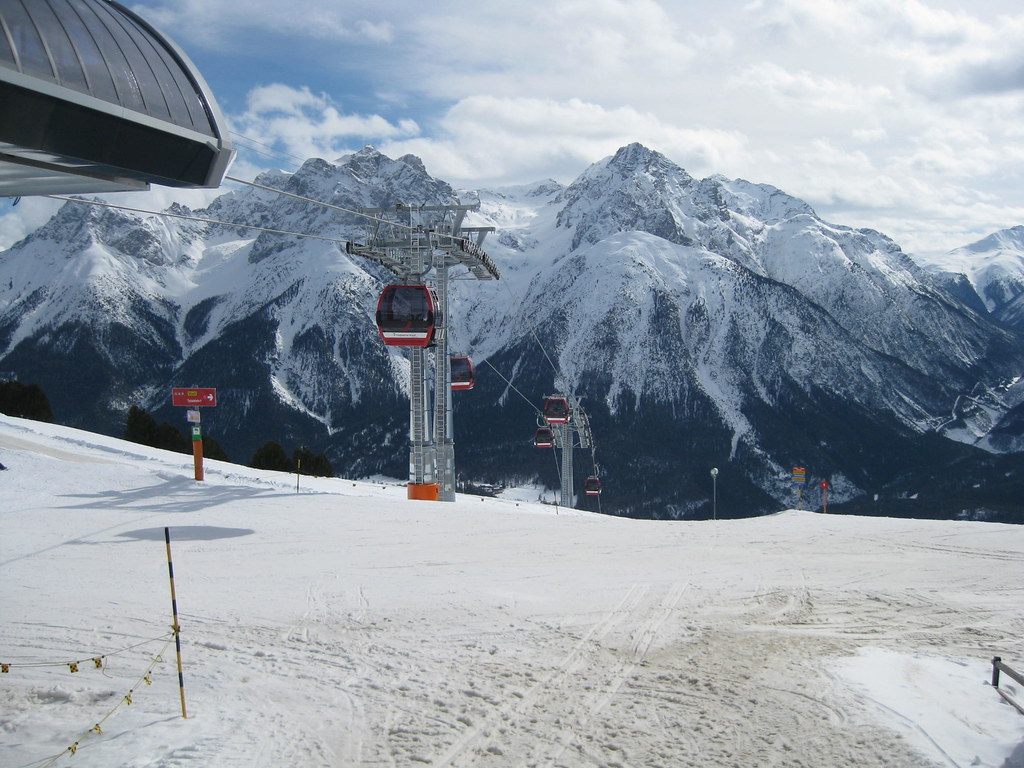
We returned to Scoul, one of our favorite places in Switzerland, for our ski holiday this year. The weather was great and the snow was fine. Scoul is about four hours from Zurich by railway. This post lists some of the reasons we love Scoul.

First, of course, is the Rhaetische Bahn; Scoul is the terminal station (shown in the photo above) at the southeastern end of the Engadine Valley (St Moritz is at the other end of the valley). The Rhaetische Bahn is a narrow gauge railway that serves the canton of Grabunden. It operates the famous Bernina Express and Glacier Express. This is a special year because the Bernina line is 100 years old. Anyway, the Rhaetische Bahn is exactly as you imagine a Swiss railroad: small red trains traveling through a magnificent landscape. If the weather had not been so good we would have taken a few joyrides over the Bernina Pass, but that will need to wait for this summer.

The skiing in Scoul is very good. Switzerland is spoiled for all the wonderful places to ski and Scoul, which would be on the top of the list in any other country, is not as popular as the more famous resorts. But, of course that has the positive side that it's a little less crowded and a little less expensive. The lifts are also a bit outdated (they have several Tee bars and old chairlifts in addition to the brand new gondola and a couple new chairlifts).

Another great reason to go to Scoul is the mineral bath. They have a relatively modern bath complex right in the middle of the town. My favorite part of the bath is the outdoor section with a view of the mountain peaks in the not so far distance (see the photo on their website). You can visit the bath for three hours (bring your own towel) or do something called the Roman-Irish bath, which is a two-and-a-half hour experience of going from sauna to massage to steam bath to different temperature mineral pools, followed by a half-hour rest. We've done both and they are highly recommended. You need to book the Roman-Irish bath in advance, see their website.

Scoul is a tourist destination and there are many places to eat and sleep. The old town down the hill from the main street, has wonderful historic architecture and traditional guest houses. The main street has several historic and modern hotels with all the comforts you would expect in Switzerland.


We have stayed at the Hotel Traube, an historic hotel, the Hotel Curuna, a very nice hotel with a very good breakfast, and Chasa Sofia, a four-room bed and breakfast that is out of this world. All three are located right in the center of Scoul, within five-minute walk of the bath.


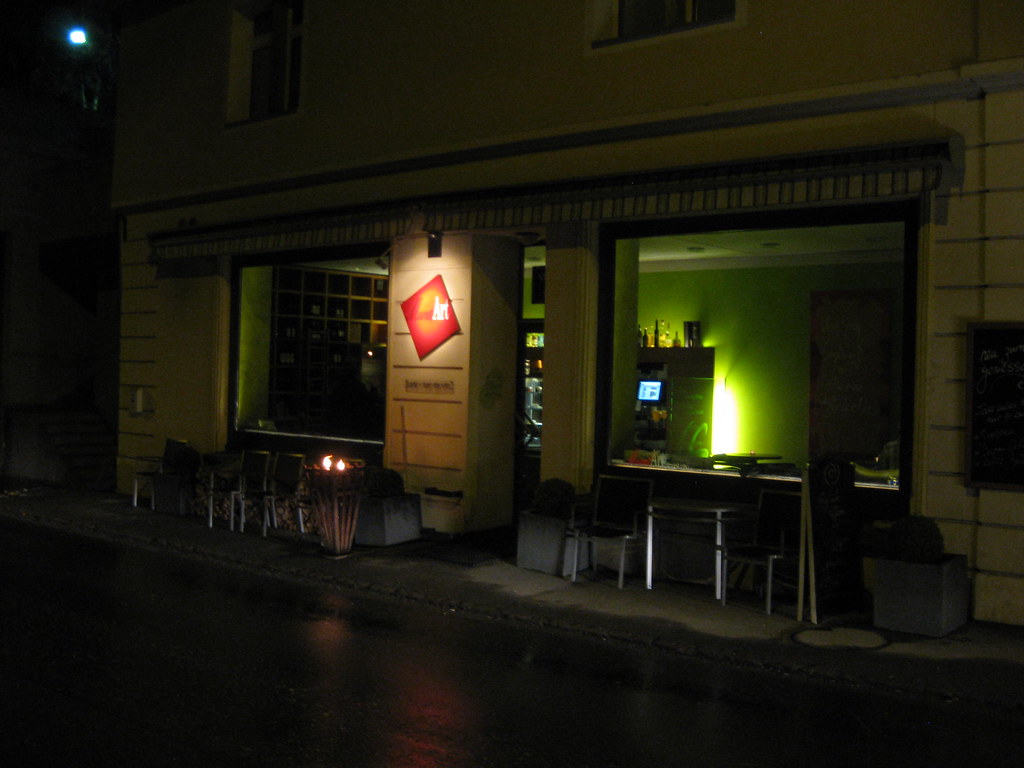
Finally there's lots of great food in Scoul. We visited a wonderful cafe on our trip in February: Mund Art. It's a great place for cake and coffee or a drink anytime (try the local beer: Biera Engiadinaisa). The people are wonderfully nice and friendly, the owner gave us a tasting of his homemade chili pepper syrup.

We had a wonderful dinner at the Hotel Traube restaurant (they also have Biera Engiadinaisa). Their wine list is superb, they probably have 50 different wines from the Canton of Grabunden; we had an excellent Pinot Noir (Blauburgunder) from Annatina Pelizzatti. We all had variations of venison (Wild), either steak (shown in the photo upper left) or stew with spatzele, one of my favorite wintertime mountain village dishes.


Finally, no trip to Scoul would be complete for us without a visit to the Pizzaria Giovanni adjacent to the Hotel Curuna. They have a wood-fired oven, use local organic ingredients where possible and have a wide variety of dishes beyond pizza, but the pizza is great. Service was a little scattered on our visit but the food was fine.


We can't wait until our next visit to Scoul!

Tuesday, March 9, 2010

City Models and Miniatures

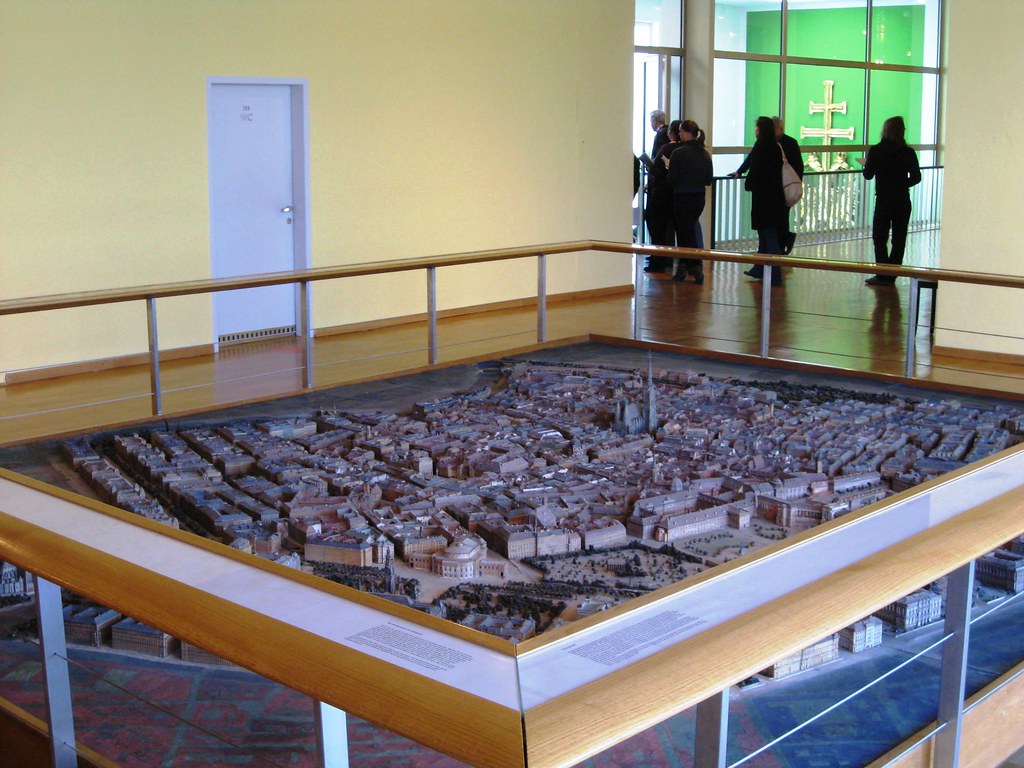
Wien Museum model of Vienna in about 1900 from my flickr photos.

Here's a great post from the Web Urbanist on 22 miniature cities ... different physical and virtual models of cities (I learned about it from Planetizen). I especially loved the film by Sam O'Hara "The Sandpit" at the end of the article.
Here are some more examples of physical models for the list:
  • San Francisco - when I studied at the UC Berkeley City and Regional Planning Department Professor Bosselmann had a laboratory with a miniature San Francisco; it was used to model how new buildings fit into the visual environment;
  • San Francisco - there is an old model of the city that used to be in the Powell Street BART station ... but I have not seen it in a while.
  • Zürich - the planning department has a large model of Zürich today (German) cut into sections mounted on wheels so you can move the sections (they are on tracks) and then walk through a cross section to find yourself in the middle of any neighborhood;
  • Zürich - the Zurich city archives museum has a nice model of Zürich around the year 1800, the museum is a delightful place for history buffs and is located on a wonderful square in the old city (try the Neumarkt Restaurant across the street for a nice lunch or dinner). 
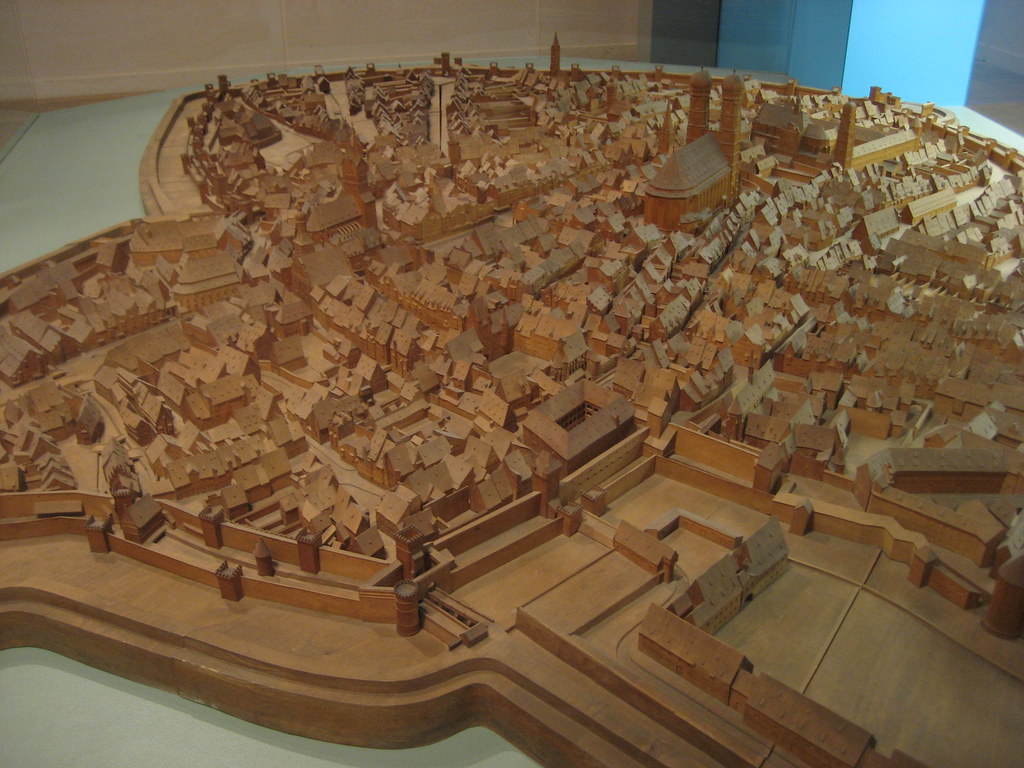
  • Munich - the Munich city museum has a model of the city in 1570 and a nice brochure (available in English) about city development (Munich as Planned). The model (shown in photo) is a copy of another model that is in the Bavarian National Museum. The Munich city museum is well worth a visit (have lunch at the Vitualmarkt - one of the greatest urban spaces in the world! - in good weather, try Der Pschorr at night and if the weather is bad).
  • Vienna - the Wien Museum (the city history museum) has two models at about the same scale (one on the second floor and one on the third) showing the city in about 1800 and in about 1900 (overview shown above and detail shown at the right). The Wien Museum is well worth a visit, here's a link to my Wien Museum flickr photos set.
Add more in the comments!

Tuesday, August 11, 2009

Moving Sidewalks: Back to the Future?


There's a great article on the history of moving sidewalks in New Scientist Magazine (thanks to Planetizen).

I think moving sidewalks, or some other type of continuous transport system, would be a great feeder system for regional (US: commuter) rail systems. This would enable the stations to be located a bit further apart in urban areas than in a 'normal' subway system - reducing operating costs and making service on the regional system more attractive (fewer stations = faster). Regional rail systems build with this model could follow the Zürich S-Bahn model, many lines operating through a central section that branch to different suburbs when they leave the center.

An interesting compliment to the moving sidewalk/continuous transport system would be combining it with attractive urban design, in other words give the people traveling on the system something interesting to look at while traveling. I recently had the idea of creating such a system in Abu Dhabi as part of their new Metro project. In this case the continuous system could travel through a traditional Arab linear market street setting. The market street would be protected from the weather in traditional ways, thus reducing energy use. The project would combine 'new' urban development with the transport system. More on this idea later.

Thursday, July 30, 2009

Swiss Travel System Video Contest!


Here's my entry in the Swiss Travel System's video casting contest. Please take a look and rate the video highly ... extra points for those who know what I am alluding to ... send me a comment! Thanks, Andy

Saturday, July 4, 2009

Hallwylerhof restaurant Zurich


I recently had dinner with friends in Zurich at a restaurant called Hallwylerhof. It was updated Swiss food, very nicely prepared and served. The workers were also very friendly and nice. However, the decor caught my eye.

As many of you know I collect photos of WC signs (website coming soon - I hope). I think that it's one of the few places people can be creative these days ... some people at least.


The Hallwylerhof restaurant had a very whimsical design where many items were painted in a sort of primitive style on the walls, for example three framed old postcards from the Swiss mountains with a simple drawing in the middle of them that looked like a postcard.

Given the quality and whimsical-ness of these paintings I knew I was in for a treat when I went downstairs to the WC (no comments please!). And, sure enough, some of the best WC signs I have collected ... my flickr Hallwylerhof photos and all my flickr WC sign photos.

Hallwylerhof Restaurant and Bar: Hallwylerstrasse 43, 8004 Zurich, www.hallwylerhof.ch

Wednesday, June 3, 2009

Oh Lord, won't ya buy me a cobra tram?


Finally a new music video. Just before heading out to dinner with friends in Zurich I heard Janis Joplin's Mercedes Benz song. All I can say is that it was inspiring ... and I am not the only one, there's lots of versions on YouTube.

We went to dinner at a great little neighborhood restaurant with big windows on one of Zurich's public transport priority streets. All night long trams passed by until finally it clicked ...

Cobra trams are Zurich's new low floor streetcar. They were a bit undependable when they first arrived although seem to be doing well now. They are quite elegant: big windows, lots of room around the doors to move in and out, nice seats, clean lines and quiet. Their wheels are independent (in other words there is not a common axle between wheels on either side of the streetcar) which make them very quiet.

Unfortunately as the public transport vehicle manufacturing industry has consolidated over the last few years the major manufacturers have discontinued the "cobra" design, so Zurich's are unique. Here's a press release by the manufacturer Bombardier describing the cobra trams (PDF).

Thursday, April 16, 2009

Rainy Saturday on the Glattalbahn, Zurich


On our recent trip to Zürich we rode the Glattalbahn (German) from Zurich Airport into the center of Zürich. The Glattalbahn is a new rail line that combines aspects of a tram (streetcar, light rail transit) line with regional rail. It operates on the city streets in Zürich and then on its own right of way outside the city.

The Glattalbahn was very carefully planned and has lots of interesting features that you can see in this film including very well designed stations, sensitivity to the environment (tracks laid on grass, lines of trees), including the whole street in the improvement project and connectivity to other public transport. I hope the film does justice to some of these, sorry about the rain!

Zurich: Restaurant Karl


On our last trip to Zürich I had a great lunch at Restaurant Karl in the Zentrum Karl der Grosse, which is right next to the Grosse Munster.

The Zentrum Karl der Grosse is operated by the city of Zürich and offers a large variety of social and cultural programs. For example they have integration classes for immigrants, art programs and sometimes concerts. The restaurant offers training to disadvantaged persons and eating there helps support the programs.

We ate there several times when we lived in Zürich and the food was always very good. It's fairly simple: pastas, rosti and grilled meats. They offer a nice selection of wines by the glass, most from nearby (especially good are those from the Kloster Ittingen, which also brews a great Klosterbrau beer). An added bonus: it's smoke free ... still a rarity (unfortunately) in Zürich.

On this visit I was drawn in by the promise of Barlauch. Barlauch is something I never had in the USA, it's a spring herb that you make pesto out of, it's a natural garlic. I can't get enough of it (in fact we made five bottles of pesto last week). Anyway, I had it on top of the Zürich standby Rosti (home fried potatoes). It was fantastic, check out the photo. Although they did look at me a bit oddly when I asked for extra Barlauch, they brought me a nice little pitcher full. Lunch with water and coffee cost about 35 Swiss Francs.

Tuesday, March 17, 2009

Spotted by Locals


I just found out about a great website/blog called Spotted by Locals it consists of postings by people living in different cities. It's similar to some of the postings I have made for restaurants and things to do in different cities (i.e. my San Francisco pages and Zurich pages), but better organized! I checked a couple of cities I am familiar with and they had some good tips.

Saturday, March 7, 2009

Incredible Railway Information Technology Story


In an article entitled How RailCorp's derailing commuter 'apps' the Sydney Morning Herald reports that RailCorp, the railway operator there, has sued independent developers of applications that enable real time schedule data to be read from mobile telephones. RailCorp says that the schedules are out of date and might confuse passengers.

Hmm ... maybe RailCorp should provide up to date schedules?

This is a good example of the types of social and institutional problems preventing railways (and public transport in general) from being as successful as they could be. As ETH Zürich Professor Ulrich Weidmann said in the 2008 IT08.rail conference, railway customers expect a very high level of information since that is what they have in their cars with GIS etc. Just today, the NY Times in Have Smartphone, Can Travel about the latest applications for drivers. If railways don't provide quality information using new technology, they will lose customers.

Fighting new technology and the social systems that grow up around these new technologies (e.g. open source, Web2.0) doesn't work. Just look at how successful record companies have been fighting music downloads. Only iTunes has worked because it makes it easy for users and is based on new technology.

Companies, especially railways, need to embrace new technology and support developers of applications that make their systems better and more attractive to customers. More about information technology in the railway industry in our papers: Can Information Technology Help Rail Play a Greater Role in Preventing Climate Change? and From Engineers to Entrepreneurs: The need for social innovation in high speed rail systems.

Friday, February 27, 2009

More Amsterdam, less suburban-dam!


Amsterdam street scene, March 2008


David Brooks, a syndicated columnist from the NY Times, had a column this week titled "I dream of Denver" basically saying that most Americans did not want to live in Amsterdam (i.e. "dense" older cities). Paul Sighley, who writes a blog for the California Planning and Development Report, took issue with Brooks, and believes that the poll upon which Brooks based his column really shows that Americans want options beyond suburban sprawl. He says,
It makes me wonder if we have built enough suburbia to last us for another a generation or two. Maybe, just maybe, we in California should be focused on making cities – whether they be like San Jose or Anaheim – better places to live. Maybe we should make our small towns – whether it’s Chowchilla or Ukiah – complete places to live, learn, work and recreate. And maybe we should pause before we convert our rural places – whether it’s the Salinas Valley or the Sierra foothills – into suburbs.

Most planners are not advocating for an American Amsterdam, and neither am I. I’m only pointing out that not everyone – nowhere near a majority, according to Pew – wants to live in Roseville.


As a former Californian who has moved to one of those old European cities, I can only say I really enjoy the urban lifestyle and hope that California can develop more real urban areas like San Francisco and Los Angeles. Maybe the economic crisis maybe will give us the opportunity to "reset" into a more sustainable and exciting built environment.

Tuesday, February 24, 2009

Zurich: Kronenhalle Restaurant


We lived around the block from the Kronenhalle Restaurant in Zurich for about seven years, but although we visited the bar a few times, we never ate at the restaurant. Last week we took the plunge (well, actually, we were invited).

The Kronenhalle is one of Zurich's most famous restaurants. It was a meeting place for artists including James Joyce and Marc Chagall. Rumor has it that some artists paid for their meals in pictures and the owners were collectors. Consequently, the restaurant and bar are filled with excellent art.


The Kronenhalle is classic. Waiters in white, an elegantly dressed Maître d' and assistants in black with white aprons. One funny thing, especially if you are not from Zurich, is that they serve Burli rolls (I describe them here). These rolls are extremely crusty and, as you can see from the photo above, leave crumbs all over the white starched table cloth; but they are classic in Zurich.

We started with celery-chestnut cream soup and nussli salad (lambs' ear). The nussli salad was served with a nice french cream dressing; it's very popular in Switzerland. Both starters were excellent.

For our main courses my wife and I shared the rack of lamb for two and our companions shared the Chateaubriand for two. Both dishes were presented to the table, then taken to a carving station for plating.

They use an antique plate heating device that's a bit scary to see in operation, but elegant. The meal is served in two settings with fresh plates for the second helping. The meat and side dishes were cooked perfectly. We all ordered the profiteroles for dessert and they were also quite fine.


Since we were guests I can't say what the whole meal cost, but the prices, while high, are not significantly more expensive than in other Zurich restaurants especially considering the experience. The Maître d' said that the Zürcher Geschnetzeltes are the house speciality and they looked quite good. As a comparison Zürcher Geschnetzeltes cost 54 CHF at Kronenhalle versus about 40 CHF in many other restaurants.

Zurich Real Time Public Transport Information


As I have written before, the quality of Zurich's public transport system never ceases to amaze me. We visited last week for the International Association of Railway Operations Research (IAROR) conference and had a chance to catch-up with what they have been doing since we left. The biggest change for me is the real time public transport information systems.


All the new vehicles and most of the old vehicles have been outfitted with television monitors that display the next three stops, travel time to these stops and the final destination. Next to each stop all the connecting public transport lines are listed. That's pretty good, but it gets better.

As the bus or tram approaches a stop where there are connecting public transport lines, a second screen shows the departure time of the connecting lines and displays any delays for the particular line (see below). This gives you time to re-plan your route if something is delayed (although lines are seldom delayed in Zurich!).


The on-vehicle system is complimented by real time displays of bus and tram arrivals at all the main bus/tram stops and many of the smaller ones. The displays are simple and easy to read. These are very common today, but the extent of their deployment in Zurich is noteworthy.

As shown on the photo to the left, real time train information is also available on Zurich's S-Bahn (regional rail network), although the transfer of real time S-Bahn data to the Zurich city buses and trams did not seem to be working yet. It's probably only a question of time, the highly innovative and successful StadtbahnZug! S-Bahn system in Zug Switzerland was experimenting with providing local transit information in the trains several years ago.


I am not sure if Zurich's system is unique, but I have never seen a similar system so it might be. In any case it's an excellent example of providing real time public transport data. It's so good I am working on a parody music video of it, you'll see the video here first!

Friday, February 20, 2009

More Public Transport Announcements

My friend who was so impressed with Nice and the public transport announcements there wrote back to me when I asked if I could quote her, with the following:

Your note made me think a bit more about transit announcements, the fundamental question being, "Who should be speaking?" Is it the management of the transit service, as appears to be the default choice, deciding how it should be represented to the public? Is it the driver, who might be speaking if there weren't a recorded announcement? Or is it the community: specifically, the transit-rider part of the community? While of course professionals would have to make sure that most riders could understand the thing, I like the idea of the voice representing more of the actual participants in the transit experience, that is, either the driver or the riders.

All excellent questions I think.

Reflecting on the idea that the announcements should represent the actual participants in the transit experience I am reminded again of one of my favorite quotes (about half way down page) from Alain de Botton about Zurich and its public transport system ... essentially that everyone in the city from the Mayor to the very young school children use it. In which case the announcements would truly represent the entire community, a nice civic gesture.

Public Transport Announcements

I am preparing a post about Zurich's real time public transport information system, but here's another interesting item. A friend wrote to me from Nice:

How's this for a charming transportation refinement: I'm staying in the old city of Nice (not a bad town, either) five tram stops from the train station. As you get to the first seaside stop, the recorded stop announcement is followed by the sound of a wave breaking. The next stop is the opera house, which is announced in French and then in Italian. The next stop is the regional bus station, which is announced in French in then in English. Then they go back to announcing just in French. Cute, eh?

They have men and women's voices, young and old, changing for all five stops I've heard so far. Why NOT have an eight-year-old or an 80-year-old announcing the stops? I've always thought that the recorded announcements in San Francisco should use men's voices with the local black San Francisco accent because that's who drives the bus, instead of woman-like machine voices from Ohio somewhere, but I like this idea even better.

I think this is a great idea. Not only does the variation in voices and audio clues (wave breaking) add some creativity but it also helps remind you where you are in the city. The WienerLinien (Vienna's public transport operator) had a recording come on between two stations of a child asking you not to leave your newspapers in the trains. I loved hearing it because it was so different and unexpected (even though I heard it between the same two stations every day!). By the way, after being asked so nicely I never left my newspaper again.

Friday, February 6, 2009

JetBlue Terminal 5

Patrick Smith has a different opinion about JetBlue's new Terminal 5 than mine. I do agree with most of what he said, although I kind of like the retail in airports especially the more interesting shops like Muji To Go that we don't have here in Vienna. I did not find the terminal crowded, but as I mentioned in my blog post, I traveled at a non-busy time.

Smith asks why we can't build better airports. I think we simply don't spend the same amount of money on these projects as other countries. In the USA the airlines need to partially pay for the airports through their landing fees and they (especially now) really pinch pennies.

The Zurich airport is operated by a private company called Unique. They purchased the airport from the city several years ago. I find that airport very nice, however the Swiss seem to have a very high quality of building (everything) that is not so often seen in the USA. They use quality materials everywhere and these materials last.

Anyway, Smith is right, it's too bad our airports can't be more like the grand train stations of the past. The NY Times had a great article by Simon Winchester called Cathedrals of the Iron Horse, Awesome Again that captured some of the glory in these stations.