I visited Prague last week for a conference on urban railway track construction best practices (more on the Urban Track conference in a future post).
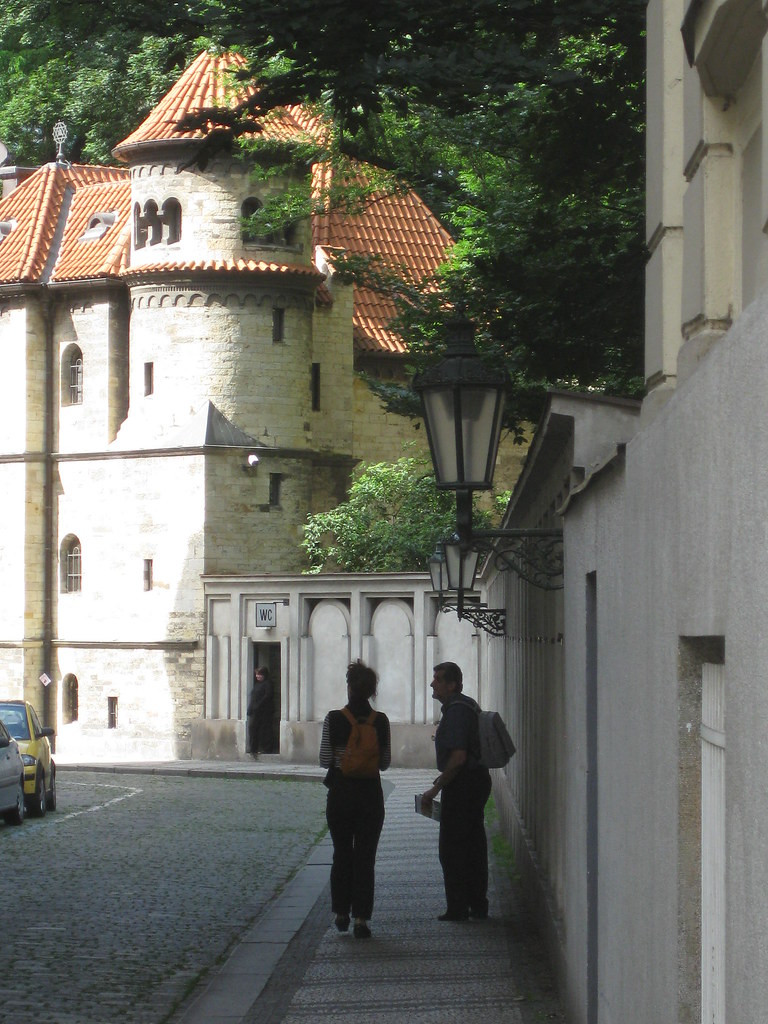
Prague is a fantastic city: you can walk from one highlight to the next. One of my favorite neighborhoods is the old Jewish Quarter. I have visited the historic sights before and so now I just like to walk around the neighborhood, being gently reminded of the Holocaust.
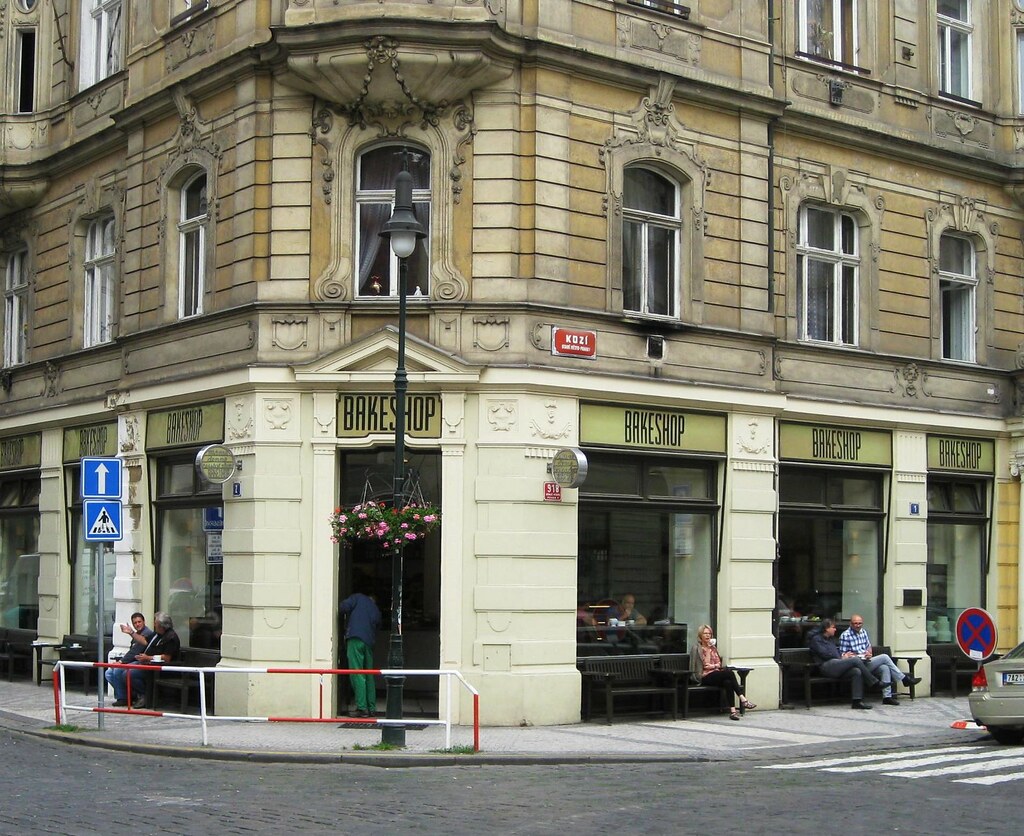
Many buildings in this neighborhood were built at the turn of the 19th Century and are Jugendstyle (Art Nouveau) – perhaps my favorite building style. I skipped breakfast in my hotel both days and walked to a really fine bakery-cafe called Bake Shop for espresso and pain au chocolat … a real treat (some Prague Bake Shop photos here).
The weather was beautiful and I could sit out doors and enjoy my breakfast. One of the things I love about Prague is that it is so quiet on the streets (at least in the center) and so you can really enjoy sitting outside eating.
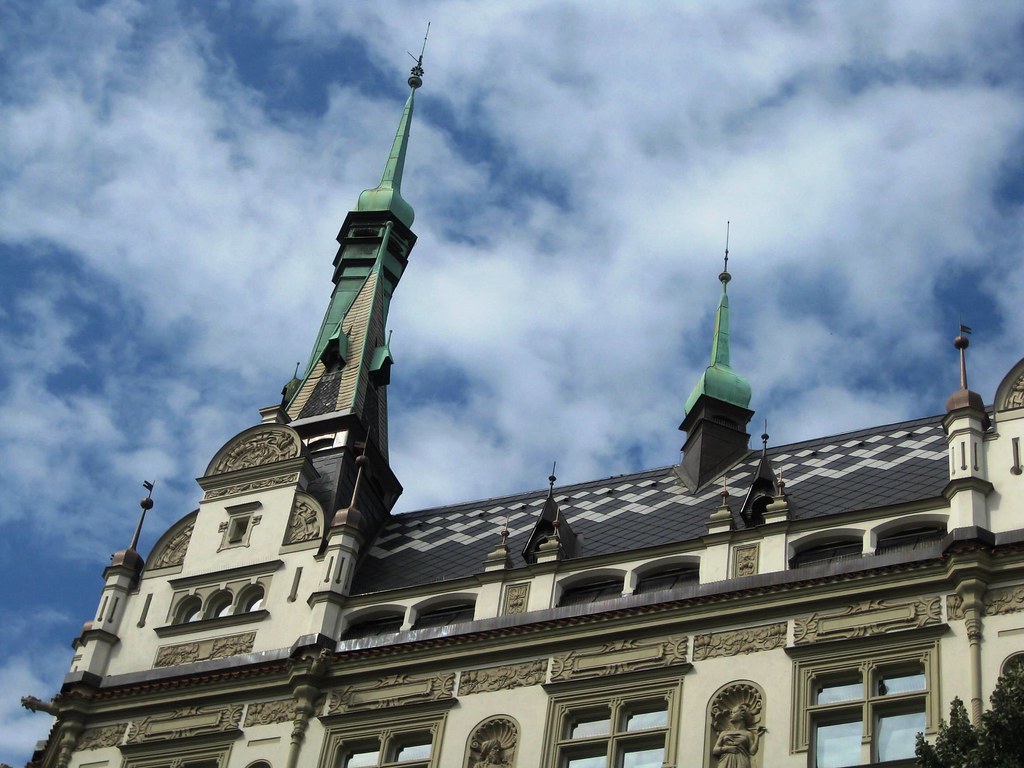
As I was leaving I noticed how the roof lines were making nice patterns against the clouds and started taking photos of rooflines meeting the skyline. Many of the photos are buildings from Parizska street and the Jewish Quarter. I couldn’t help but notice that today’s contribution to how buildings meet the skyline is generally cellular telephone antennas or satellite television disks.
Another really cool thing I noticed about Prague is the very large number of arcades running through buildings between streets. I talk about Prague’s arcades in future post.
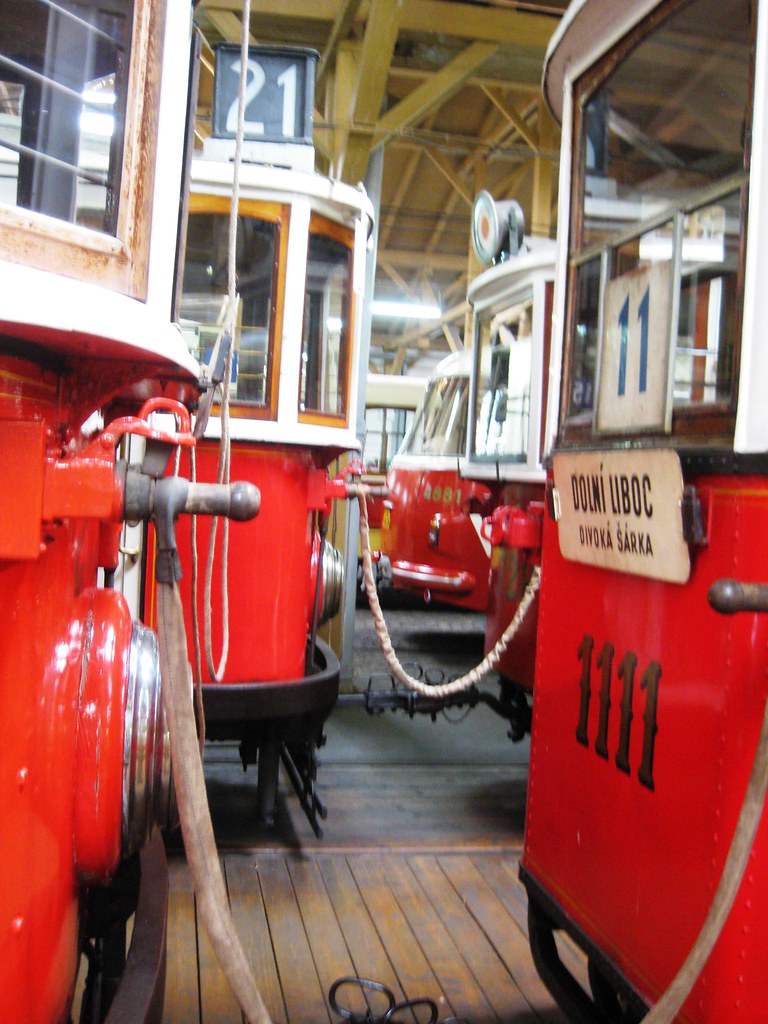
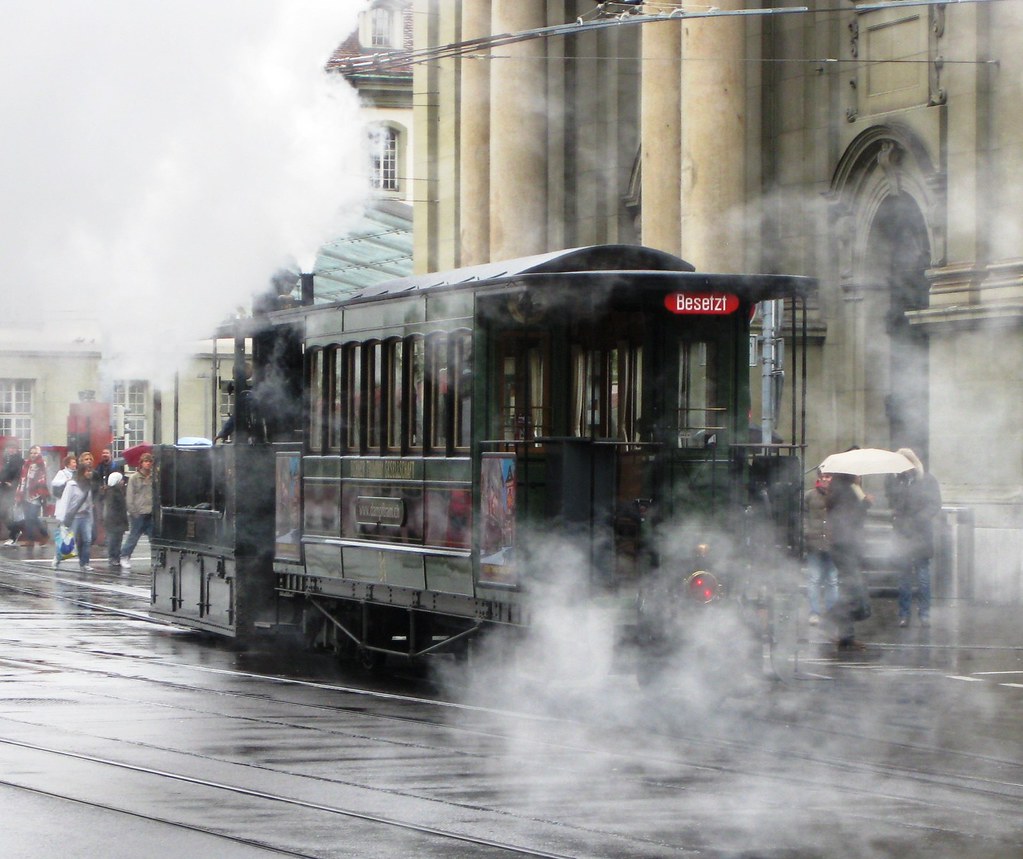
After the first day of the conference we had a reception at the Prague Tram Museum (website lists all Prague museums, scroll down to tram museum info). The museum is really great, many old vehicles all very well restored. It is an old tram barn, naturally, and it has been very nicely cleaned up. The descriptive texts are in the Czech language, but there is a brief guide for the museum in English. It’s one of the better tram museums I have visited. (Some photos of the Prague Tram Museum are here.) Here's a link to information about historic trams in Prague.
The reception was very nice, good food and local beer/wine. They served a very nice Goulash made with lots of cumin and also green beans. As a real Goulash fan I enjoyed it very much. Another nice touch was a six-piece jazz band. They did lots of standards including Girl from Ipanema … of course after hearing that I talked to the band leader and “casually” mentioned that I had written new words for the song (The Bus From Curitiba) thinking he might suggest that I sing it, but alias that was not to be, so the YouTube version will need to be it for now, but they were really good and what a wonderful place to perform the song. I’ll keep looking for more opportunities.

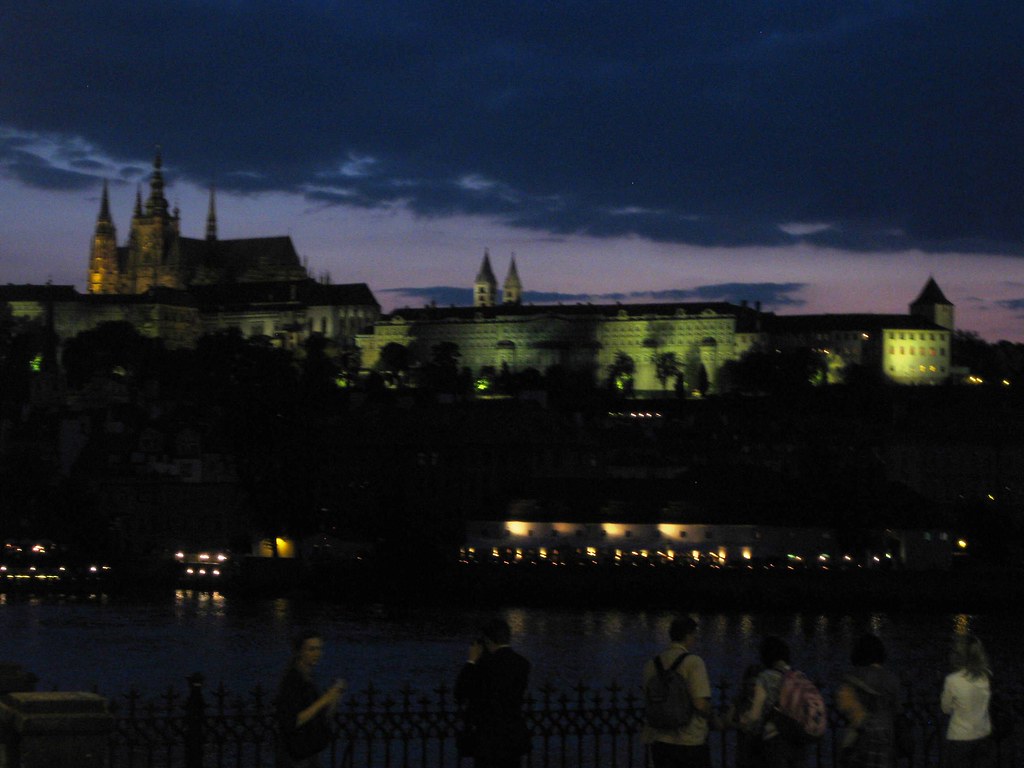
After the reception we took a night walk through the city, first stopping at the main square where live outdoor viewing of the world cup was going on, then through the old city to the Charles Bridge, it was dark by then, but everything is well lighted. Over the bridge and then up to the castle where there were only a few people, but again, everything well lighted. Then back down the hill to the hotel where I had to wake up early to make it to the Bake Shop before the conference started.
I’m writing from the train on my way back to Vienna. The fast trains between Prague and Vienna seem quite crowded (especially 1st class – many tourists). On the way to Prague there was only one 1st class wagon – with several children playing video games (with the sound turned on) and two infants crying … so it was really not relaxing. Today the air conditioning is not working very well - in the second 1st class wagon it's not working at all! The railways really need to do a better job!
A colleague from San Francisco was in town last week and, as usual, visitors call attention to the things you don't always notice as you go about your everyday business. I have been following his blog (Jarrett Walker, www.humantransit.org) and added a couple comments and then thought, well one of these comments is something I've wanted to write about myself for a while, so here's a first installment on Otto Wagner and his influence on Vienna transportation planning.
Otto Wagner is a fascinating example of an architect who also did some great urban civil engineering. There is a nice exhibition of his work at the Wien Museum's Otto Wagner Pavilion located in the Karlsplatz U-Bahn entrance (designed by Wagner). The museum is very small but manages to present a good summary of Wagner's work.
Also don't miss his Hof Pavilion (German website, nice photos) a private station designed for the Kaiser at Schönbrunn (the Kaiser's summer palace). The Hof Pavilion is adjacent to the Hietzing U-4 station (one station beyond the Schönbrunn station). Right now it's only open on Sunday mornings (see German website for times) but well worth the visit for fans.
Of course you can still see Wagner's influence in the design of many stations on the U-4 and U-6 lines. Both these lines were operated with steam engines in Wagner's day (he developed the conceptual plan for these lines as well as designing many of the stations and infrastructure). The photo on the right is of his famous bridge on the U-6 line over the Vienna River at the Gürtel. The photo is taken from the U-4/U-6 Längenfeldgasse Station.

Vienna has done a wonderful job restoring many stations designed by Wagner. A couple years ago they rehabilitated the Gumpendorferstrasse Station (U-6) - shown at the top of this post. They did a great job integrating new features (e.g. elevator) and new floor tiling (rubber non slip) that matched the old style. It is great that Vienna does not eliminate history from their transportation infrastructure in the name of efficiency or current fashion. As places like NY Grand Central Terminal show, old pedestrian flow designs often work much better and the buildings are much more gratifying as many modern designs.
 I attended Volvo's Urban Transport Conference in March and as part of the conference a group of us toured the Volvo Museum (there's my photo driving a bus). But I just learned that Nils Bohlin, an engineer at Volvo invented the three-point seat belt. The full story is in Wired's Autopia The 3-Point Seat Belt Turns 50. Bohlin and Volvo made the design freely available and according to Wired, Bohlin’s invention has been singled out by German patent registrars as one of the eight patents to have the greatest significance for humanity during the hundred years from 1885 to 1985.
 A couple weeks ago we visited the Museum Tauernbahn Salzburger Eisenbahnmuseum (the Tauern Valley Railway Museum). The museum presents the history of the railway line that connected Salzburg with routes to Trieste (the main port city for the Austrian-Hungarian empire.
The museum is small but quite nice. You can reach it by taking the train from Salzburg to Schwarzach St. Veit - about one-hour trip. The museum is a few steps away from the station. If you come by train they give you a discount (3 Euros instead of 4-5 Euros).
The museum focuses on building the rail line through the alps. It has an old tunnel drilling machine, describes the construction process, the history of selecting the alignment and has a model of one of the worker bedrooms. Outside you can climb on an old locomotive and there is an old maintenance hall with exhibits on the signaling/interlock technology, power distribution and a model "station". Upstairs is a model railway (currently being completed) of the rail line.
 The museum is open from May to early October Wednesday, Saturday and Sunday (and some Thursday nights) - check the internet site for details. The descriptions are in German, but the people are very helpful and many of the exhibits are self explanatory.
Here are my flickr photos of Tauernbahn Eisenbahn Museum.
Wired is having a new contest for people to upload photos of their model trains. We don't have a model train at home, but maybe you do? Here's the link to WIRED Model Trains.