Pages

Showing posts with label San Francisco. Show all posts

Thursday, August 5, 2010

Thanks for the votes!


I've been traveling, but the big news is that my Singfrancisco music video won one of the runner-up prizes in the Swiss International Airlines contest promoting their new service to San Francisco. I won two round trip tickets for a flight in Europe ... cool! You can still see the video on my YouTube channel.

By the way, as I was catching up with my reading I checked James Fallows' blog and he had a post recommending Pamplamoose (links to their cover of Lady Gaga Telephone on YouTube). They are really fantastic and show how good a modern music video can be ... highly recommended!

More when I recover from my jet lag.
Enhanced by Zemanta

Monday, October 12, 2009

San Francisco Airport - Caltrain South


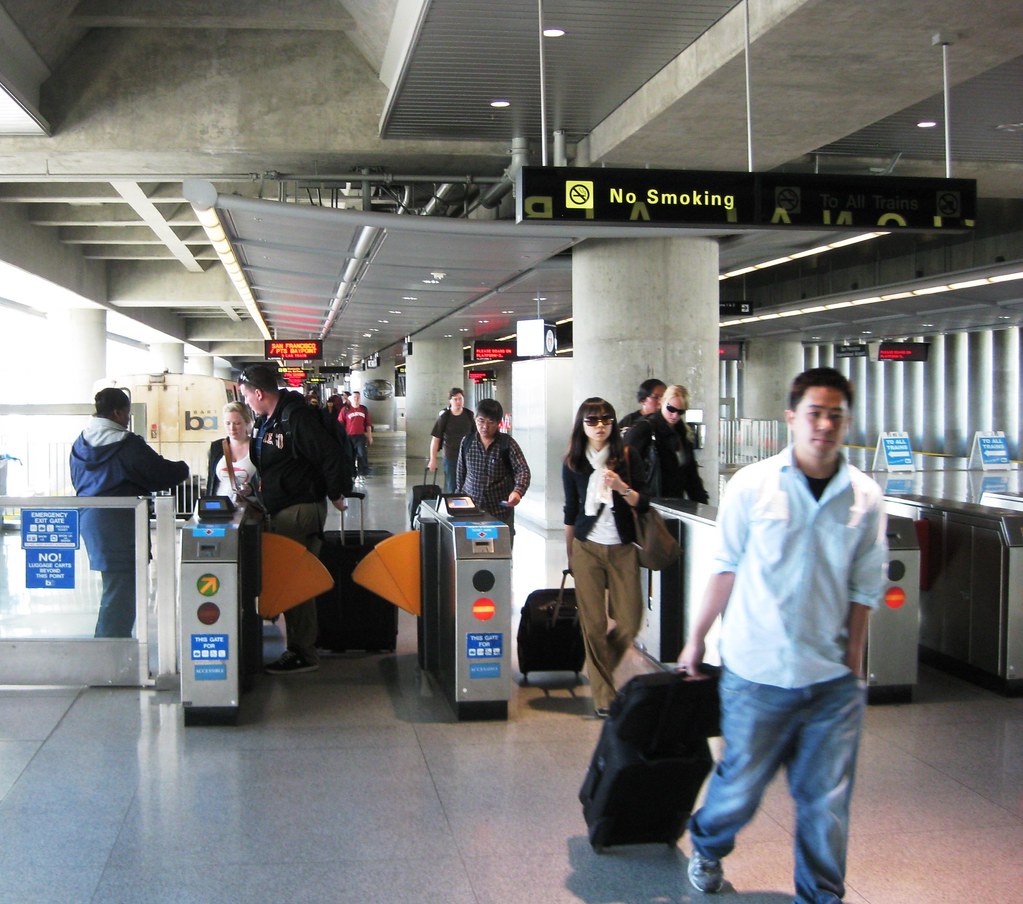
Continuing my USA travel adventure, from Boston I flew to San Francisco. I lived in San Francisco for about 20 years during which there were probably 20 years of controversy over extending BART to San Francisco Airport. Eventually a plan was approved and the extension was opened several years ago. While it works pretty well for trips to San Francisco and the East Bay (although it costs $8.10 now from downtown San Francisco - fairly close to the cost of a shared ride shuttle), the design is really awful for persons heading south on public transport (as predicted by public transport advocates during the planning process).

The first problem is ticketing - always a hassle in the San Francisco Bay Area! (See Paul Shigley's blog.) You need to buy a ticket for BART at the Airport Station ($2, I think the transfer to Caltrain was supposed to be free!). Then, after exiting BART in Millbrae, you need to buy another ticket for Caltrain at the Millbrae station.

If the Bay Area public transport operators cannot agree on a common ticketing system (see next paragraph), at least there could be a Caltrain ticket machine at the SFO BART station so that people could save time (and possibly not miss a train - I had this happen more than once! - waiting to buy a ticket at the Caltrain Millbrae station) by buying a ticket there. Or, thinking more creatively, the BART ticket machine could sell a special Caltrain Ticket that could be used on BART and had the Caltrain destination zone information printed on it - one ticket. There are probably lots of other creative solutions to this problem as well.

Back to the Bay Area's perennial problem of common public transport ticketing. It's really hard for anyone who has traveled outside the USA to understand the problem. Paper-based zone ticket systems have been used in European cities for probably 30-years. It's simply a question of political will and having a regional agency that is willing to force the different public transport operators to cooperate. The Bay Area's MTC seems to lack this political power, too bad.

It's important to understand that developing these common ticketing schemes is not easy in European cities either. Many European regions have used incentives such as major capital projects to encourage participation by reticent public transport operators (this was done in Zurich: the voters said no money for the new regional rail system improvements if ticketing and schedules were not coordinated). It seems that in the Bay Area the independent public transport operators have more clout with the federal government capital programming than the regional agency, so they ignore coordination.

The Bay Area is rolling out a new electronic stored value card system called TransLink to reduce the need for different tickets. TransLink has been under development for as long as I can remember - while bigger cities like London and NY have already implemented very successful electronic ticketing systems.


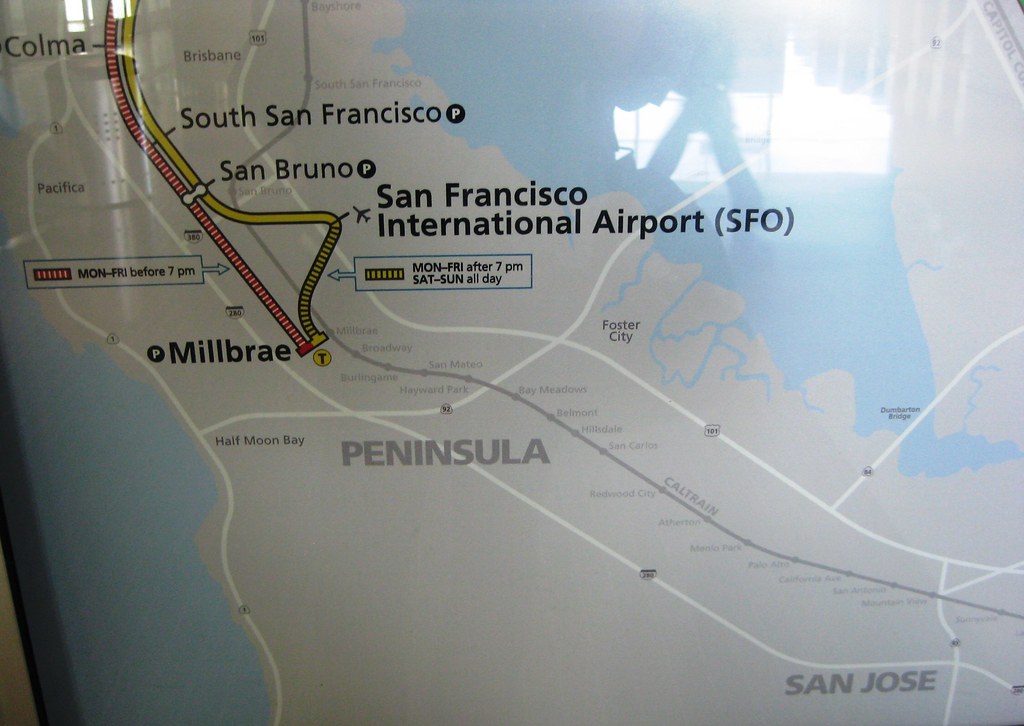
The second problem with heading south from San Francisco Airport on Caltrain is the linkage between the airport and Caltrain station. BART heads into the airport in a terminal station and then needs to reverse out of the station. Originally trains reversed out of the station south one stop to the Millbrae BART-Caltrain station throughout the day. Due to budget cuts (?), trains now only go north from the airport before 7 pm. Here's a bad photo of the BART map (too much light) showing the operating pattern.

This new operating pattern means that passengers wanting to transfer to Caltrain must take the train north one stop to San Bruno, then wait for a southbound BART train to take them to Millbrae. I arrived at the SFO BART station just as a northbound train pulled into the station. It took a full half hour to make the trip to Millbrae via this route (and it would have been longer if I had had to wait for BART at the SFO station). It's probably faster to walk to the Millbrae station.


Caltrain really should re-implement the shuttle bus system it had before BART was built, this was much more convenient and reliable. This is especially true because the shuttle could be coordinated with the Caltrain schedule. During the day Caltrain runs a combination of express and local trains. It's possible for you to reach the Millbrae station right after your local train has left and then need to wait for an hour for the next train (this becomes extremely frustrating given the time wasted on the convoluted BART trip to Millbrae from SFO).

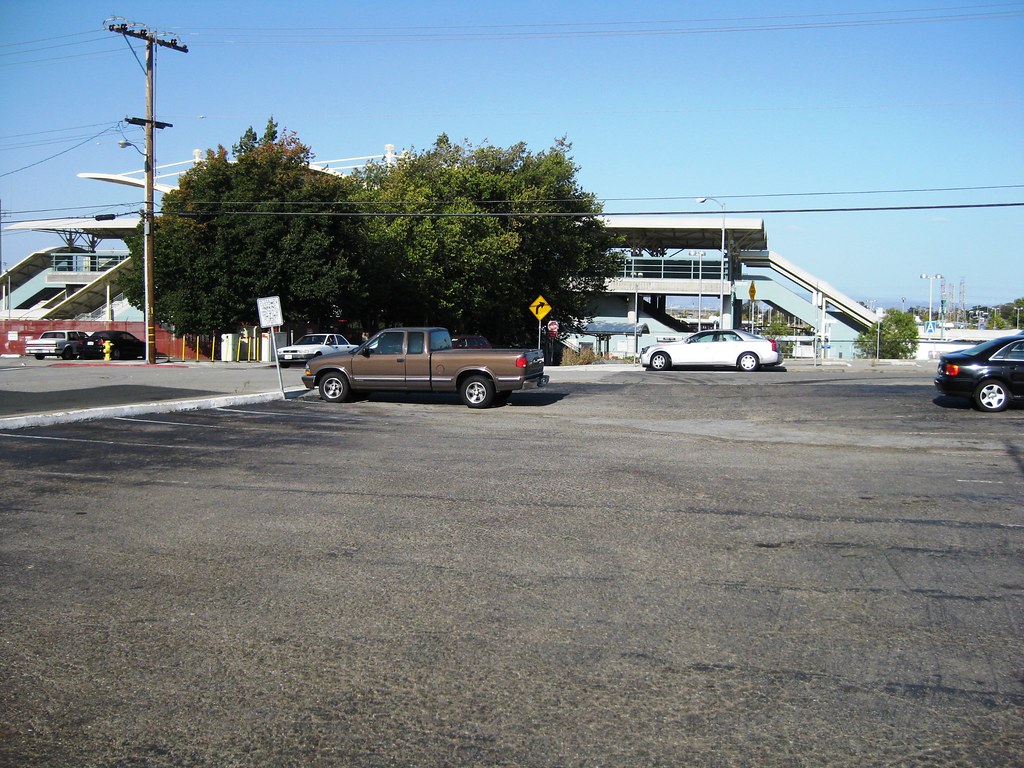
On my trip I could have taken a local or express train. I missed the local train by about 2 minutes. (Incredibly the local Caltrain trains are scheduled every hour and the BART trains have a regular 15-minute headway ... this means that every connection is missed by about 2 minutes!) Since I could take the express train too, I only needed to wait about a half hour at the desolate Millbrae station.

There's probably a good book on transport planning practice to be written on the BART to San Francisco Airport. There are so many lessons that could be learned. I think that the most interesting story is how little power transport planners had in the process of planning the project. The engineering is fine, but the main questions of how the project relates to the overall public transport network on the Peninsula and in the region, were answered in an ugly political process. The results are a badly working system and a myriad of lost opportunities.

Sunday, March 22, 2009

My Campaign Poster


Last week I was taking some photos of my office for Alain de Botton's office photo contest - he has just written a book about work called: The Pleasures and Sorrows of Work and I noticed my campaign poster sitting on the couch (we unpacked it and put it there about a year ago). The poster is from 1992 when I ran for election to the San Francisco Bay Area Rapid Transit District (BART) Board of Directors. I received over 30,000 votes, but unfortunately the incumbent received over 60,000. However, I think I had the best campaign slogan: "It takes an engineer to run a railroad."

The campaign was very interesting for me on many levels. I learned the techniques of politics. I learned a lot about what people want from their public transport system. (You might be amazed to learn how many people mentioned broken escalators as a problem - I remember that every time I see a non-functioning escalator today.) Finally, I almost learned to ask people for money, but not quite. In short, I learned a lot of things that they don't teach you in graduate school!

One of my campaign goals was to make the BART Board a non-elected position, filled by people elected to a higher office (i.e. city councilpersons or county supervisors). I say this because, while democracy is great, I think that the people managing public transport systems should have a broader perspective than just transportation. They should be involved with land use decision-making and other aspects of local government.

Thursday, March 19, 2009

Pogue on Electric Cars - It's the system not the car!

The NY Times' David Pogue has a great blog post about a group of people developing a 'system' for making electric cars happen. The basic idea is that they rent you the batteries for your electric car. He titled his posting Electric Cars for All! (No, Really This Time) that about covers it don't you think?

Tuesday, March 17, 2009

Spotted by Locals


I just found out about a great website/blog called Spotted by Locals it consists of postings by people living in different cities. It's similar to some of the postings I have made for restaurants and things to do in different cities (i.e. my San Francisco pages and Zurich pages), but better organized! I checked a couple of cities I am familiar with and they had some good tips.

Friday, February 27, 2009

More Amsterdam, less suburban-dam!


Amsterdam street scene, March 2008


David Brooks, a syndicated columnist from the NY Times, had a column this week titled "I dream of Denver" basically saying that most Americans did not want to live in Amsterdam (i.e. "dense" older cities). Paul Sighley, who writes a blog for the California Planning and Development Report, took issue with Brooks, and believes that the poll upon which Brooks based his column really shows that Americans want options beyond suburban sprawl. He says,
It makes me wonder if we have built enough suburbia to last us for another a generation or two. Maybe, just maybe, we in California should be focused on making cities – whether they be like San Jose or Anaheim – better places to live. Maybe we should make our small towns – whether it’s Chowchilla or Ukiah – complete places to live, learn, work and recreate. And maybe we should pause before we convert our rural places – whether it’s the Salinas Valley or the Sierra foothills – into suburbs.

Most planners are not advocating for an American Amsterdam, and neither am I. I’m only pointing out that not everyone – nowhere near a majority, according to Pew – wants to live in Roseville.


As a former Californian who has moved to one of those old European cities, I can only say I really enjoy the urban lifestyle and hope that California can develop more real urban areas like San Francisco and Los Angeles. Maybe the economic crisis maybe will give us the opportunity to "reset" into a more sustainable and exciting built environment.

Friday, February 20, 2009

More Public Transport Announcements

My friend who was so impressed with Nice and the public transport announcements there wrote back to me when I asked if I could quote her, with the following:

Your note made me think a bit more about transit announcements, the fundamental question being, "Who should be speaking?" Is it the management of the transit service, as appears to be the default choice, deciding how it should be represented to the public? Is it the driver, who might be speaking if there weren't a recorded announcement? Or is it the community: specifically, the transit-rider part of the community? While of course professionals would have to make sure that most riders could understand the thing, I like the idea of the voice representing more of the actual participants in the transit experience, that is, either the driver or the riders.

All excellent questions I think.

Reflecting on the idea that the announcements should represent the actual participants in the transit experience I am reminded again of one of my favorite quotes (about half way down page) from Alain de Botton about Zurich and its public transport system ... essentially that everyone in the city from the Mayor to the very young school children use it. In which case the announcements would truly represent the entire community, a nice civic gesture.

Public Transport Announcements

I am preparing a post about Zurich's real time public transport information system, but here's another interesting item. A friend wrote to me from Nice:

How's this for a charming transportation refinement: I'm staying in the old city of Nice (not a bad town, either) five tram stops from the train station. As you get to the first seaside stop, the recorded stop announcement is followed by the sound of a wave breaking. The next stop is the opera house, which is announced in French and then in Italian. The next stop is the regional bus station, which is announced in French in then in English. Then they go back to announcing just in French. Cute, eh?

They have men and women's voices, young and old, changing for all five stops I've heard so far. Why NOT have an eight-year-old or an 80-year-old announcing the stops? I've always thought that the recorded announcements in San Francisco should use men's voices with the local black San Francisco accent because that's who drives the bus, instead of woman-like machine voices from Ohio somewhere, but I like this idea even better.

I think this is a great idea. Not only does the variation in voices and audio clues (wave breaking) add some creativity but it also helps remind you where you are in the city. The WienerLinien (Vienna's public transport operator) had a recording come on between two stations of a child asking you not to leave your newspapers in the trains. I loved hearing it because it was so different and unexpected (even though I heard it between the same two stations every day!). By the way, after being asked so nicely I never left my newspaper again.

Thursday, November 6, 2008

Best Global Cities - Part 2

After writing about the Best Global Cities a couple days ago I found an excellent site called Best City Reviews that keeps up with different "best cities" surveys and news about the subject. The site would have really helped me several years ago when I was trying to use results of the Mercer Company survey in a research project on Zürich. Now I know where to turn for this type of information in a clear and useful format.

Best City Reviews even has a feature that lets you compare weather between two cities. I wish this feature were available for my hometown, Buffalo, which actually has much better weather than people think. Although on second thought, given how bad most people think the weather in Buffalo is, that may not be saying much.

Tuesday, November 4, 2008

Best Cities Lists

I am always fascinated by best cities lists. Especially interesting are the criteria they use to develop these lists. Today I read an article in Business Week on a new study by A.T. Kearney, the Chicago Council on Global Affairs and Foreign Policy magazine that ranked the "Most Global Cities". The article is quite good and I pretty much agree with the list. I especially liked the fact that the study recognizes that great cities are not only about economic strength, but also about livability and culture.

To see the best cities you need to view the slide show included with the article. There is a slide on each of the top 12, then a slide listing cities ranked 13 to 50. I was happy to see that San Francisco was rated number 15, Vienna number 18 and Zurich number 26. I can only say that I feel privileged to have lived in all three cities.

Another popular city ranking survey, by Mercer Consulting, usually rates Vancouver, Zurich and Vienna all in the top three.

Also, here's an interesting link to a Q&A session with Bert Sperling from the NY Times Freakonomics Blog. Sperling is co-author of the book Cities Ranked and Rated on best places to live in the USA. His thinking is quite interesting.

Saturday, October 25, 2008

The train in Spain is better than the plane.


Here's an article I wrote in support of California's high speed rail initiative which is on the ballot on November 4, 2008.

The train in Spain is better than the plane.

High speed trains are transforming Spain and countries throughout the world. High speed rail’s benefits are clear, it’s time for California to get on board.

California’s transport system is a brake on innovation and growth, airport lines, flight delays, and traffic congestion, it’s an endless series of hassles stealing our money and wasting our time – it’s different in Spain.

Spain’s first high speed train started operating in 1992 between Madrid and Seville. At the time many ridiculed it as a prestige project with little economic value. Well, they’re not laughing now. Instead, based on the initial line’s economic and environmental success, they are too busy building a high speed network connecting Spain’s major cities and neighbors in France and Portugal.

One of the first benefits Spain noticed was that the share of people flying the Madrid – Seville route dropped from 75% to 25% overnight and the total number of travelers doubled. In addition to spurring economic development, reducing flights helped reduce greenhouse gases and airport congestion. The shift from plane to train has been repeated in many markets including Brussels - Paris, Paris - London and Paris - Lyon. In several cases airlines no longer even offer service.

Ah, but the airlines won’t give up without a fight. Well, not really; European airlines have taken an “if you can’t beat them – join them” approach. Lufthansa uses high speed rail on feeder routes to Frankfurt airport providing through ticketing and baggage handling. KLM-Air France is a partner in the new Netherlands high speed rail company. Can’t we do the same in California? High speed rail makes good economic and environmental sense for both airlines and society.

But, it’s not only people, high speed’s newest market is freight. Several railways now offer express delivery and will soon move more substantial goods. Again, railways are working with private sector partners like FedEx and UPS to create efficient networks, and again they are economically and environmentally sustainable. Imagine the number of trucks we could remove from California highways with a similar system.

Spain is also overlaying regional rail trains on its high speed network just as California is planning. These trains are a supercharged version of Caltrain”s highly successful Baby Bullet trains, imagine San Jose to San Francisco in 20-minutes! This is being successfully operated now, so ignore the doomsayers who say it won’t work.

Finally, high speed rail is revitalizing economies. A fine example is England’s high speed line from the Channel Tunnel to London – a case study of top quality planning, engineering and environmental sensitivity. The line was specifically routed through southeast London to encourage economic development in a depressed area. So far the EURO 10-billion project has generated EURO 40-billion in investments, and played a major role in securing the Olympics for London. Can’t we use high speed rail to revitalize California too?

So, repeat after me, the train in Spain is better than the plane: faster, more economic and better for our environment. What’s California waiting for?
---------
Andrew Nash, andy@andynash.com, is Managing Director of Vienna Transport Strategies, he formerly served as Executive Director of the San Francisco County Transport Authority. This article is based on his experience at the UIC 2008 World High Speed Rail Conference.

Tuesday, September 30, 2008

Nancy Pelosi for Congress

I just spent a couple days in San Francisco visiting friends. San Francisco is a place where politics is in the air, at least among my friends.

One of the political controversies in San Francisco now is a women running for Congress, Cindy Sheehan, against the incumbent Democrat Nancy Pelosi (who is Speaker of the House of Representatives). Ms. Sheehan is a great women. She stood up to President George W. Bush against the Iraq war. She is running against Nancy Pelosi because she believes that the Democrats have not done enough to stop the Iraq war.

Unfortunately, this is another case of the Democratic infighting that has cost our country dearly. Nancy Pelosi needs our help. The Republicans have made it impossible for her to do what she wants on everything from the war to the economy. I think that Cindy Sheehan is a fine women, but the Republicans are the enemy not the Democrats.

Ironically Sheehan personifies the Ralph Nader approach; Nader's actions in the 2000 election made Bush's election possible which led to the war, the economic meltdown and who knows what next. Unfortunately we are a two party system and the Democrats are miles ahead of the Republicans. That's why I am supporting Nancy Pelosi.

Tuesday, January 22, 2008

Best of 2007 List

Mark Morford from the SF Chronicle had a great list of the best 12 best of lists for 2007. Some great stuff there!

Tuesday, April 17, 2007

Why I like Zurich: They know how to Party?

It might be surprising to learn that Zurich, and Switzerland in general, throws great parties; they don't have that reputation. But it's true.

Zurich throws several huge parties every year. They close many of the downtown streets, re-route the public transport system and set-up stages for entertainment. Yesterday was the annual Sechseläuten, in the summer there will be the Street Parade, there are fireworks at New Years and every several years they throw a really huge ZurichFest.

Anyway, the party organization is what most impresses me, as a city (and party) planner. Zurich leases out refreshment stand spaces (with temporary electric power feeds!). Public transport is organized to bring people to the event and often admission tickets include free transit. Best of all, after the party the streets are spotless. (The Street Parade has over a million people and probably they drink ten million beers/sodas etc. The outdoor party ends at midnight and by 6 am the streets are perfectly clean - no trace of the 12-hour+ party!)

In contrast it seemed like every big party in downtown San Francisco was completely unplanned. Too little public transit, garbage sitting around for days, ... Of course Zurich is better organized in these things throughout the year so it's no surprise that it works better for public events. Better city party planning is something we need to learn in the USA - it's one of the things that makes city life more enjoyable. Interestingly, San Francisco probably spends as much on its parties as Zurich
on a net cost basis since Zurich parties generate income from refreshment stand leases.

Sunday, April 8, 2007

Automobiles and Bicyles

A friend forwarded a great column by Jon Carroll of the San Francisco Chronicle on an incident that happened at a recent Critical Mass event in San Francisco. Carroll makes many interesting points. Another friend once said that 'if you put Mother Theresa behind the wheel she never would have won the Nobel Peace Prize.'

Thursday, February 1, 2007

Transport Porkbarrel Jail

"Do not pass Go, do not collect $200, go directly to Jail" ... that sums-up US federal transport policy, except ... you DO collect hundreds of millions (or billions) of dollars. What am I talking about? Simply the Federal Transit Administration's New Starts Program.

The New Starts Program provides funding for major new public transport projects. The problem is that most of these projects were planned decades ago and often no longer make sense, but, since the program is essentially a "first-come, first-serve" system (in other words once a project is approved - and, thanks to Congressional politics, almost all projects are eventually approved - it is simply placed in the queue for eventual funding) and since projects cannot be changed once they are in the queue (without going back to the end of the queue), what is built often reflects plans developed decades earlier.

A good example is Buffalo NY, where I grew up. Buffalo began planning a heavy rail system in the 1960s. Gradually the plans were downscaled to a light rail system, although most of the route is underground. Construction of Buffalo's light rail system was started in the late 1970s and finished in the 1980s, but, guess what, Buffalo was a different city then. The six-mile light rail line cost well over $600 million and operating costs are much higher than the buses it replaced. This would be fine if there was sufficient ridership to warrant increased service or if the line was able to revitalize the center city, but there isn't and it hasn't. Buffalo has decentralized, its population has fallen drastically, its transport priorities are vastly different from the 1960s, and its transit district is struggling financially. These trends were clearly visible as final plans were being made for Buffalo's light rail line, but, because no substantial changes could be made to the plan once it was in the FTA New Starts Queue (without losing federal funding), more effective projects could not even be considered.

A similar problem is brewing now in San Francisco. The city's Central Subway project, planned during the early 1990's, is in the FTA's New Starts queue and has powerful support from Speaker Nancy Pelosi. However, as this article explains, after more detailed engineering, the project's costs have skyrocketed and its effectiveness has been significantly reduced. There are many much more efficient and effective ideas for improving public transport in San Francisco, but since the Central Subway is in the federal queue and transport managers do not want to lose the chance for federal funding, there is no possibility for implementing these new ideas.

These two illustrations show why we need to revisit federal urban transport policies. Probably the best idea is to develop a block-grant type program that allows cities to spend federal funds on projects that they believe will best solve their problems. This will allow cities to better link transport planning with other urban plans and lead to more innovative and creative transportation solutions. In the 1970s, the federal government introduced an extremely successful program that enabled cities to 'trade-in' funds designated for US Interstate urban freeways for public transport. This program was used to fund some of the most successful public transport projects of the last several years including Portland's first light rail line, Boston's Orange Line and San Francisco's Embarcardero Roadway/Muni Metro line. We should learn from that program.

I hope that Speaker Pelosi and the Democratic Congress will take up this issue, it would help reduce porkbarrel politics and revitalize our cities at the same time. I think that many professional transportation planners and managers would welcome finally getting out of New Starts Jail.

Tuesday, December 12, 2006

Zürich

As a city planner I feel privileged to live in Zürich. The city is clean, people are friendly and everything seems to work well - especially the public transport system. One of my favorite authors, Alain De Botton, comes from Zürich and in a short story called, The discreet charm of the Zürich bourgeoisie, writes:
"In Switzerland’s largest city, the urge to own a car and avoid sharing a bus or train with strangers loses some of the urgency it may have in Los Angeles or London, thanks to Zurich’s superlative tram network – clean, safe, warm and edifying in its punctuality and technical prowess. There is little reason to travel alone when, for only a few francs, an efficient, stately tramway will transport one across the city at a level of comfort an emperor would have envied."
When my wife and I returned to San Francisco in 2004 one of the things we missed most about Zürich and Switzerland was how easy it was to travel by public transport everywhere ... we could travel effortlessly from our home in the center of Zürich to the top of a mountain in the Alps quickly and inexpensively. In contrast, living in San Francisco without a car is difficult at best. What's really sad is that San Francisco is a place where public transport should be great: the city is dense enough to support good public transport and most people care greatly about the environment. It's a real shame.