Pages

Showing posts with label Transportation. Show all posts

Sunday, February 20, 2011

Buffalo Freeways to Remove-Part 2

Buffalo Historical Society May 10-1
Buffalo and Erie County Historical Society, behind the freeway.
(Source: Andrew Nash, 2010)


Yesterday I wrote about Rust Belt city planning in general. As I was looking through my Buffalo photos for the post I came across the photo above.

Can there be a better illustration of the insanity of building freeways through parks? The huge bright green freeway signs in front of the only building remaining from Buffalo's Pan-American World Exhibition (1901). Looking over Delaware Park's Hoyt Lake from the Casino towards the Buffalo and Erie County Historical Society building ... and there they are, the huge green freeway signs.

Of course the freeway also generates noise and pollution in addition to creating a wall that splits the park into pieces.

Many will argue that once a freeway is in place you can't remove it, but Portland and San Francisco both did and have not looked back. (Check out the great StreetFilms on San Francisco's Embarcadero Freeway replacment). Previously I wrote about tearing down several Buffalo freeways, maybe that's too much to start.

How about this? Just close the freeway between the Elmwood exit and Parkside. Just this summer. Give people plenty of warning. Install some improvements (and directions) on alternative routes and give it a chance.

Create a Buffalo Beach, just like Paris.

Thursday, February 10, 2011

Graz Austria Main Train Station

Graz AT Hauptbahnhof  - 4

Since my wife is from Wolfsberg Austria (Carinthia) we travel frequently through the Graz Hauptbahnhof on our way south. There are hourly trains from Vienna to Graz, but then the fun begins.

There is no train service between Graz and Wolfsberg, but there is an "Intercity Bus" which is not bad, about an hour nonstop between the cities operated approximately every two hours. Unfortunately the bus and the train schedules are almost perfectly uncoordinated.

The bus from Wolfsberg (and Klagenfurt) is scheduled to arrive one or two minutes after the train to Vienna leaves. So you need to hang around in Graz Hauptbahnhof for about an hour. In the other direction many of the buses also require a long wait (Friday we waited 57 minutes, since the bus leaves 3 minutes before the next train from Vienna arrives).

Graz AT Hauptbahnhof  - 2

Perhaps the reason for this sloppy scheduling is that the buses used to leave a few minutes after the train from Vienna arrived. If the train from Vienna was at all late you missed your connection - then it's almost two-hour wait until the next bus. The new system allows the train to be almost an hour late and you can still make the bus.

Another problem with the bus is that it is frequently overbooked at peak travel times like Friday and Sunday evenings. We were lucky last Friday and they put another bus into service, but we have also been forced to drive to Graz because the bus is full.

Graz AT Hauptbahnhof  - 3
You may think - like the sign at the right says - "Missed your train? Great, you can have a coffee at the station" - but I don't know many people who think "Great" about missing their train. Yes, it is great that the station has restaurants and shops, but my goal is to get somewhere not to spend time in the station.

Oh, and one more thing as long as I'm ranting. You need to pay to go to the restroom in Graz! Why can't railway stations - especially railway stations with shopping centres - have free restrooms? I can't think of an automobile-based shopping centre that has restrooms where you need to pay. I understand that railway stations seem to attract people with social problems, but deal with the problems, don't make everyone pay. (Especially if you have restaurants serving coffee and beer!) By the way, the problem is not unique to Graz, they also charge for the restrooms in Vienna and Zurich.

Graz AT Hauptbahnhof  - 1

This kind of sloppy scheduling and lack of attention to providing basic customer amenities causes people to drive. Why put up with the hassles of railway travel?

Poor service is especially dumb on this route because the Austrian government is spending about 4 Billion Euros on a tunnel that will replace the bus with rail service; they should be doing everything possible to build up demand on this route so that when the tunnel is finished people will be used to taking public transport. Instead people like us will probably have bought a car since the drive from Vienna is about 3 hours and the train takes 4 and a half hours with the bad connection.

Tuesday, January 25, 2011

Bus Meister Game (beta) - Now online!


I have just finished the beta version of a game designed to help citizens understand public transport priority. The game is linked to a wiki that provides detailed information about measures to improve public transport. Once we are happy with the game we will place it on facebook and add social networking features so that players can discuss how to improve public transport in their own community.

I am looking for people to try out the game and wiki and to give me comments (also join the wiki as contributors!). The game is available now at: http://www.greencitystreets.com/busmeister

The wiki is available at: http://busmeister.wikispaces.com/

This page on the wiki provides instructions on how to play the game: http://busmeister.wikispaces.com/BMG_playing

Right now the game works, but we need to refine the values used to run the simulation and calculate the happiness and cost values. We will adjust these in the coming weeks and also add levels (so players advance to more difficult challenges) and other standard game features. We also will add more information to the pages. But, for now, the game works and we would love your feedback.

Finally, I hope to extend the approach to other modes of transport (biking, walking, street design) in the future.

Thanks for your help,

Sunday, January 9, 2011

High Speed Rail in the USA

Prague main railway station June 2010-01

Pendolino Train in Prague - From my flickr photos.

I just commented on a very interesting article in The Infrastructuralist: A Powerful Argument for US High Speed Rail. The article discusses the fact that no US transportation system actually pays for itself and therefore arguments against HSR because it does not pay for itself are wrong. Here's my comment:
I think an important point is that we need a transportation SYSTEM that works. High speed rail is part of that system and we all realize it’s not appropriate everywhere and it will be impossible to build quickly enough even where it is justified right now. What’s to be done?
1 - Focus on improving the existing railway system. It may not be possible to build a real HSR system through New England, but I am sure there are many projects that could shave ten minutes off the travel time.
2 - Improve multimodal connections. Travelers care about door-to-door time not speed. Any rail traveler can tell you the horror stories involved with connecting to local public transport networks. Most of these problems are “simply” institutional, they would cost almost nothing to fix. Again, this could save tens of minutes.
3 - Build a couple HSR lines where they make sense. California for example. Let’s see how they work, even starter lines with (1) and (2) above could show whether the concept will work in the USA.
These seem like pretty uncontroversial suggestions. A country as innovative as the USA should be able to try out an idea like HSR and spend some money improving the rail system without all the controversy that seems to have been generated by what is really a very small program.
Reading through the article comments is really enlightening. There is so much negative energy being thrown around about what amounts to a very small amount of money. It seems strange that people would object to spending a little money testing something that works pretty well in other countries and which could be implemented successfully in carefully chosen US corridors.

Furthermore, many of the investments in Obama's High Speed Rail program fall in the first category of improvement above: small projects to improve railway travel in the USA. Again, a small amount of money to make pretty useful improvements (and create jobs in a depression economy - no small benefit). Critics say these are not "real high speed rail," fine, but useful, yes.

Most depressing of all is the fact that normal people have been coerced by politicians and the media to get fighting mad about these small expenditures on relatively benign infrastructure improvements. To be against simply trying out things that just might really improve our society, and certainly won't hurt. A pessimist would say that it's useful for those in power to keep the middle class fighting with each other about peanuts rather than questioning why, for example, hedge fund managers only pay a 15% income tax rate.

Thursday, July 8, 2010

Urban Track Final Conference 2010

 Czech Pendolino train in Prague main station.

I went to the Urban Track Project final conference in Prague because I am helping the Wiener Linien (Vienna’s public transport operator) on a research project intended to better understand the motivation for implementing good maintenance procedures. The conference presented results of the four year research project on how to design and build better urban rail (streetcars, metro, subway, etc.) track work. Several of the presentations were about how to design slab track to reduce noise and vibration.

Since I am more of a planner than engineer a couple of the less track-engineering presentations were more interesting for me. These were on: green track, rehabilitation processes and socio-economic impacts of rehabilitation projects.


Brussels Public Transport 25apr10-06

Green Tram Tracks on Avenue Louise in Brussels (from my flickr photos)

The Green Tram Tracks, The Advantages of Implementing Vegetation Systems in Tram Tracks presentation was by Henrikje Schreiter from the Institute of Agricultural and Urban Ecological Projects (IASP) in Berlin. She described her phd dissertation on the benefits of using a specific plant species (Sedum, which is a succulant plant) for green tracks. In summary, there are a lot of benefits including water retention, reducing noise (small, but something), reducing airborne particles and just creating a nice visual environment. She discussed lots of the practical reasons why Sedum is a good choice (e.g no need for mowing) and how you actually build these systems (e.g. building them so that emergency vehicles can drive over them).


The IASP is holding a seminar on the subject of green tracks (German) – who knew that Berlin has been using green tracks since the early 1900s? – on 20 September 2010 (before the Innotrans Exhibition). The seminar is in German, but I may try to go and can do some translation of interesting presentations.


Several speakers talked about rehabilitation of tram tracks. As visitors to my website and YouTube channel know, tram track rehabilitation is a subject close to my heart! Speakers described a replacement project in Bremen where the tram service was only stopped for a weekend (although roadway traffic on the adjoining lanes was stopped for four weeks) for a traditional tram track replacement project, and one in Karlsruhe, where the city took about three weeks to install pre-fabricated track slabs in a historic district.


The contrast between the two projects was quite interesting. In Bremen the goal was to minimize service disruption and in Karlsruhe the goal was to install historic-looking track as efficiently as possible. In the project area Karlsruhe’s track is set in cobble stone pavement, so the prefabricated sections had a cobble stone surface. Also interesting was the fact that the work was done under the catenary lines – which made it difficult to maneuver cranes and lifting equipment. Both projects were partly funded by the Urban Track project and lots of practical lessons were learned.


The final presentation I will talk about was by Marjolein de Jong from Hasselt University in Belgium. The presentation was on evaluating the socio-economic impacts of tram track rehabilitation projects. What I found so interesting about her research was how systematically she identified the potential impacts and her findings regarding various potential staging strategies. When I talked to her later she said, well it’s just impact analysis 101, but I think it’s important because it starts to develop an organized framework for thinking about some of the problems planners face when considering rehabilitation programs.


More information about the UrbanTrack project is available at the UITP website.

Wednesday, July 7, 2010

Tour de France - Brussels

I was in Brussels on Monday for a meeting of the High Speed Regions group. As it happened the Tour de France was traveling through Brussels - a block from our meeting location - on Monday too, so I had time to watch the racers go by.

Unfortunately it was right at the start of the day's race, so the riders were going quite slowly and were all in a pack. Well actually mostly team packs. It was funny because the streets were blocked for hours but the race took about 30 seconds to go by (and, they were going slowly!). Also odd is that there were probably more cars, trucks, motorcycles etc. going by than bikes. More photos on my flickr photos Tour de France Brussels.

Thursday, July 1, 2010

Die Prinzen: Mein Fahrrad - My Bike

I just heard the song "Mein Farrad" (My Bicycle) by Die Prinzen on the radio. It's a very catchy tune and the words are lots of fun. I thought I would translate it for my English speaking bicycle friends, so here goes:

The other day I was going 120 (kph)
Riding round town on my bike
And as usual I could only hope
The police wouldn't catch-up to me
Because they'd give me a ticket
And take me to the station
And my poor little bike
Would be left all alone out front
Oh how I love my bike
Although I really don't know why
To her I'll always be faithful
In contrast to my wife
Never will I leave her
Never will I give her away
Because we fly together on the clouds
And understand each other perfectly

Every grandpa drives his Opel
Every monkey drives his Ford
Every idiot drives his Porsche
Every asshole drives his Audi Sport
Every crazy man drives his Manta
Every complete idiot his Jaguar
Only connoisseurs are cycling
And they're always faster there

My bike is surely not purple
That's not my color at all
And it's certainly not brown
Because I can't stand brown
No, mine is painted blue
From head to toe that shade
Blue's the perfect color for me
Because sometimes I'm blue too

Every grandpa drives his Opel
Every monkey drives his Ford
Every idiot drives his Porsche
Every asshole drives his Audi Sport
Every crazy man drives his Manta
Every complete idiot his Jaguar
Only connoisseurs are cycling
And they're always faster there!

I took a few liberties with the lyrics, but I hope it does justice to the great song! Feel free to add improvements to the comments.

Wednesday, June 16, 2010

Rate My Street


Here's my street in Vienna rated on Rate My Street.

Just found a cool new website called Rate My Street that allows you to rate your street according to several criteria. It was developed in the United Kingdom, but since it uses Google Maps as a base you can rate any street anywhere.

Other great sites that can be used to rate streets and indicate problems that I discuss in my TRB Paper: Web 2.0 Applications for Improving Public Participation in Transport Planning include:

seeclickfix
walkscore.com
cyclopath.org - Twin Cities Minnesota Area

The ultimate goal of my Bus Meister project is to develop a similar application that helps city residents use an internet application to help identify, plan and support public transport priority measures that improve the attractiveness and efficiency of public transport routes they use every day. I'm struggling to finish a proposal right now ... more later!

Wednesday, March 10, 2010

Signs and Wayfinding from Slate


Julia Turner has a great series of articles on signs and wayfinding in Slate. The first article describes the importance of signs in general. The second article takes us on a tour through Penn Station in New York looking at how well (or badly) the signs work in helping us get from an entrance to the Amtrak trains. It reminds me of an experience I had in the Paris Metro Châtelet - Les Halles station in 2008.

The third article is on urban wayfinding, which Turner describes as completely different from wayfinding in transport stations or other controlled environments (e.g. Penn Station). She uses the example of Transport for London's Legible London project to describe the concept. This is a really excellent article filled with lots of good information.

The photo at the right is another solution: people at the Copenhagen Airport who help guide visitors (the other signs there are pretty good too).

The fourth article describes research on the hand-made maps made by normal people. The fifth article describes the 'war over exit signs' which includes a nice summary of the idea behind pictograms and their use on signs. The sixth article is forthcoming, but I am sure it will be good.

I have always been fascinated by signs. Here is a link to my flickr set signs and here is a link to my flickr set WC Signs ... I find wc signs to be especially interesting because they give businesses and people the ability to be creative about how they use graphics. As they say, "You can tell a lot about a place by their WC signs" ... well, at least that's what I always say.

Finally, my restaurant review of the Hallwylerhof restaurant in Zurich. They have a wonderful graphics and signage design used consistently throughout the restaurant, and the food is great too.

Saturday, March 6, 2010

Books about maps

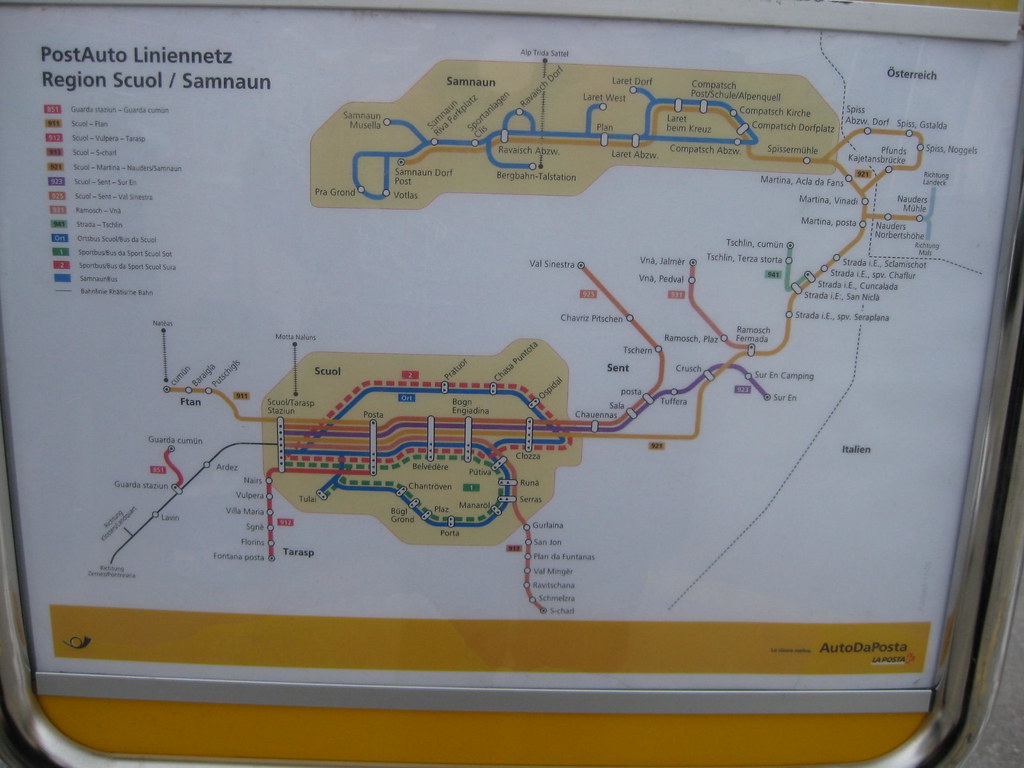
Bus map from Scoul Switzerland from my flickr photos.

I just read a review in the NY Times (The World as Their Canvas by Stephen Heller) surveying several books about maps and graphic design. Great survey article, I want all the books!

Sunday, February 28, 2010

Benefits of High Speed Rail

I just read an interesting article on high speed rail that takes a more comprehensive look at the benefits of high speed rail ... it's not just travel time savings, but what these make possible for the economy. The article presents a very nice analysis by the University of Toronto's Martin Prosperity Institute. Here it is High Speeds, High Costs, Hidden Benefits: A Broader Perspective on High-Speed Rail.

Wednesday, February 17, 2010

Lakeside Conference on Transportation Data

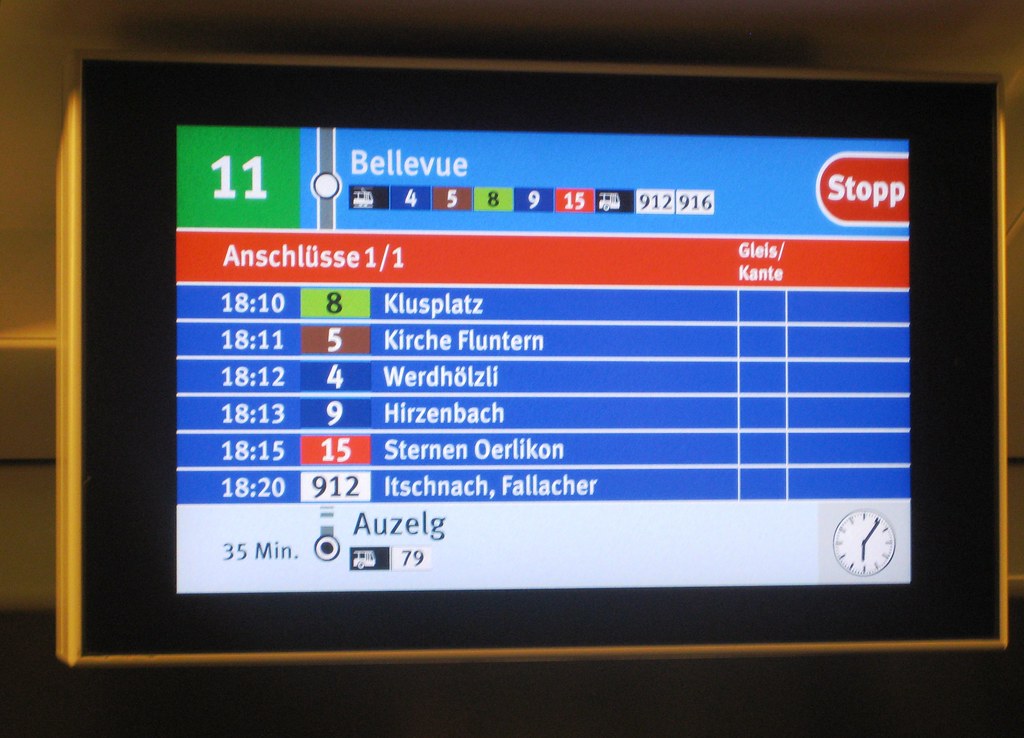
Zurich's on-board transport information system from my flickr photos.
I am helping organize the 3rd Lakeside Conference on Data and Mobility. The conference will explore ways of using data to improve mobility. The last conference focused on weather data but this year the scope will be broader. I am particularly interested in learning about new ways non-professionals can use data to collaborate on transport planning similar to the ideas in my 2010 US Transportation Research Board paper: Web 2.0 Applications for Improving Collaboration in Transport Planning.

We are looking for papers! Here's the call for papers - the deadline is somewhat flexible, send me an e-mail if you have a good idea for a paper but don't have time to do a full abstract by the February 26 deadline.

The conference will run from October 6-8 in Klagenfurt Austria. I am trying to organize a small meeting in Vienna on October 5 for people who come early to learn about some of the interesting things going on here. Contact me for more information.

Wednesday, February 10, 2010

Saturday, February 6, 2010

Transportation for Communities Collaboration Website

Figure illustrating coordinated set of Web 2.0 tools for collaborative transport planning from my 2010 US Transportation Research Board paper: Web 2.0 Applications for Improving Public Participation in Transport Planning. 

I just saw the website Transportation for Communities - Advancing Projects through Partnerships (TCAPP). The website "has been created to enhance collaboration in transportation decision making". My major research interest right now is improving collaboration in transportation planning so I was quite interested in seeing what the website had to offer.

In summary, it is a very good description of the transportation planning process (although specifically designed for highway projects many of the concepts are quite similar for public transport). The main purpose seems to be to help citizens better understand the transport planning process and it does a good job. It also includes a tool to help either stakeholders or practitioners "identify what is going wrong in a process". That's quite an interesting and helpful feature I think. Other interesting features are the decision guide and case studies.

The website does not provide Web 2.0 tools that actually enable citizens to collaborate in the transportation planning process as I have proposed, but is a very valuable addition to the "library" of information needed to help support an integrated set of applications (see illustration above).

Saturday, December 19, 2009

ITS Berkeley California High Speed Rail System Seminar - Videos

In October I blogged about the California High Speed Rail seminar organized by UC Berkeley's Institute of Transportation Studies. The seminar was videotaped and the tapes are available from the ITS News Bits website.

Saturday, November 28, 2009

Web 2.0 and California High Speed Rail Planning

I have been working with Nadia Naik from Californians Advocating Responsible Rail Design on ways to use Web 2.0 techniques to improve the California high speed rail system planning and design by increasing the ability for citizens to collaborate in the planning process.

We just wrote a draft paper called: Peer-to-plan CSS 2.0: A Web 2.0 application to facilitate public collaboration in the project planning and design process. It builds on the work described in my Transportation Research Paper: Web 2.0 Applications for Improving Public Participation in Transport Planning - described in a previous post. As it is a rough concept, I would be interested in your comments and ideas.

Thursday, November 19, 2009

Web 2.0 and California High Speed Rail Planning

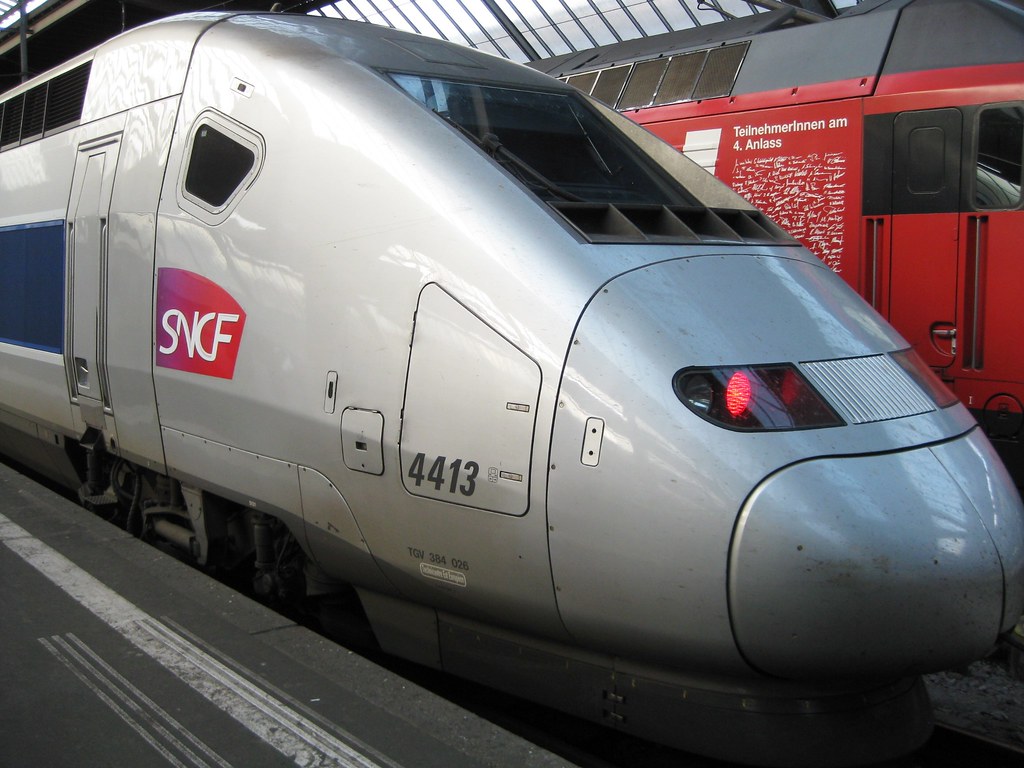
TGV at Zurich Hauptbahnhof - October 2009 - from my flickr photos.

As I mentioned in a previous post, I just finished revising my TRB paper on Web 2.0 applications for improving public participation in the transportation planning process (download here: web2transport). Yesterday I was talking to someone about some of the ideas in the paper and I remembered a story I wrote in 2005 as part of a proposal for completing the Regional Rail Plan for the San Francisco Bay Area.

The story was a speech given by one of the participants in the Regional Rail Plan planning process given 25-years after completion of the California High Speed rail system. I just re-read the story and I was surprised about how good it is and how relevant so many of the points it raises are today. So, here's the link to a pdf file. As they say, sit back, relax and enjoy the trip!

San Francisco Bay Area Regional Rail Plan - A vision (2005)

(By the way, although people I talked with on the inside said that this story was an important reason for selecting the consultant team, the consultants never asked me to help with the project and I'm not sure what ever happened to the plan itself.)

Tuesday, November 17, 2009

Web 2.0 applications to improve transport planning


Sunny day in Stockholm from my flickr photos.

I just posted the latest version of my US Transportation Research Board paper: Web 2.0 Applications for Improving Public Participation in Transport Planning on my website. I would love to get comments on the paper, so add one below or e-mail me directly.

I will be making a presentation on the paper at SPUR in San Francisco on January 7, 2010 and at the TRB Annual Meeting in Washington on Monday January 11. See my website for more details.

Tuesday, November 10, 2009

Car Trap in Holland


Daniel Sparing, a colleague from Hungary, just posted the photo above on his flickr site. It's a good picture of a public transport priority measure. He calls it a bus trap but says in the comment "or to be more precise, a car trap. Buses can pass through." He's got lots of great bicycling photos on his site too.