Andrew Nash, Transport and City Planner Transport and City Planning, European travel, restaurant reviews, European Railway trips, food, wine, beer
Showing posts with label Vienna. Show all posts
Wednesday, July 3, 2019
Now on wordpress at https://andynash.com
I've changed my home page to Word Press a few years ago, I now blog there ... here's the link:
https://andynash.com
Monday, July 4, 2011
Slow Day at the Wurst Stand
Wurst stands are ubiquitous in Vienna. I see this one everyday on my streetcar trips "downtown". I took the photo last Friday, it was hot and the chef was so relaxed it just seemed like a perfect opportunity.
Ironically, after posting the photo I had wurst for lunch at the airport and then wurst for dinner at the city hall reception given for the Cities for Mobility Congress in Stuttgart. It was a great reception with lots of international guests. The mayor spent the entire evening there talking with us and enjoying the great local hospitality.
Thursday, March 10, 2011
(B)eat Pizza!
![]() |
| You can't beet this pizza! |
Here's how I made the pizza. Christa had cooked and sliced the beets a couple nights before. After cooking, she marinaded them in oil, vinegar and caraway seeds (she had planned to use them in a salad). Instead, I made a pizza with them. I used (sorry to admit) roll out dough from the dairy case. First I pre baked the crust with a little olive oil and salt for about 10 minutes (I always find it necessary to pre bake these refrigerated pizza doughs).
![]() |
| Beet Pizza and Beer ... Yum! |
Then I spread the pizza with yogurt, placed thinly sliced onions and freshly ground horseradish on the yogurt, ground some pepper, then added the beets. On top I added a little more horseradish. In the oven for about 10 more minutes and voila!
It really tasted good.
Thursday, February 17, 2011
Cafe Sperl Vienna
I know it's in all the tourist books, but still ... we had guests visiting over the weekend and wanted to show them a real Vienna coffee house. Homemade cakes. Good solid food. Plenty of newspapers. Music on Sunday afternoons. And, now, no smoking!
I took the advice of a recent Independent Column (Graham Greene's Vienna) - thanks Gavin Plumley - and had my first Fiaker (coffee with schnaps). Even though we had just had a huge brunch we "forced" our friends to have cake (chocolate truffle cake and topfen torte) while we enjoyed our coffee.
As the top photo shows ... the coffee is comes fast-often more quickly than that horrible self-service system used in places like Starbucks. I am pretty sure our 7 different kinds of coffee, each with its own water and balancing spoon, arrived within three minutes of ordering ... I have stood around longer for a short latte.
Come visit Vienna while places like Sperl still exist! It's even better in the summer when you can sit outside on the large shaded square in front. My flickr set Cafe Sperl.
For more about Vienna and especially coffee in Vienna check out Merisi's Vienna For Beginners ... a truly beautiful blog.
Sunday, January 2, 2011
Happy New Year 2011
Happy New Year from Vienna! This is how we celebrated New Years day ... that's the Vienna Philharmonic in the background ... like most people in Austria we watched it on TV. Christa is pouring a glass of Austrian sparkling wine. Cheers!
Tuesday, July 13, 2010
Watching Scorpio in Vienna
Scorpio: Chase scene through Vienna Karlsplatz U-Bahn station.
The Kino unter Sternen is showing a whole series of films made (at least partially) in Vienna. Scorpio was particularly good because the big chase scene was filmed at the Karlsplatz U-Bahn station when it was under construction during the 1970s. Sorry the photo is out of focus. More photos on my flickr photos tagged Scorpio Vienna Kino untern Sternen. More photos are available from the flickr user Kino unter Sternen including one of the Wiener Beschwerdechor (Vienna Complaining Choir) singing before the July 3 movie - see if you can find me!
Monday, June 28, 2010
Two Vienna Musical Stars
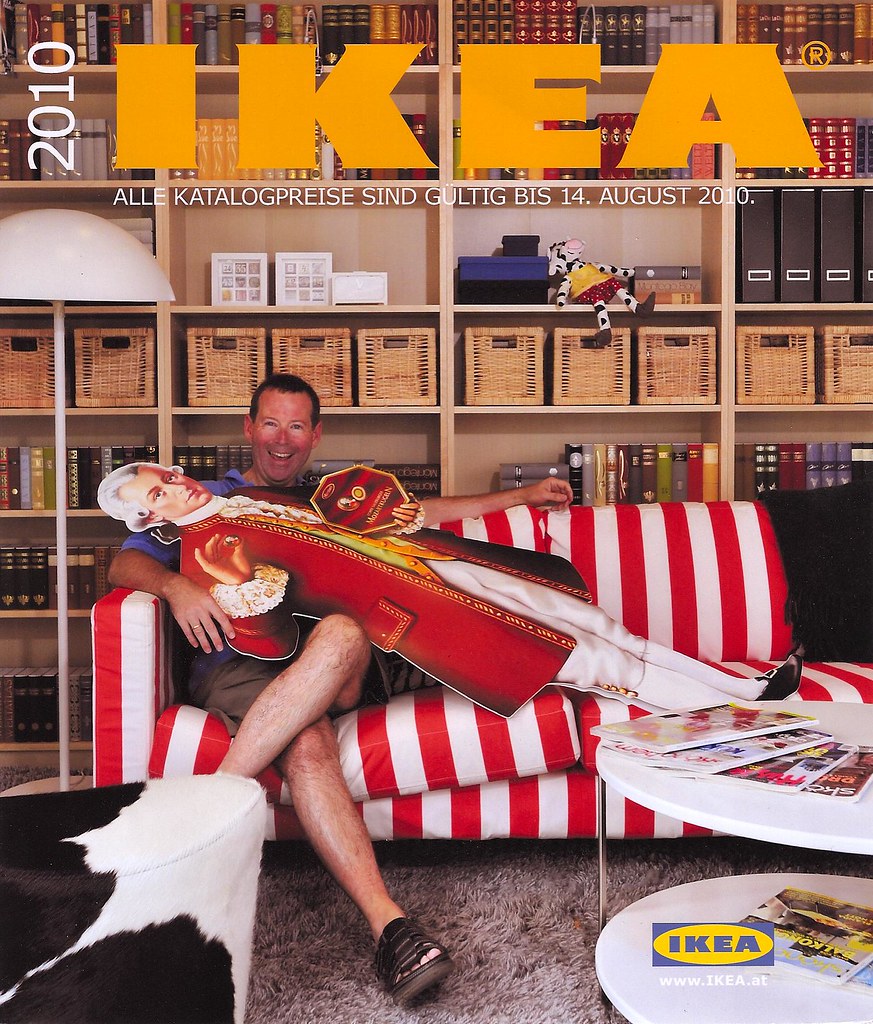
Last fall IKEA set up a truck with their catalog cover furniture minus people at the MuseumsQuartier. Passers-by could have their photo taken in the scene. Thinking quickly I went downstairs into the U-Bahn station and asked to borrow the Mozart Kugel (a type of candy) man. Back upstairs to the photo shoot and now, here it is, two of Vienna's musical geniuses together on the same stage!
Don't forget to vote for my latest music video: Flowers in your Horns!
Wednesday, June 23, 2010
The Truman Show - Vienna
One of my favorite movies was The Truman Show, I thought that the plot was quite good, but also enjoyed seeing the new urbanist city Seaside Florida, the movie setting.
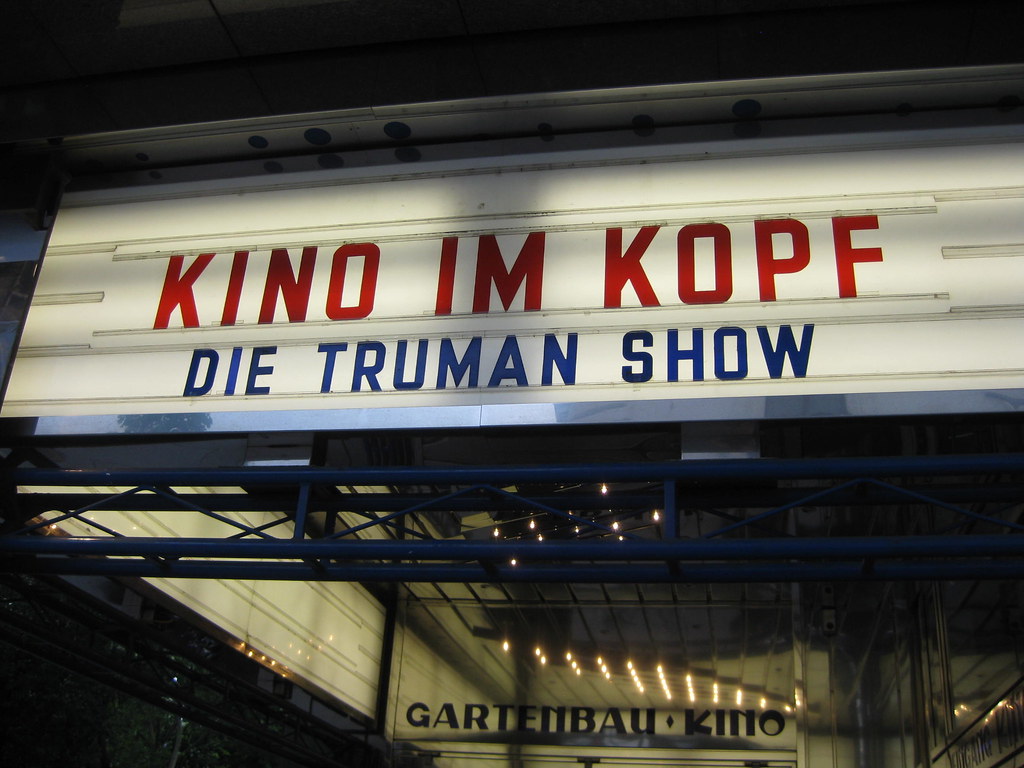
Anyway Oliver Hangl, the artistic director of the Vienna Complaining Choir among many other artistic projects, is doing a project this week called Kino im Kopf: Die Truman Show where the audience rides through Vienna on a streetcar (they have headphones for the soundtrack) and people on the street act out scenes from The Truman Show movie. Oliver needed extras so, along with many members of the Complaining Choir helped out. We worked at Lancaster Square (actually the Josefstadterstrasse U-Bahn - Tram stop).
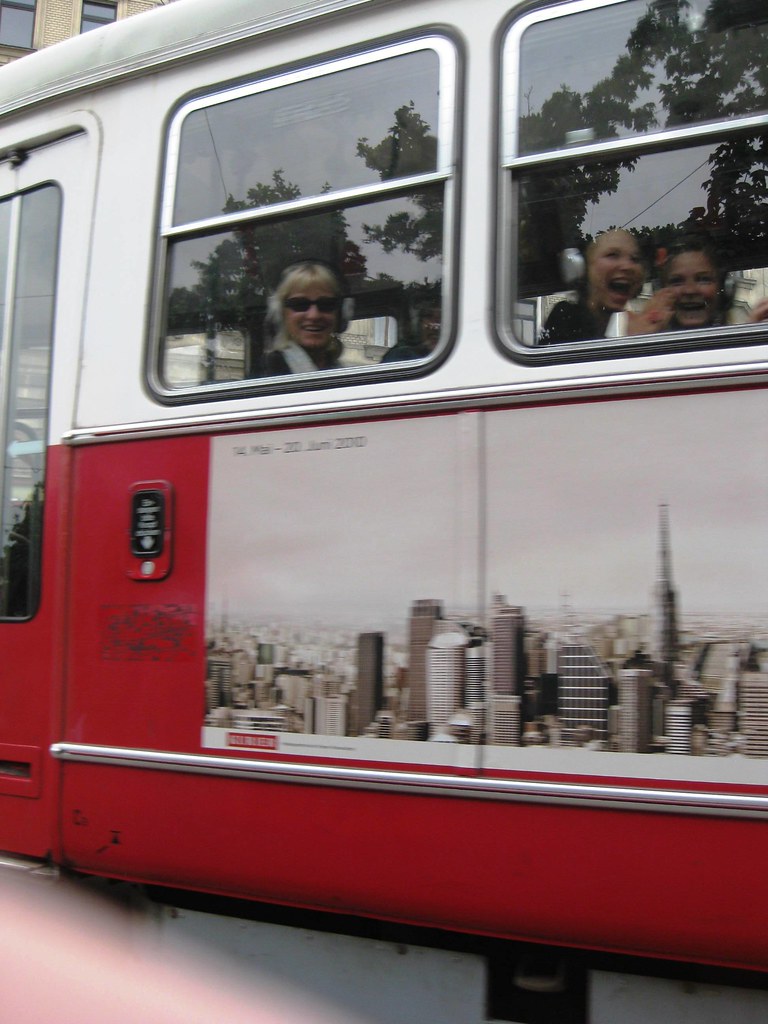
Here's a photo of the people on the tram enjoying our performance. Our job was to bend down and hold our ears for the 15-seconds while the tram went by. (I had the camera balanced on my leg and just shot, so it's out of focus). More photos are on my flickr site tagged Truman Show Vienna.
EXTRA: We helped out throughout the week and on Saturday we were in the audience on the tram. The show was great and I took more photos which are also on the flickr site.
It's going on until Saturday 26 June 2010, highly recommended if you are in Vienna!
Anyway Oliver Hangl, the artistic director of the Vienna Complaining Choir among many other artistic projects, is doing a project this week called Kino im Kopf: Die Truman Show where the audience rides through Vienna on a streetcar (they have headphones for the soundtrack) and people on the street act out scenes from The Truman Show movie. Oliver needed extras so, along with many members of the Complaining Choir helped out. We worked at Lancaster Square (actually the Josefstadterstrasse U-Bahn - Tram stop).
Here's a photo of the people on the tram enjoying our performance. Our job was to bend down and hold our ears for the 15-seconds while the tram went by. (I had the camera balanced on my leg and just shot, so it's out of focus). More photos are on my flickr site tagged Truman Show Vienna.
EXTRA: We helped out throughout the week and on Saturday we were in the audience on the tram. The show was great and I took more photos which are also on the flickr site.
It's going on until Saturday 26 June 2010, highly recommended if you are in Vienna!
Tuesday, June 15, 2010
Vienna Linchpin Meetup - June 14, 2010
MuseumsQuartier Vienna from my flickr photos.
We held our Vienna Linchpin Meetup at the MuseumsQuartier. The highlight was meeting a group of people who wanted to discuss Seth Godin's ideas. On the way home I was amazed to note that three hours had passed, although the fact that they pretty much had to throw us out of the cafe should have been a hint.
We discussed a wide variety of subjects, listed below. We decided to meet again in September to continue our discussion with more people.
Can cleaning people be linchpins? We think that it's possible to bring art to cleaning and cleaners can be an important connection between people working in an office. Our model is not the outsourced cleaning companies, but rather the cleaners who were really part of the organization, like the janitors in our elementary schools in the old days (Mike Mulligan of steam shovel fame). Maybe not forever, but being a linchpin cleaner (to pay the bills) while you are doing some other art at night.
How do you transfer Seth's ideas to old businesses and institutions? An especially important question in cities like Vienna with long traditions.
Can you be a linchpin in a large business or do you need to work for yourself? Of course Seth discusses this, but it was on our minds. We felt that learning to get along in existing structures can provide you with the freedom to implement innovative ideas. But, it's a balancing act.
We should always ask, "Where's the fun?" at work. Work should be a playground where you can fail. Interestingly some organizations allow failure but sweep it under the carpet preferring to ignore it rather than learn from it.
What about colleagues to whom work is simply 8 hours plus a paycheck?
Finally, as a mixed German and English speaking group, we had a lot of fun translating and debating how to interpret Seth's work (starting with "What does linchpin mean?") in another language.
Friday, April 23, 2010
Kristian's Monastiri Vienna - Restaurant Review
Last Saturday we had an excellent dinner at Kristian's Monastiri in Vienna's 7th District. The restaurant was totally full and everyone seemed to be having a nice time. The restaurant staff were friendly and attentive - even though they were so busy - a welcome change.
Our waiter recommended two bottles of wine, first a Grüner Veltliner - one with a nice mineral taste (so good we drank two bottles!), and then a red curvee. The wine list focuses on Austrian wines and these two were excellent. It was especially nice because the recommendations were relatively reasonably priced (25 Euros, 39 Euros).
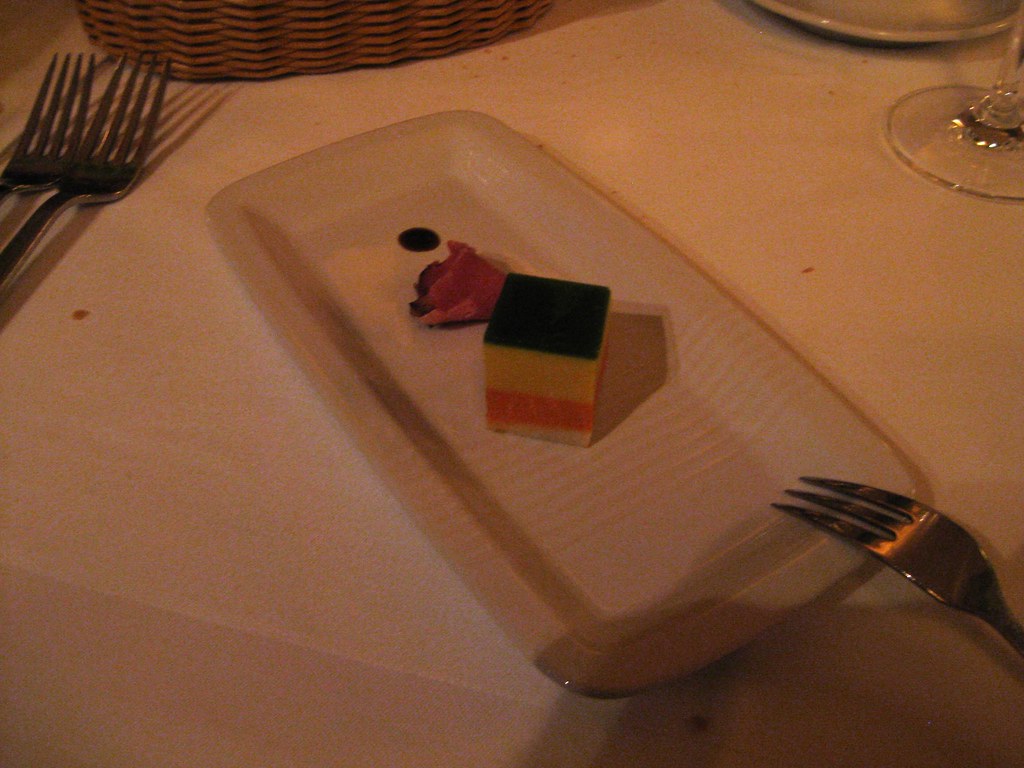
We were served an very nice amuse bouche to start, there's a photo above. (Sorry for the photo quality, the lighting was very romantic!) It was a small piece of smoked duck breast and a pepper mouse.
Then several of us had the artichoke - sheep cheese salad, also very good. Several of us also had the manzanitas pork: two different cuts of meat served together. Also quite nice.

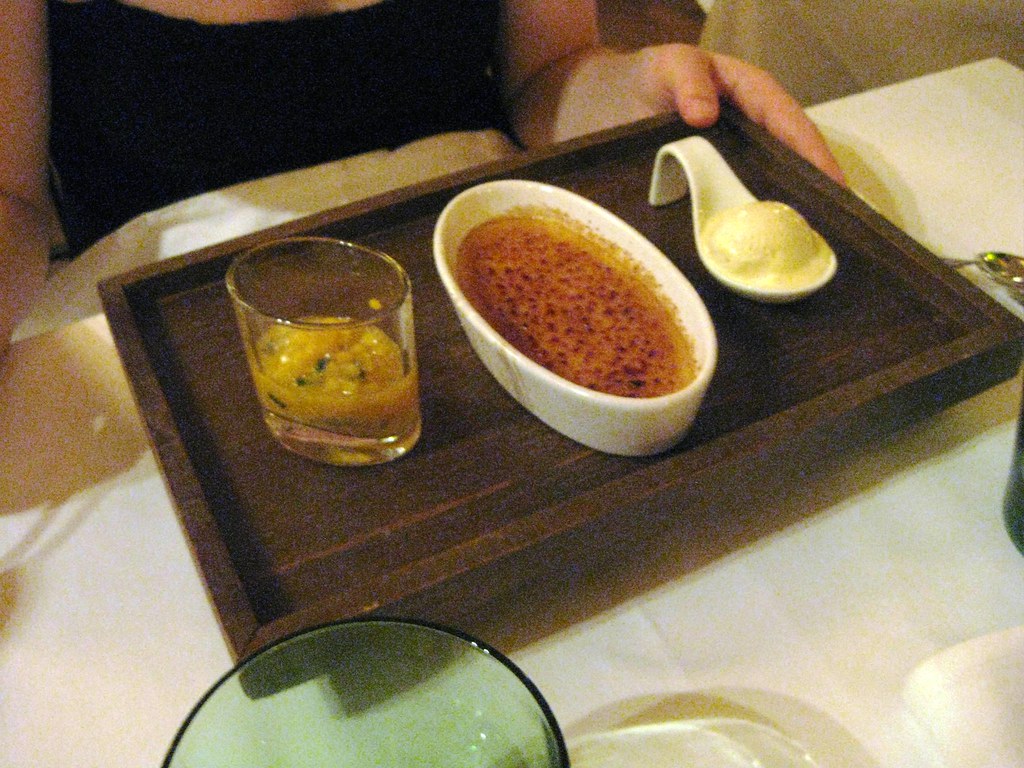
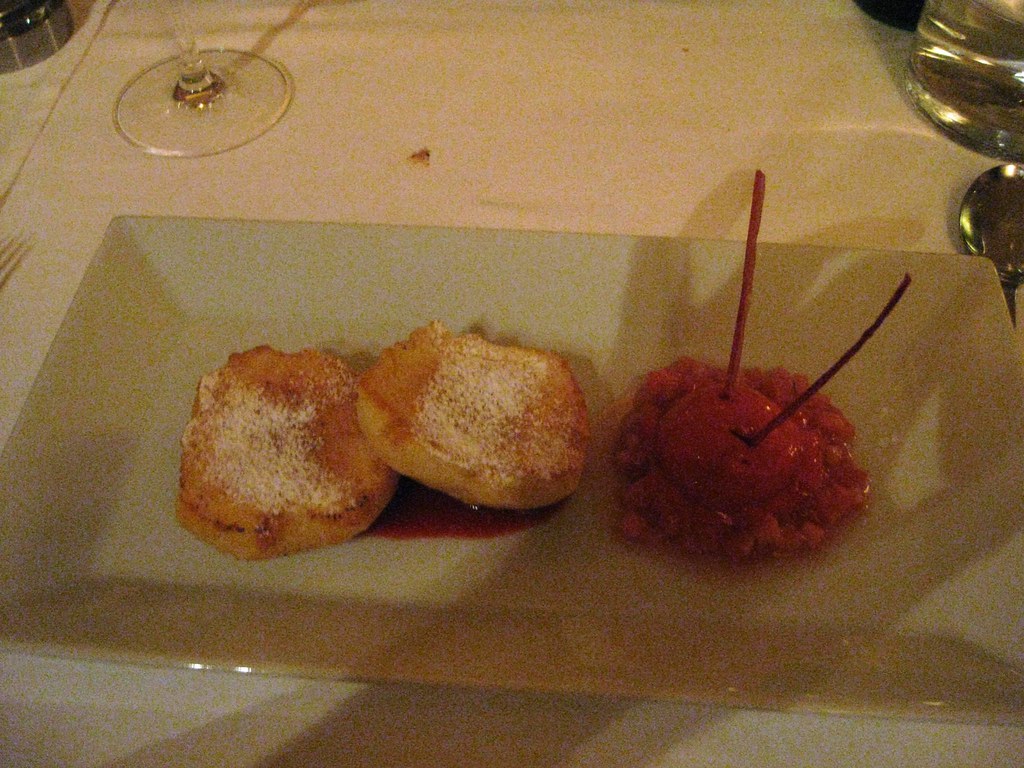
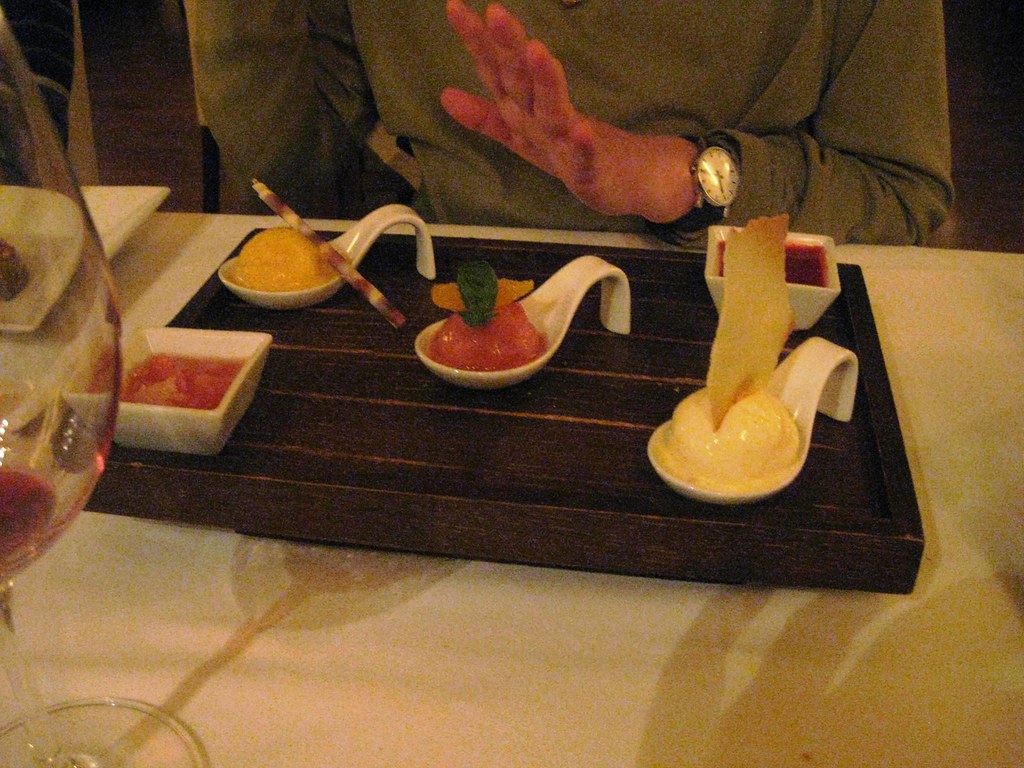
We tried three desserts and the cheese plate. All were excellent. On the left is the variation of sorbets and ice cream. On the right are the Bohemian pancakes and rhubarb ice cream. At the top of the article is passion fruit, creme brulee and passion fruit ice cream.
Our only complaint was that some smoke wafted in from the adjacent smoking section a couple times, although it was not bad by Austrian standards. Dinner for five with three bottles of wine cost about 300 Euros including tip.
I used to walk through the wonderful pedestrian passageway alongside the restaurant everyday for a project I was working on in 2007 and always wanted to eat here, now I wonder what took me so long. We'll be back again soon!
Our waiter recommended two bottles of wine, first a Grüner Veltliner - one with a nice mineral taste (so good we drank two bottles!), and then a red curvee. The wine list focuses on Austrian wines and these two were excellent. It was especially nice because the recommendations were relatively reasonably priced (25 Euros, 39 Euros).
We were served an very nice amuse bouche to start, there's a photo above. (Sorry for the photo quality, the lighting was very romantic!) It was a small piece of smoked duck breast and a pepper mouse.
Then several of us had the artichoke - sheep cheese salad, also very good. Several of us also had the manzanitas pork: two different cuts of meat served together. Also quite nice.
We tried three desserts and the cheese plate. All were excellent. On the left is the variation of sorbets and ice cream. On the right are the Bohemian pancakes and rhubarb ice cream. At the top of the article is passion fruit, creme brulee and passion fruit ice cream.
Our only complaint was that some smoke wafted in from the adjacent smoking section a couple times, although it was not bad by Austrian standards. Dinner for five with three bottles of wine cost about 300 Euros including tip.
I used to walk through the wonderful pedestrian passageway alongside the restaurant everyday for a project I was working on in 2007 and always wanted to eat here, now I wonder what took me so long. We'll be back again soon!
Wednesday, March 24, 2010
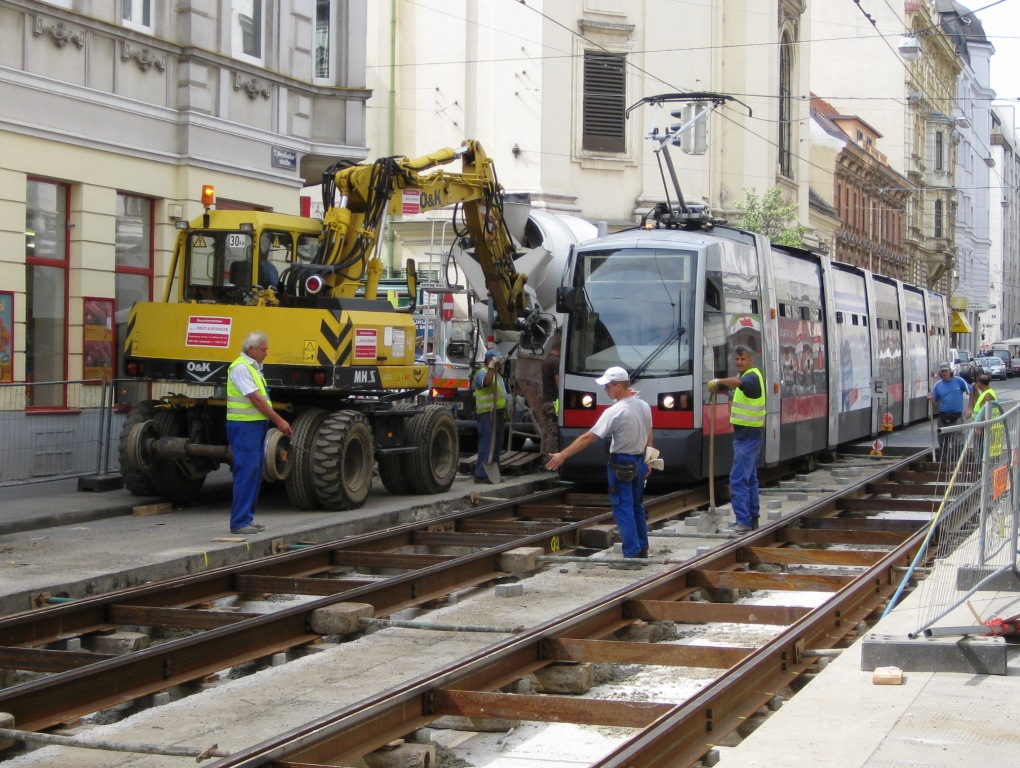
Builder Bob on Westbahnstrasse
From my flickr Westbahnstrasse Tram Track Renewal set.
I just finished my series of website pages describing the Westbahnstrasse Tram Track Rehabilitation Project completed during the summer of 2009. The two new pages present aerial views of the work (from a neighbor who was also fascinated by the construction process) and photos of the workshop where the Wiener Linien prefabricate the track by cutting, bending and welding together sections of rail. The website pages include photos, descriptions and YouTube video links.
Now I can get started on this summer's Westbahnstrasse project: the Westbahnstrasse Chronicles! Stay tuned.
Tuesday, March 9, 2010
City Models and Miniatures
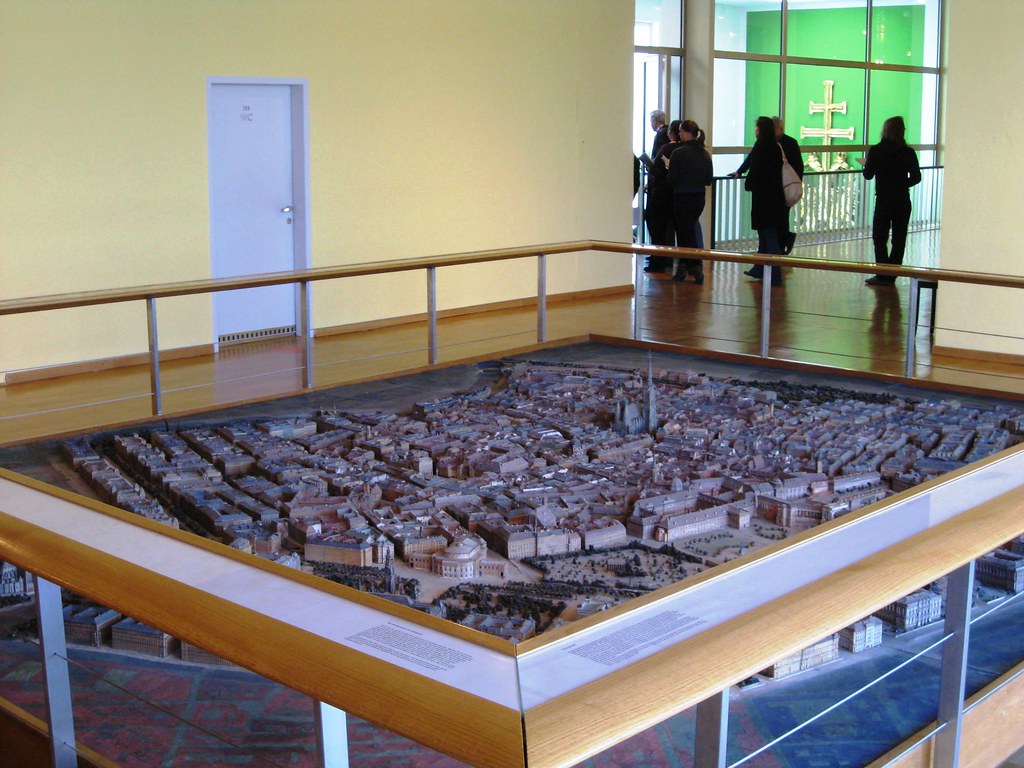
Wien Museum model of Vienna in about 1900 from my flickr photos.
Here's a great post from the Web Urbanist on 22 miniature cities ... different physical and virtual models of cities (I learned about it from Planetizen). I especially loved the film by Sam O'Hara "The Sandpit" at the end of the article.
Here are some more examples of physical models for the list:
- San Francisco - when I studied at the UC Berkeley City and Regional Planning Department Professor Bosselmann had a laboratory with a miniature San Francisco; it was used to model how new buildings fit into the visual environment;
- San Francisco - there is an old model of the city that used to be in the Powell Street BART station ... but I have not seen it in a while.
- Zürich - the planning department has a large model of Zürich today (German) cut into sections mounted on wheels so you can move the sections (they are on tracks) and then walk through a cross section to find yourself in the middle of any neighborhood;
- Zürich - the Zurich city archives museum has a nice model of Zürich around the year 1800, the museum is a delightful place for history buffs and is located on a wonderful square in the old city (try the Neumarkt Restaurant across the street for a nice lunch or dinner).
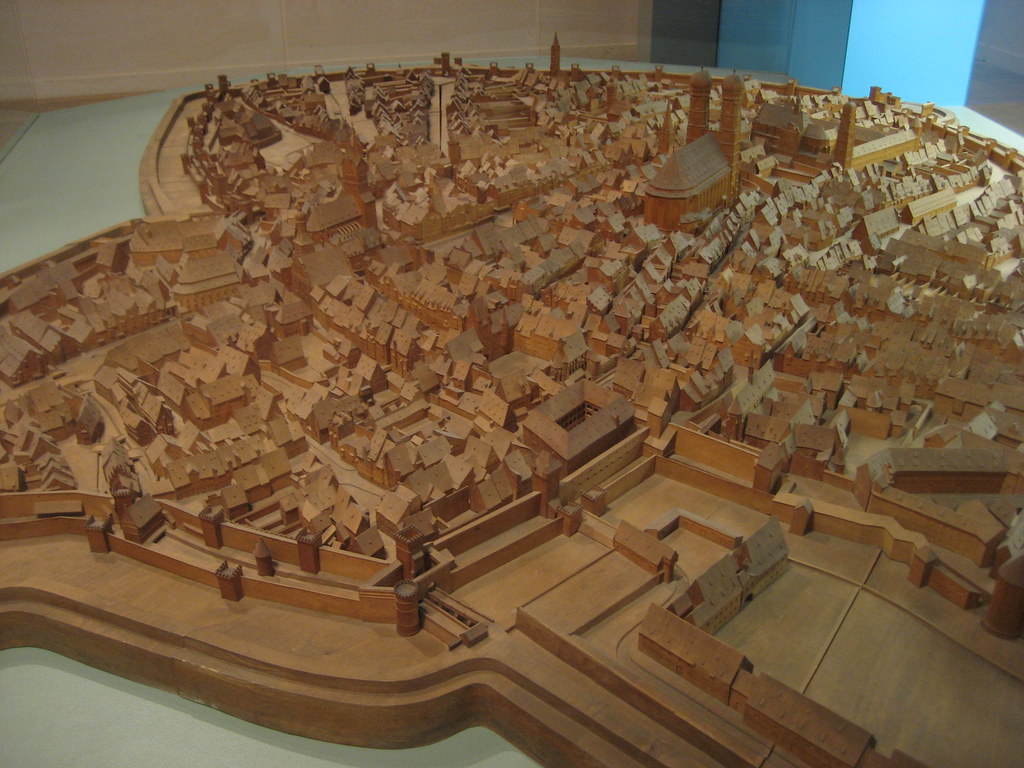
- Munich - the Munich city museum has a model of the city in 1570 and a nice brochure (available in English) about city development (Munich as Planned). The model (shown in photo) is a copy of another model that is in the Bavarian National Museum. The Munich city museum is well worth a visit (have lunch at the Vitualmarkt - one of the greatest urban spaces in the world! - in good weather, try Der Pschorr at night and if the weather is bad).
- Vienna - the Wien Museum (the city history museum) has two models at about the same scale (one on the second floor and one on the third) showing the city in about 1800 and in about 1900 (overview shown above and detail shown at the right). The Wien Museum is well worth a visit, here's a link to my Wien Museum flickr photos set.
Tuesday, February 16, 2010
Vienna Museum: Kampf um die Stadt
The Wien Museum (Vienna city history museum) has a great exhibition on right now called "Kampf um die Stadt - Politik, Kunst und Alltag um 1930" which I would loosely translate as: "Battle for the city - politics, art and everyday life in 1930". The exhibition runs until March 28, 2010, and I recommend it highly.
The exhibition is about the years following World War I until about 1934. One of the main themes is the 'practical' socialism that was introduced in the city of Vienna during this period. After WW I the Social Democrats came to power in Vienna, a city of almost 2 million people. Vienna did not fit very well with the rest of Austria which was mostly agricultural and quite conservative. Vienna, in contrast, was a modern industrial city with a huge number of workers. There was great fear in Austria that Vienna's workers would lead a Communist revolution, but the Social Democrats focused instead on "practical improvements" that would lead in the long run to socialism.
The Social Democrats' practical improvements included a huge public housing program (the city still owns over 200,000 apartments and continues to build new public housing), kindergartens and health clinics, schools, and one of my favorites: a box of diapers, baby blankets and clothes which was given to new mothers (this was quite important because many people were poor). The exhibition has a great film of children in one of the public housing project's parks being taught how to brush their teeth.
One interesting fact is that Vienna was able to pay for these programs because it was made a separate Austrian state in the early 1920s. This gave the city a relatively large budget and the leaders chose to spend the money on social programs. A key problem in many US cities is the lack of funding created by inner cities being separated from the more prosperous suburbs that depend on the city; Vienna was (and still is) a very large city in terms of area and it includes many 'suburban' areas with high income. This helps explain how Vienna has been able to maintain and improve its impressive quality of life.
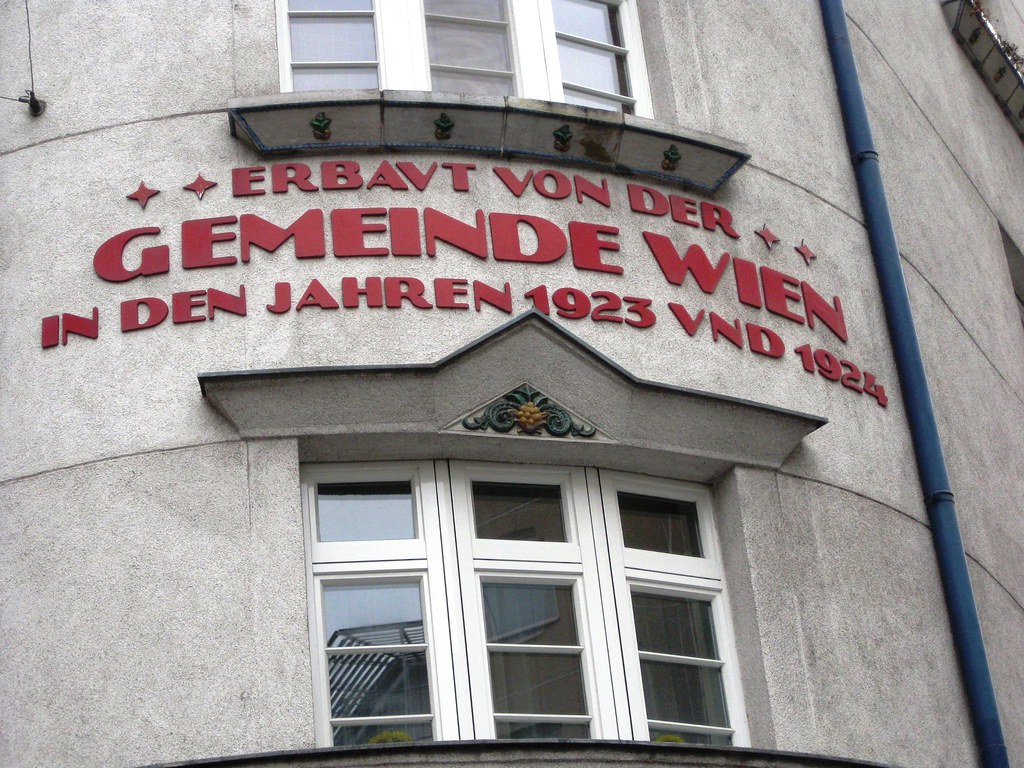
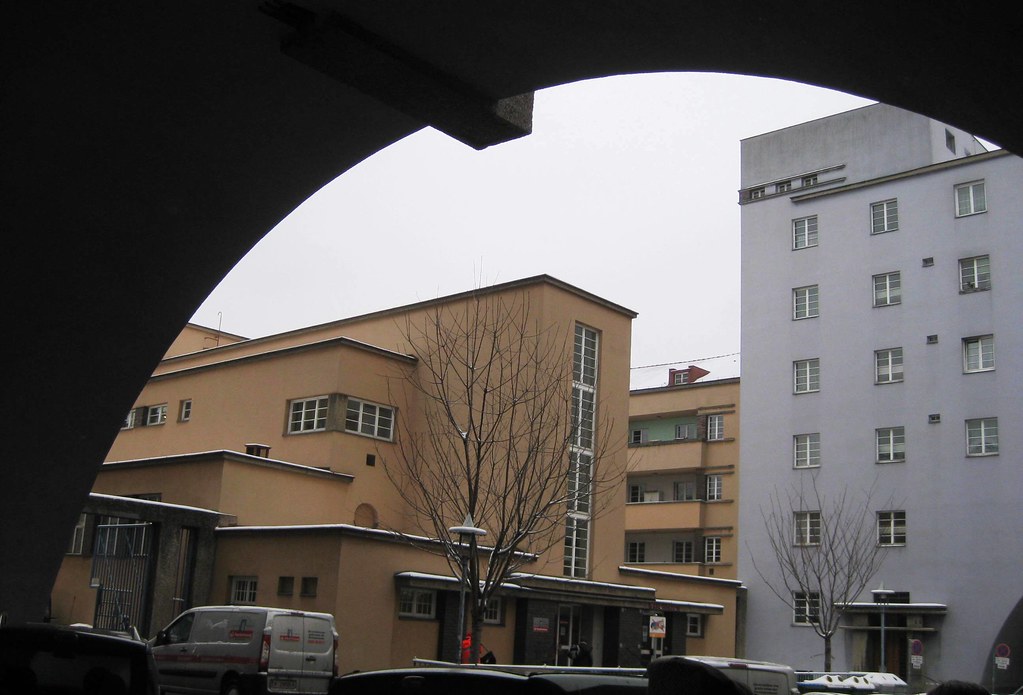
I have been on two tours organized by the museum in conjunction with the exhibition. On the first tour we visited several public housing projects (I hate using the word 'project' here because it brings to mind the idea of US public housing projects and the ones in Vienna are completely different) in the Margaretenguertel area of Vienna - the so-called Ringstrasse of the Proletariat. One of the public housing complexes is shown in the top photo.
On the second exhibition we visited some of the sites where there were actual battles between the Social Democrats and the conservative parties which controlled the national government. The first site we visited, Karl Marx Hof, is one of the public housing complexes built in the 1920s and is really an impressive site (see photo). The Austrian Army actually had to bring out the artillery to battle the residents.
My photos of both tours are available on my flickr site Wien Museum set.
Monday, November 2, 2009
Terra Madre Austria - Slow Food Vienna
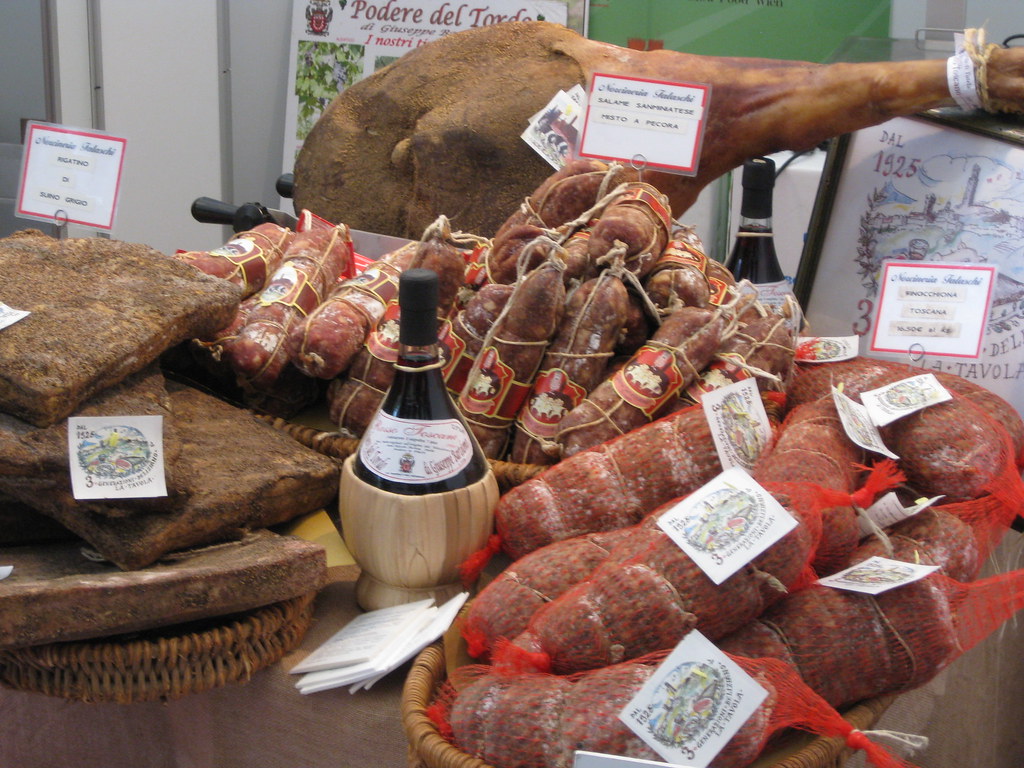
Meat from Sergio Falaschi butcher shop, San Miniato, Italy.
Last week I helped Slow Food Vienna (German) with the Terra Madre Austria conference in Vienna. Terra Madre is a program sponsored by Slow Food to highlight local foods and local growers/producers. There is an International Terra Madre every two years in Turin Italy, and local Slow Food chapters organize their own versions regularly.
Terra Madre consisted of three parts: a market of variety, a series of classes on specific local foods and an international congress.
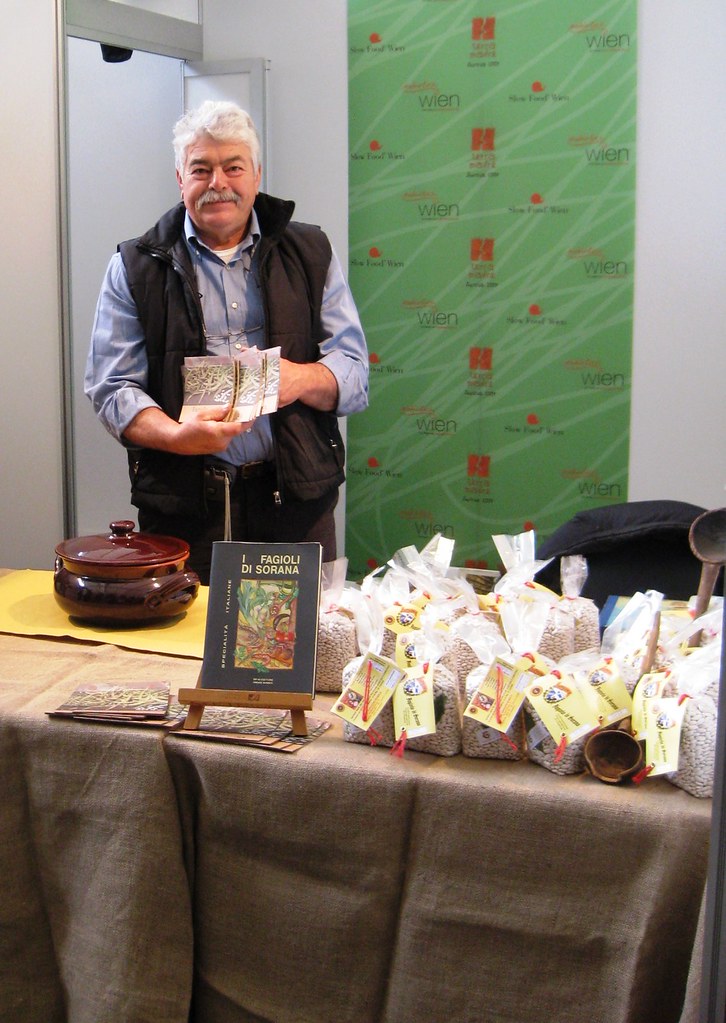
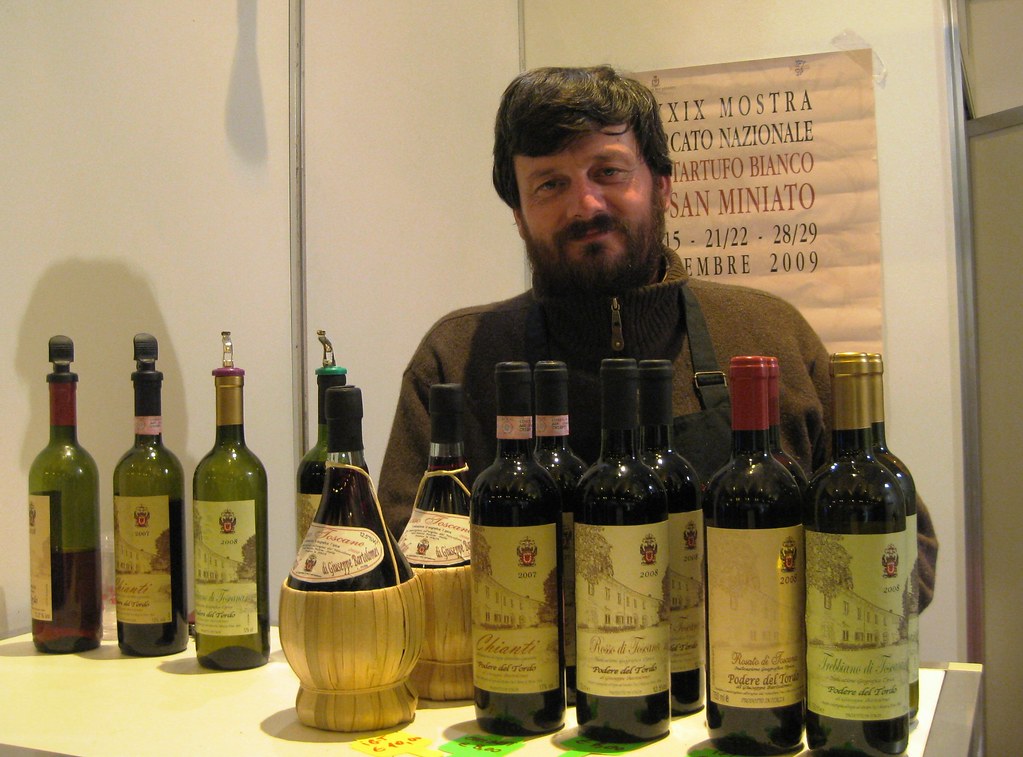
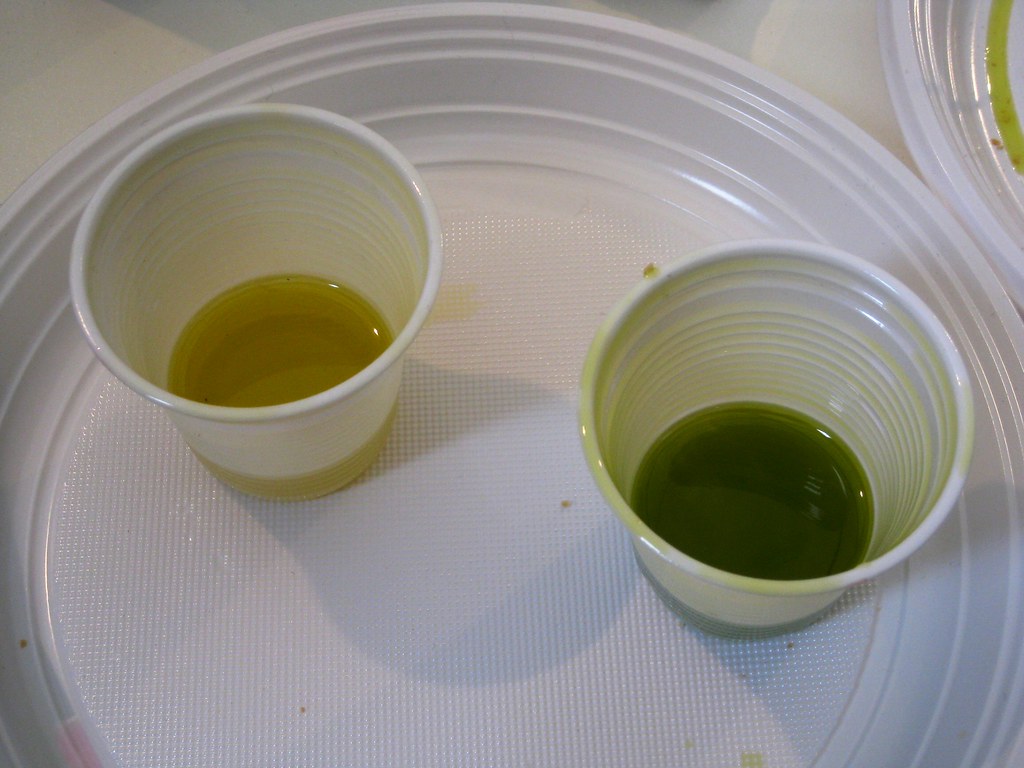
I volunteered to help a group of Italian producers who participated in the Terra Madre as guests. (I know a little Italian, but my wife and niece are quite good, so actually I volunteered them ... although they were only there a little while, but I spent the whole two days at the show.) We helped Alberto Bellesi, from Poggione, an olive oil producer (the green oil in this photo is only five days old), Enrico Gaggini, a producer of Sorana Beans, Giuseppe Bartolomei, from the winery Podera del Tordo in Pistoia (Tuscany), Andrea Falaschi from the butcher shop Sergio Falaschi in San Miniato, and Gulio Malvezzi who makes olive oil in Tuscany, but was showing traditional Pistola Mountain Peccorino cheese.
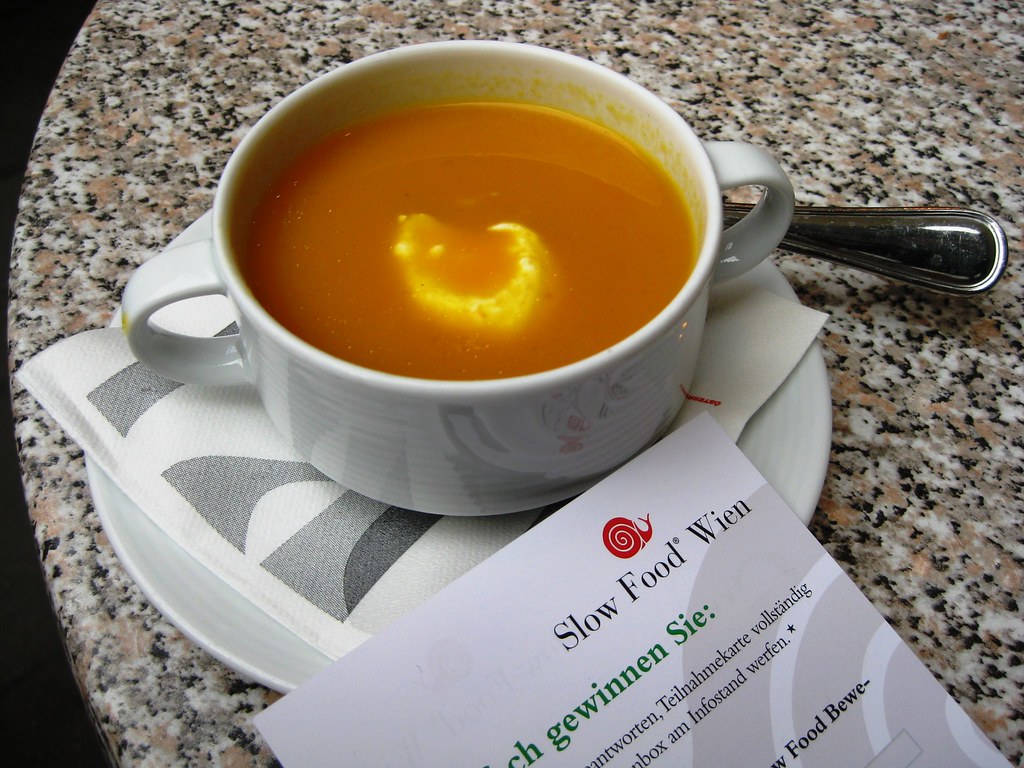
As a volunteer I found myself being pressed into action when the Rathaus Keller kitchen staff realized that they did not have enough people to peel all the "ox heart carrots" (another traditional food) needed for all the delicious carrot soup. So, I helped with several other volunteers for a couple hours peeling carrots in one of Vienna's finest restaurants. A good story....
The conference was also very good. The Slow Foods International founder Carlo Petrini gave a great call to arms explaining why food diversity is good for the planet, society and the economy. I loved the point he made that 'politicians always arrive too late to solve problems, so the people need to take the initiative for improving the world" amen to that!
One final thought, the Terra Madre was partly sponsored by the city of Vienna. The conference was held at city hall, the market was held in the city hall hof, the school for taste was held in the city hall. The city provided financial and logistic support. This is really a great thing about Vienna, the city supports lots of these types of conferences and seminars. The photo in the left is Andrea Falaschi carving the last pieces of the wild boar prosciutto from the bone, leaving a wonderful taste in our mouths as Terra Madre Austria 2009 ends.
More photos of Terra Madre Austria on my Flickr site.
Last week I helped Slow Food Vienna (German) with the Terra Madre Austria conference in Vienna. Terra Madre is a program sponsored by Slow Food to highlight local foods and local growers/producers. There is an International Terra Madre every two years in Turin Italy, and local Slow Food chapters organize their own versions regularly.
Enrico Gaggini with his Sorana Beans from Pescia, Italy.
The main idea is to highlight traditional local foods that are in danger of being lost due to the homogenization of the food industry. Heirloom tomatoes are a good example. The big food companies want consistent, easy to pick, easy to ship long distances and 'durable' tomatoes, we want taste and diversity.Terra Madre consisted of three parts: a market of variety, a series of classes on specific local foods and an international congress.
Giuseppe Bartolomei with his Podere del Tordo wine, Pistoia Tuscany, Italy.
This was the first Terra Madre in Austria and several local foods were highlighted in the market of variety including: Wiener Gemischter Satz wine, Wachauer Safran (safran grown in the Wachau area of Austria), Grubenkraut (a very old method for conserving cabbage - you bury it four meters deep in the ground for up to three years), several old varieties of pork, traditional mountain cheeses, a unique version of corn that you grind, cook into small cakes and then serve with apple sauce and several other tasty treats. The idea is that a food is designated as a 'Presidio' and then a group is formed to support its preservation and encourage others to adopt it.I volunteered to help a group of Italian producers who participated in the Terra Madre as guests. (I know a little Italian, but my wife and niece are quite good, so actually I volunteered them ... although they were only there a little while, but I spent the whole two days at the show.) We helped Alberto Bellesi, from Poggione, an olive oil producer (the green oil in this photo is only five days old), Enrico Gaggini, a producer of Sorana Beans, Giuseppe Bartolomei, from the winery Podera del Tordo in Pistoia (Tuscany), Andrea Falaschi from the butcher shop Sergio Falaschi in San Miniato, and Gulio Malvezzi who makes olive oil in Tuscany, but was showing traditional Pistola Mountain Peccorino cheese.
As a volunteer I found myself being pressed into action when the Rathaus Keller kitchen staff realized that they did not have enough people to peel all the "ox heart carrots" (another traditional food) needed for all the delicious carrot soup. So, I helped with several other volunteers for a couple hours peeling carrots in one of Vienna's finest restaurants. A good story....
The conference was also very good. The Slow Foods International founder Carlo Petrini gave a great call to arms explaining why food diversity is good for the planet, society and the economy. I loved the point he made that 'politicians always arrive too late to solve problems, so the people need to take the initiative for improving the world" amen to that!
One final thought, the Terra Madre was partly sponsored by the city of Vienna. The conference was held at city hall, the market was held in the city hall hof, the school for taste was held in the city hall. The city provided financial and logistic support. This is really a great thing about Vienna, the city supports lots of these types of conferences and seminars. The photo in the left is Andrea Falaschi carving the last pieces of the wild boar prosciutto from the bone, leaving a wonderful taste in our mouths as Terra Madre Austria 2009 ends.
More photos of Terra Madre Austria on my Flickr site.
Monday, October 26, 2009
Picking Gemischten Satz Grapes in Vienna
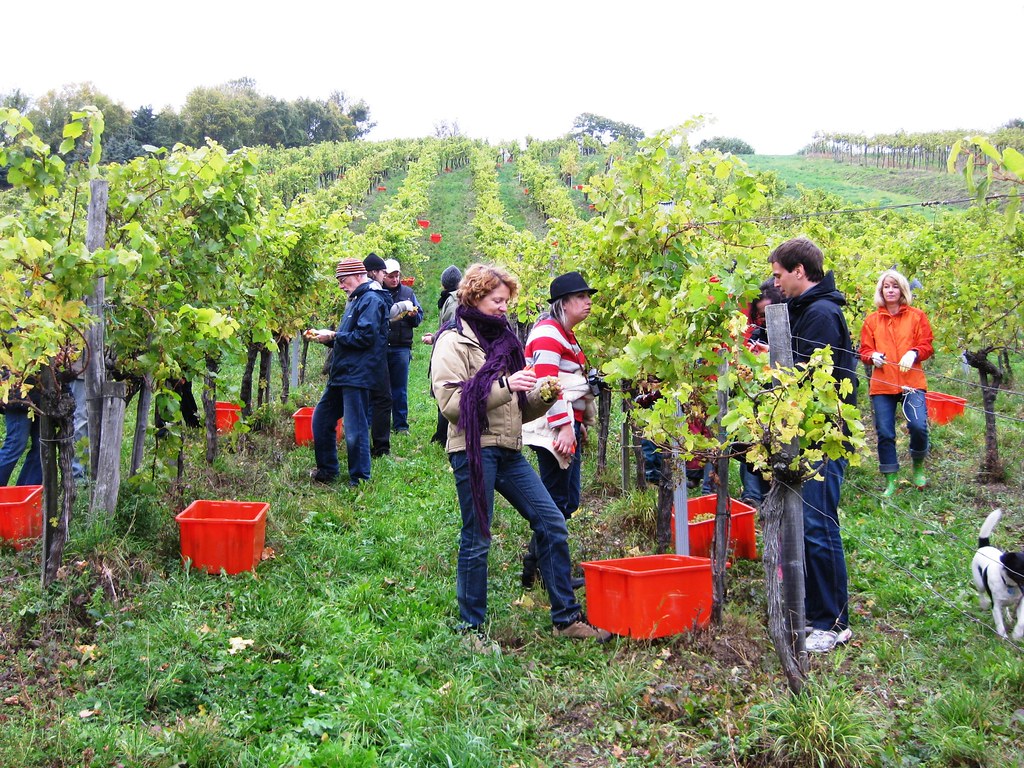
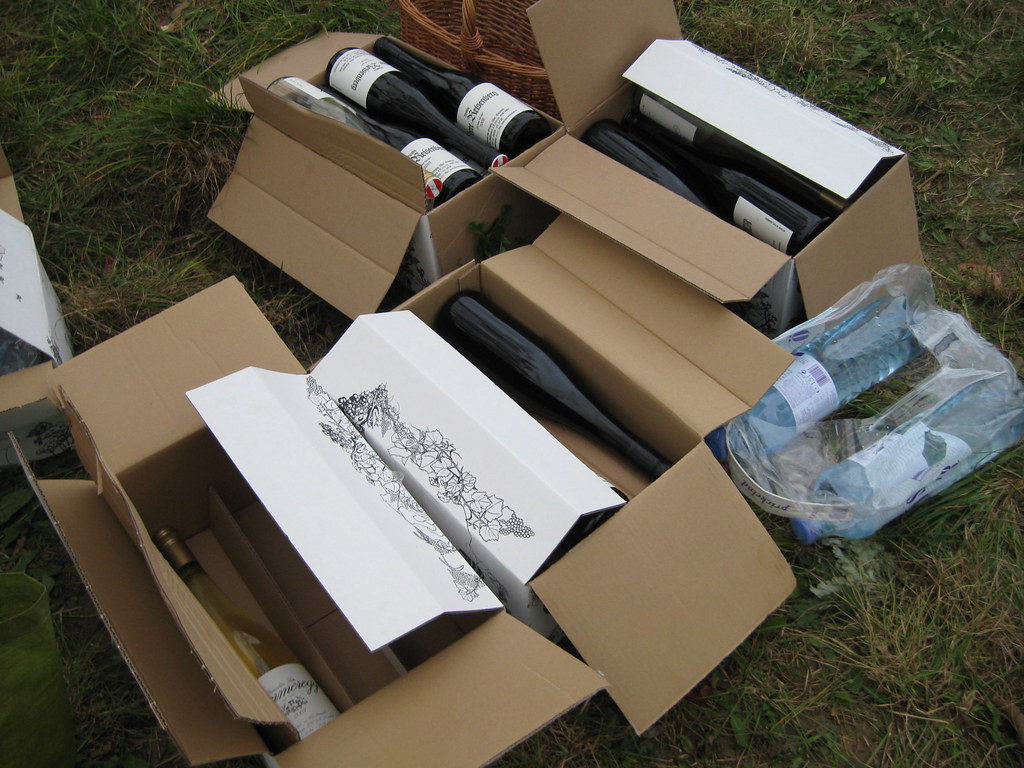
On Saturday I finally did something I have always wanted to do: pick grapes for wine! It started with an e-mail from Slow Foods Vienna asking for volunteers to help winemaker Jutta Ambrositsch harvest her "Sommeregg" vineyard (one of several she has) for Gemischten Satzes wine.
Vienna produces the most wine of any city in the world; the main reason is that the city has a huge land area and over 50% is open space (forest, hills and agriculture). Many of the hills surrounding Vienna produce excellent wine. The city even owns a winery called Cobenzl. Cobenzl has a wonderful view overlooking the city, a restaurant and an adjoining mini farm for children.
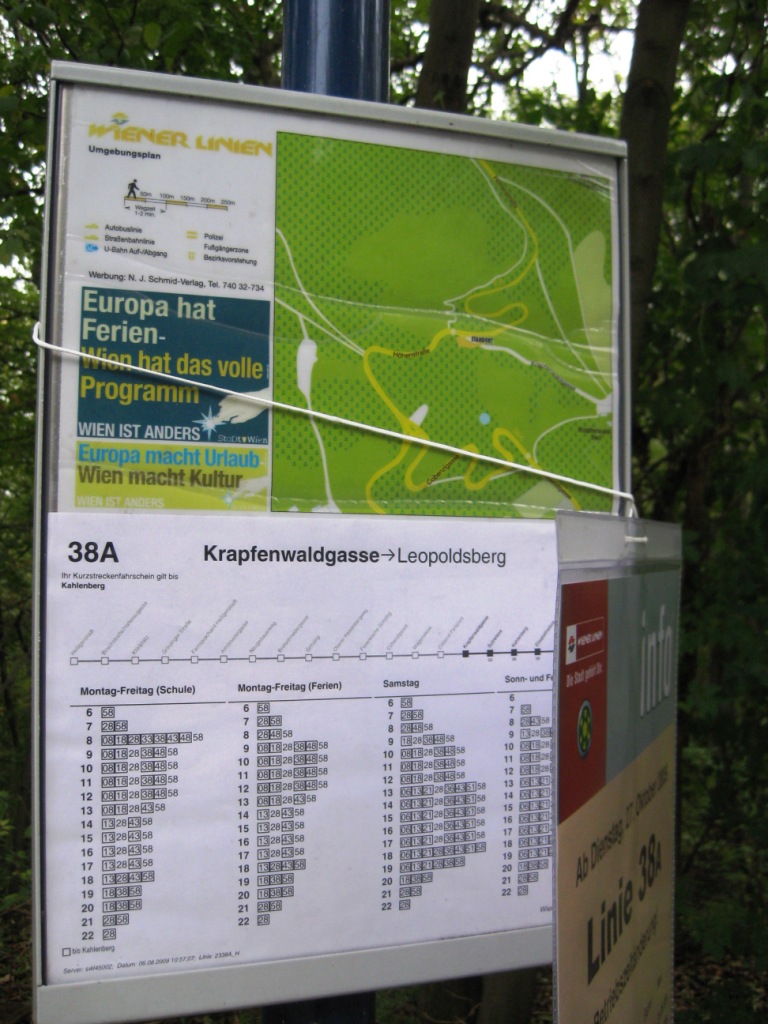
A big plus for public transport fans in Vienna is that you can take the city bus to the vineyards! The 38-A bus (direction Kahlenberg) takes you from the U-Bahn (U4) terminal station Heiligenstadt to Cobenzl and on to Kahlenberg (another great view with a nice hotel and restaurant). On the way the bus goes through the Grinzing neighborhood where there are many Heurigen (local wine restaurants).
Anyway, back to the picking. Unfortunately Saturday was gray and cool - but at least it did not rain! - so I dressed warmly. After a brief description of what grapes to harvest (no moldy grapes, no dried out grapes, no grapes damaged by hail or wasps - when the skin of the grape is open it gives a chance for vinegar bacteria to get in - and, very important, no lady bugs - they make the wine stink) we were on our way up the hill with our collection bins.
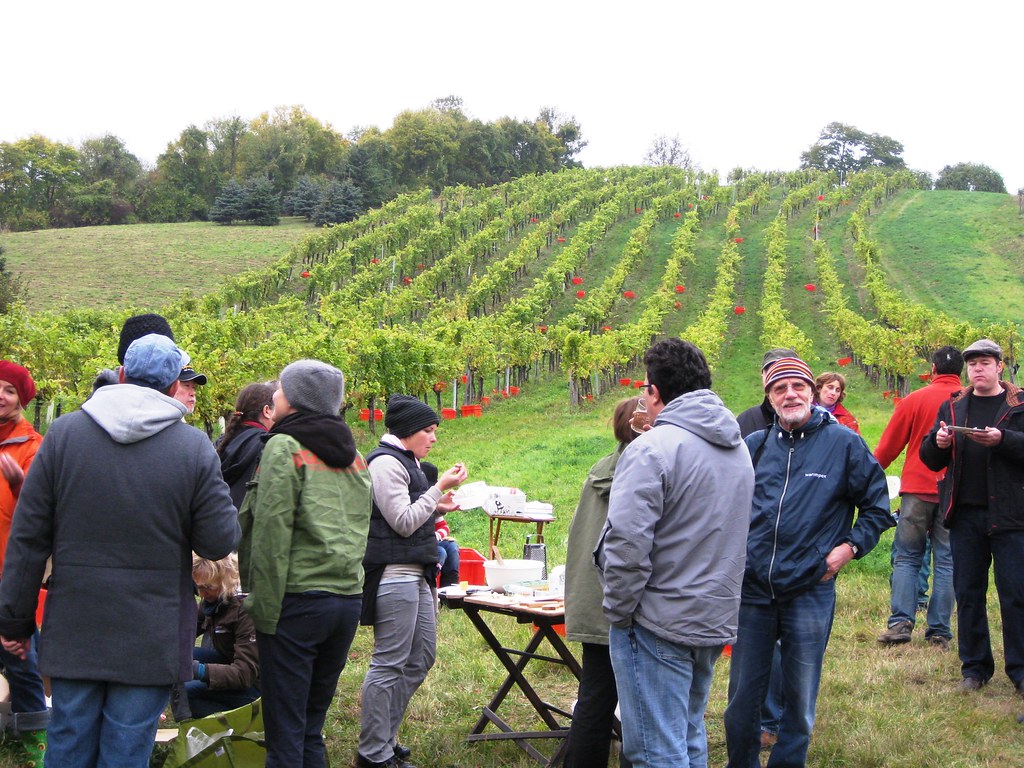
There were about 30 people helping harvest about a half-hectare area of grapes. The volunteers consisted of friends of Jutta's and Slow Food members. It was a fun group with lots of talking during the work. I was lucky enough to work with someone studying agriculture and wine making, so I learned a lot and could always ask her if the particular grapes were OK or not before throwing them in the bin. Many hands make light work and we finished the field by about 3 pm (and even had time for a one-hour lunch break).
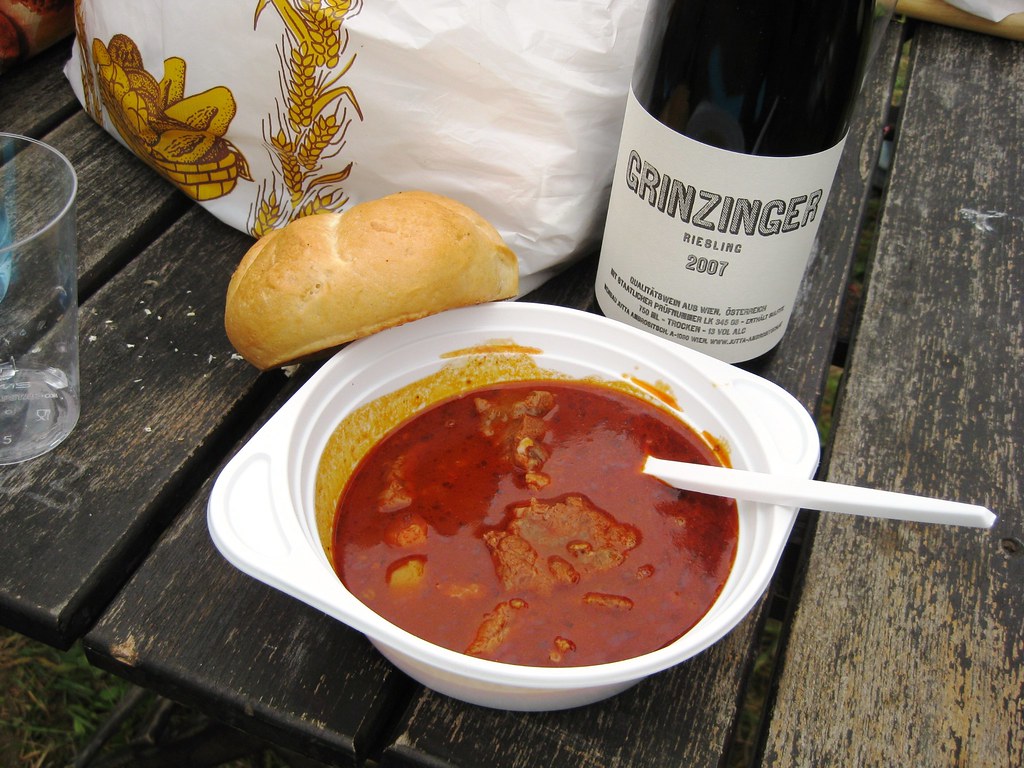
Lunch was cold salads, cheese, bread, ham and some of Jutta's 2007 Gemisches Satz (from the same vineyard we were picking) and a 2008 Riesling which was really excellent. When we were finished we had a piping hot goulash soup - nice since when standing around (as opposed to picking) you became quite cold quickly. A little more wine and then back to the bus stop in Grinzing for the trip home.
You may be asking yourself what is "Gemischten Satz"? Translated literally it means "mixed batch". It is typical to Vienna and is made from vinyards that have many different grape varieties planted together. In Jutta's half-hectare Sonnenegg vinyard there are about 20 different sorts of grapes including Grüner Veltliner, Weißburgunder, Neuburger, Riesling, Müller-Thurgau, Gelber traminer, Gewürztraminer, Zierfandler, Rotgipfler, Roter Veltliner, ... and several traditional Austrian grapes that are unique). The Sonnenegg vineyard was planted in 1955 but has probably been used for grapes for centuries.
Later this week we will attend the Slow Foods Terra Madre Austria congress at the Vienna City Hall. The congress highlights traditional foods from Austria and Gemischten Satz will be one of the foods that are officially recognized by Slow Foods at the event. We will go to a class on Gemischten Satz and learn lots more about it, so expect to hear more later. In the meantime, when you visit Vienna look for Gemischten Satz and give it a try - it's not for everyone, but fun to experience.
All photos from my flickr site, here's a link to all the photos from picking Gemischten Satz at Sonnenegg 2009.
Thursday, October 15, 2009
Tuesday, September 15, 2009
Vienna Tram Day 2009
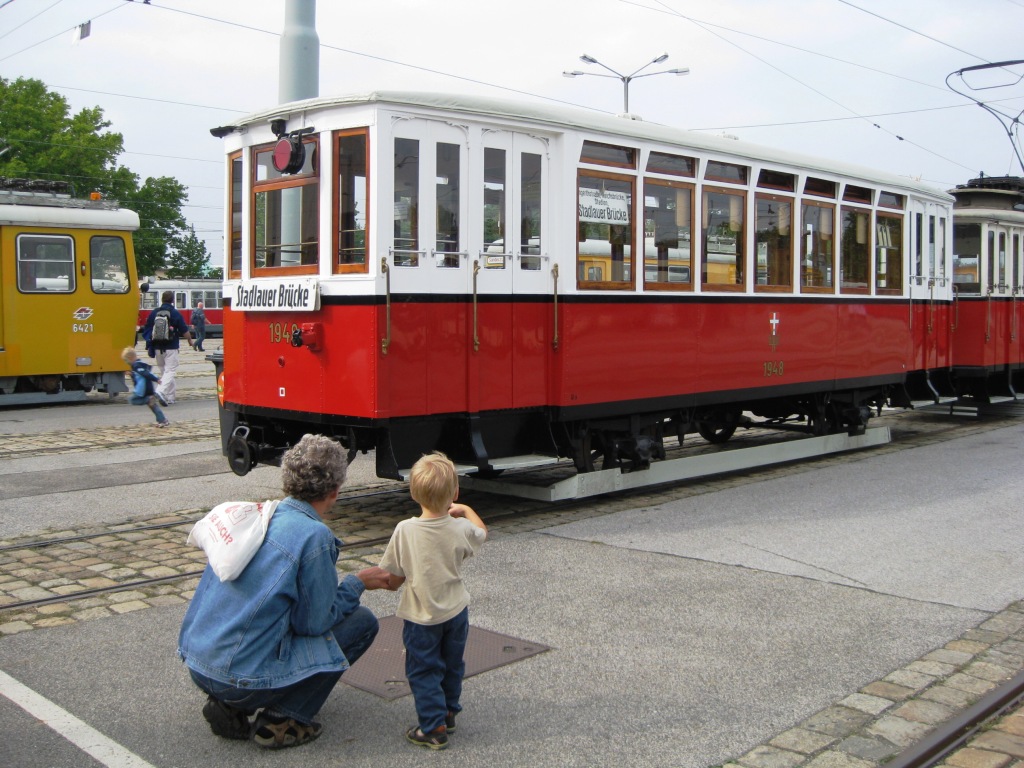
On Saturday the Wiener Linien (Vienna Lines), the city's public transport operator held its annual open house at the main workshops. It was a nice day and a great party. Here are a few photos.
Inside the railway vehicle maintenance area. The Wiener Linien had set up displays of interesting information (how the new real time passenger information system works, etc) with various types of public transport vehicles interspersed between the displays.
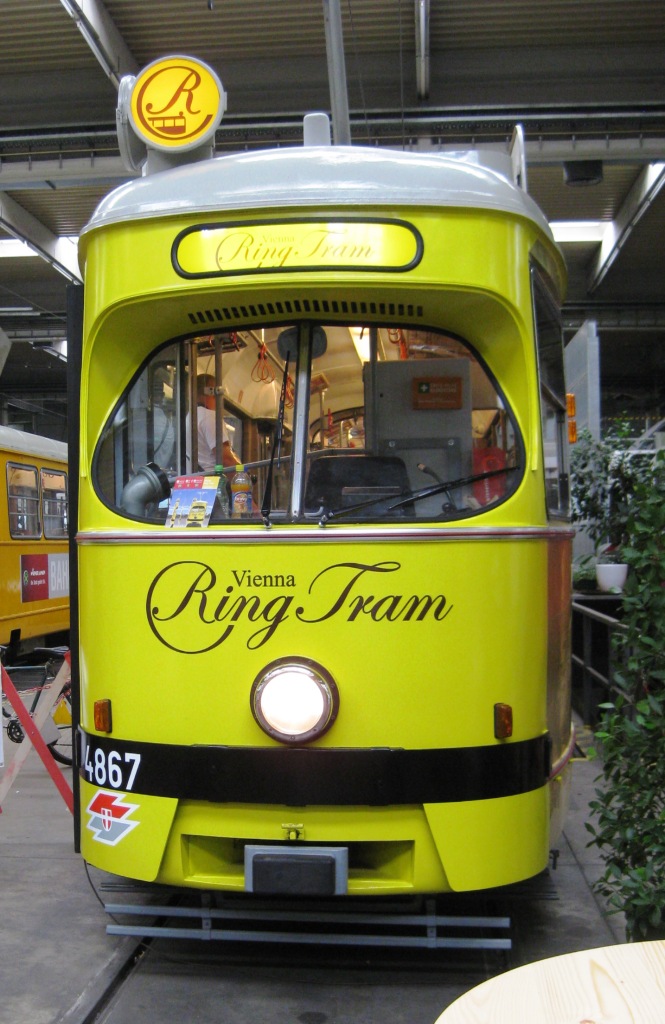
The new Ring Tram was on display. The tram lines that used to run on the Ring (#1 and #2) were recently re-routed so they only go on part of the Ring. The Ring tram is designed for tourists and has information in several languages available on headphones. It has a special (higher) fare, but it's well worth riding.
What is it about kids (of all ages) and trams?
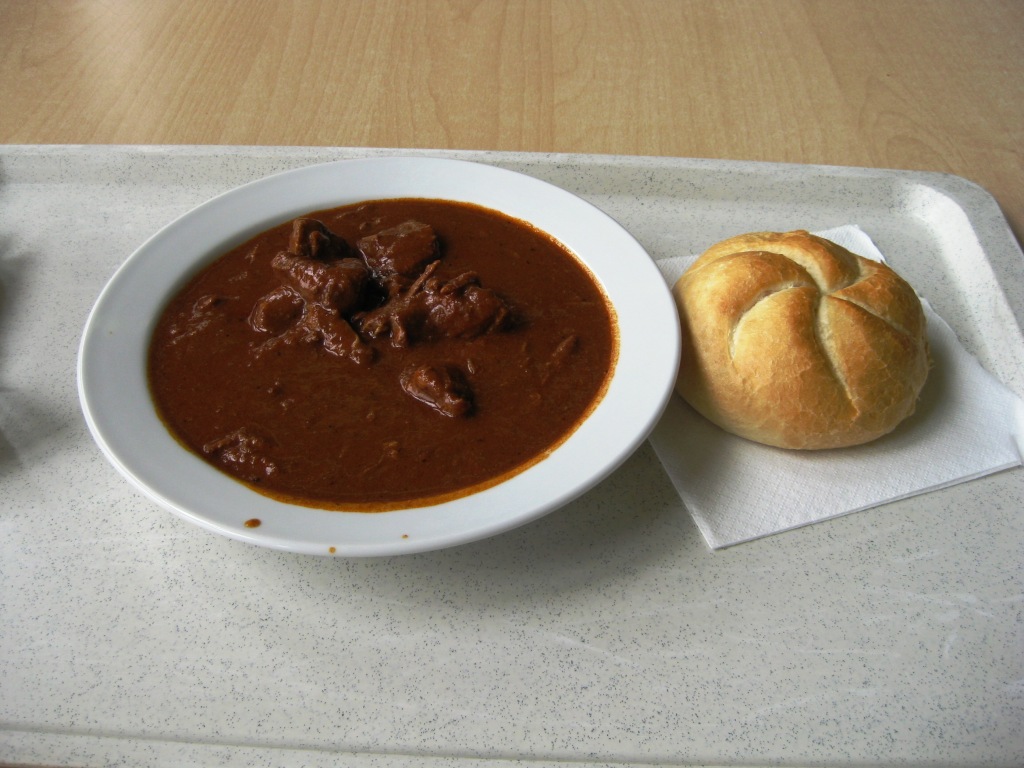
No Austrian event would be complete without food and drink. Below is my Goulash lunch at the employee cafeteria ... not as good as mine, but quite good.
Back to work ... here's a photo of several rail vehicles being maintained. On the left is one of the old trams, on the right (up in the air) is one of the old subway (U-Bahn) cars.
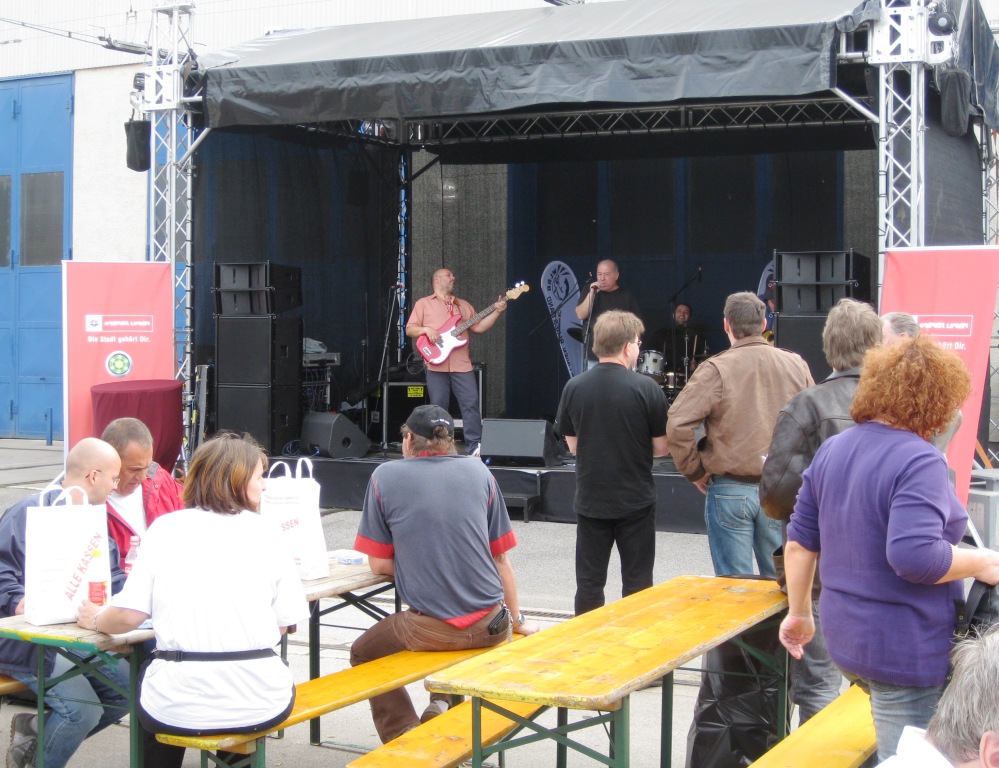
I don't know how many public transport operators have their own Blues Band, but the Wiener Linien does: the Wiener Linien Blues Band. They were playing Mustang Sally, I don't know why they didn't play Tramway Charlie ... but maybe next year!
Monday, September 7, 2009
Westbahnstrasse Tram Track Reconstruction
As I mentioned in previous posts the Wiener Linien has been rebuilding the tram tracks in our neighborhood this past month. I am putting lots of the photos on my website and also several movies. I now have five movies of the construction process on YouTube, above is one of them. I will write another post when the website is finished.
Wednesday, September 2, 2009
Otto Wagner and Vienna Transport - 1
A colleague from San Francisco was in town last week and, as usual, visitors call attention to the things you don't always notice as you go about your everyday business. I have been following his blog (Jarrett Walker, www.humantransit.org) and added a couple comments and then thought, well one of these comments is something I've wanted to write about myself for a while, so here's a first installment on Otto Wagner and his influence on Vienna transportation planning.
Otto Wagner is a fascinating example of an architect who also did some great urban civil engineering. There is a nice exhibition of his work at the Wien Museum's Otto Wagner Pavilion located in the Karlsplatz U-Bahn entrance (designed by Wagner). The museum is very small but manages to present a good summary of Wagner's work.
Also don't miss his Hof Pavilion (German website, nice photos) a private station designed for the Kaiser at Schönbrunn (the Kaiser's summer palace). The Hof Pavilion is adjacent to the Hietzing U-4 station (one station beyond the Schönbrunn station). Right now it's only open on Sunday mornings (see German website for times) but well worth the visit for fans.
Of course you can still see Wagner's influence in the design of many stations on the U-4 and U-6 lines. Both these lines were operated with steam engines in Wagner's day (he developed the conceptual plan for these lines as well as designing many of the stations and infrastructure). The photo on the right is of his famous bridge on the U-6 line over the Vienna River at the Gürtel. The photo is taken from the U-4/U-6 Längenfeldgasse Station.
Wagner's lines were later converted to electric trains then into Vienna's U-Bahn network, but many stations were maintained and have been renovated. The photo on the right is a detail of Wagner's bridge on the U-6 line. All photos are on my flickr photos of Vienna public transport, where there are many more photos of Otto Wagner stations and bridges.
Vienna has done a wonderful job restoring many stations designed by Wagner. A couple years ago they rehabilitated the Gumpendorferstrasse Station (U-6) - shown at the top of this post. They did a great job integrating new features (e.g. elevator) and new floor tiling (rubber non slip) that matched the old style. It is great that Vienna does not eliminate history from their transportation infrastructure in the name of efficiency or current fashion. As places like NY Grand Central Terminal show, old pedestrian flow designs often work much better and the buildings are much more gratifying as many modern designs.
Monday, August 31, 2009
Westbahnstrasse Tram Track Reconstruction Pages
I've been working on my website pages that illustrate the reconstruction of the tram tracks on Westbahnstrasse (Vienna) near our house. The project is almost over and has been fascinating to watch.
Here's my Westbahnstrasse Tram Track Reconstruction Homepage with links to my pages on Construction signs and artistic photos.
Let me know what you think!
Here's my Westbahnstrasse Tram Track Reconstruction Homepage with links to my pages on Construction signs and artistic photos.
Let me know what you think!
Subscribe to:
Posts (Atom)